
Most trading strategies have a preferred environment. A bullish template performs best when prices are rising with regular pullbacks. A bearish template is designed for sustained downtrends. The problem is that markets don't announce in advance which phase they're entering, and the cost of running the wrong directional template in the wrong market can range from underperformance to significant loss. This is the problem the all-season template is designed to address, and it's why Botty user reviews of this template tend to sound different from reviews of the directional alternatives.
This article looks at what the all-season template actually is, how it has performed across different market conditions, what users report about the experience of running it, and when, if ever, it makes sense to switch to a more directional approach.
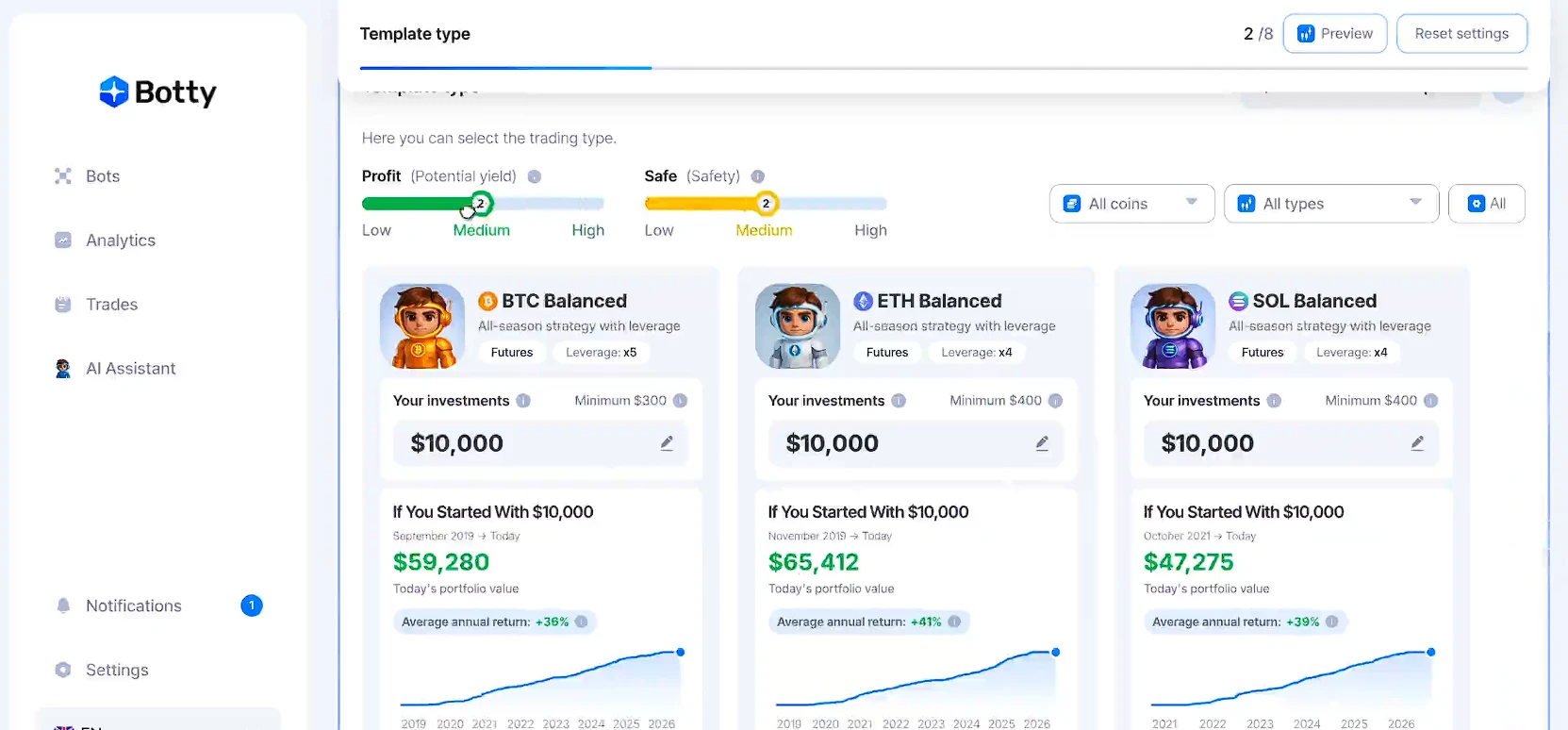
The Core Problem: Most Templates Work in One Market Type
The templates Botty offers fall into three broad categories based on market orientation: templates optimized for rising markets, templates optimized for falling markets, and the all-season template designed to function across all conditions. Understanding why the directional templates exist helps clarify what the all-season version is actually trading away.
A bullish template concentrates its grid in a range above the current price, anticipating that corrections will be followed by higher highs. In a sustained uptrend with regular pullbacks, this positioning generates frequent cycle closures and strong cumulative returns. In a sustained downtrend, the same positioning leads to the bot accumulating a large position in a falling asset, with limited opportunity for the recovery-based cycle closures that generate profit.
A bearish template does the opposite, it's calibrated for falling markets with intermittent recoveries. In a true downtrend, it can generate profits from the bounces. In a rising market, it sits largely inactive or underperforms.
The all-season template doesn't bet on direction. It operates across a wider price range that spans both above and below the current price, sized to remain viable whether the market moves up, down, or sideways. The trade-off is explicit: in a strongly trending market, either up or down, a directional template will outperform the all-season version. In exchange, the all-season template avoids the sharp underperformance that directional templates experience when the market moves against their orientation.

What the All-Season Template Looks Like in Practice
When users describe running the all-season template in reviews, certain patterns repeat. The most common description is "steady", the bot opens and closes cycles consistently, without the dramatic activity spikes of a bullish template in a strong uptrend or the extended waiting periods of a directional template caught in the wrong market phase.
The all-season version typically shows lower peak monthly returns than a well-matched directional template in its preferred environment. A bullish template during a rising BTC market can generate significantly higher monthly returns than the all-season version during the same period. Users who compare these numbers directly sometimes conclude the all-season template is simply inferior. This reading misses the comparison that matters: how does the all-season template perform during the months when the bullish template is accumulating losses and open positions that may not recover quickly?
The answer from user reviews is consistent: the all-season template continues generating modest, positive returns during those periods. It doesn't produce the same highs, but it also avoids the lows. For users who prioritize consistency over maximum return in any given month, this profile is exactly what they're looking for.

Bull Market Performance: Good, but Not the Best
In a rising market, one where BTC, ETH, or SOL is trending upward with regular corrections, the all-season template performs well but not at the ceiling of what's possible with Botty's templates. The regular pullbacks in an uptrend provide the accumulation opportunities the strategy needs, and the subsequent recoveries close cycles at profit. Monthly returns in these conditions are positive and meaningful.
What limits the all-season template's bull market performance is its grid width. Because it spans a wider range to remain functional across different market conditions, each individual position is smaller relative to total capital than a bullish template would allow. The bullish template concentrates capital in the range most likely to see action in a rising market, which means more capital is deployed in the cycles that are actually closing, and each closing cycle represents a larger portion of the account.
Users who run both all-season and bullish templates in parallel during rising markets consistently report higher absolute returns from the bullish template in those conditions. The all-season version still returns positively, it's not being left behind, but the comparison shows that directional concentration, when correctly matched to market direction, produces higher peak returns.
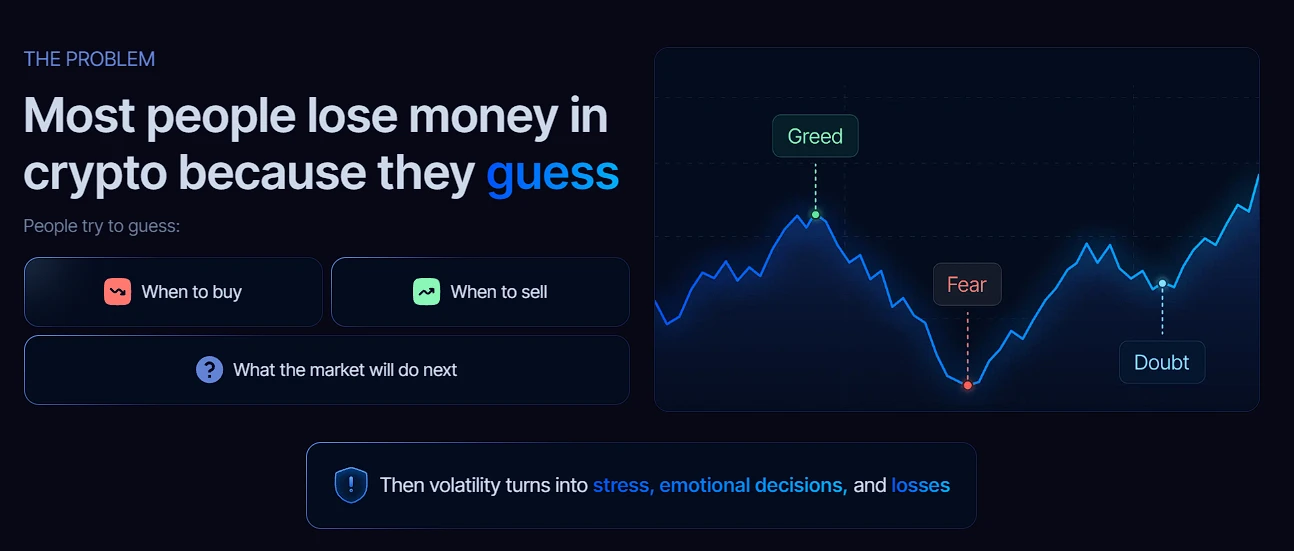
Bear Market Performance: Where the Trade-Off Pays Off
The bear market is where the all-season template's value proposition becomes most visible. When the market enters a sustained downtrend, a bullish template accumulates an increasingly large position in a falling asset. The unrealized loss grows. If the downtrend is deep enough or sustained enough, the position may not recover within the user's timeframe, and in the case of futures templates, liquidation becomes a real risk.
The all-season template handles downtrends differently. Its grid extends below the entry price to capture accumulation opportunities, but it also has positioning above the entry to capture profit when the market recovers. More importantly, the grid is calibrated to remain within operational parameters across a wider range of price movement than a directional template. The bot doesn't get caught with a deeply concentrated position in a falling market because it was never concentrated in that direction to begin with.
User reviews from periods of market decline consistently show the all-season template producing smaller losses or small gains while directional templates designed for uptrends show significant open positions and unrealized losses. The emotional experience of running these two template types through the same bear market is described very differently: all-season users report relative calm; bullish template users report anxiety and the temptation to close positions manually, which, when acted on, converts unrealized losses into real ones.
October 10, 2025, offers a useful case study. When Bitcoin dropped from $120,000 to $102,000 in a single day, a move that liquidated $20 billion in market positions, all-season bots continued operating within their parameters. The sharp drop triggered accumulation; the partial recovery within the same trading day allowed cycle closures at a profit. The event that destroyed positions for 1.3 million traders was, for all-season bot users, a demonstration of exactly the kind of volatility the template is designed to monetize.

Sideways Market Performance: The All-Season Template's Quiet Strength
Sideways markets, where the price oscillates within a range without establishing a clear trend in either direction, are often described as the least exciting environment for trading bots. For directional templates, sideways action means the market isn't cooperating with the template's assumptions. For the all-season template, a sideways market is close to the ideal operating environment.
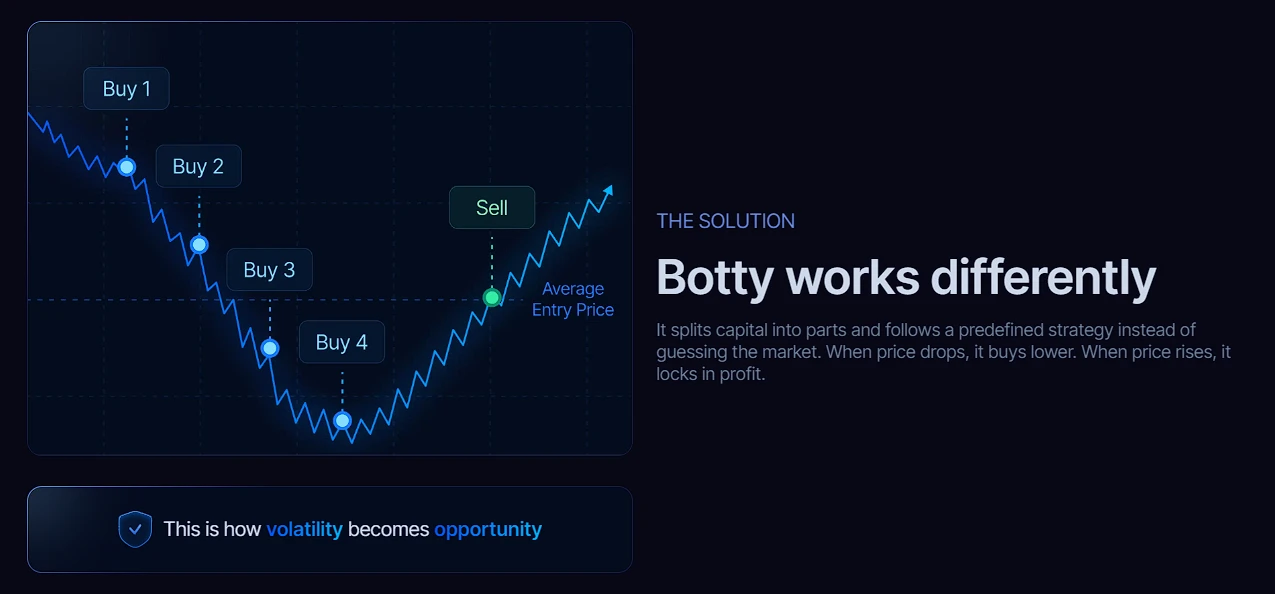
The grid-plus-averaging strategy generates profit from oscillation. It buys on dips and closes on recoveries. A sideways market provides exactly this: repeated movement up and down within a defined range, with no sustained directional move that would stress a concentrated position. The all-season template closes cycles at a steady pace in these conditions, producing consistent modest returns without the drama of a volatile trending market.
User reviews from extended sideways periods describe the all-season template as operating "quietly", the bot opens and closes positions on a regular schedule without requiring intervention, attention, or emotional management. This is, for many users, the experience they were looking for when they decided to automate their trading in the first place.

What Users Say About Switching Away From All-Season
A recurring topic in more experienced Botty user reviews is the decision to move from an all-season template to a directional one after gaining some experience with the platform. The pattern that emerges from these reviews is instructive.
Users who switch to a bullish template typically do so after observing a sustained uptrend and wanting to capture more of the upside they see a directional template could provide. The reviews from users who made this switch at the right time, early in an established uptrend, describe significantly higher monthly returns. The reviews from users who made the switch based on recent performance and ended up moving just as the trend reversed describe the opposite experience.
The lesson from these reviews isn't that switching is wrong, it's that the decision requires a view on market direction that the all-season template was specifically designed not to require. Users who switch to directional templates are accepting the directional bet along with its potential upside and downside. Users who stay with all-season are explicitly choosing not to make that bet.
The most consistent advice from users who have tried both approaches: start with all-season to learn how the strategy and the platform work without the added complexity of being on the wrong side of a trend. If and when you develop a higher-conviction view on market direction and a better understanding of how to manage the risk of a directional template, the option to switch is always available.
Who the All-Season Template Is Actually For
Reading through Botty reviews that specifically mention the all-season template, several user profiles emerge as the best fit.
New users starting their first bot consistently appear in all-season reviews. The combination of no directional bet, lower emotional volatility, and consistent behavior across different market phases makes it the lowest-friction starting point. The experience of running an all-season bot through a complete market cycle, including a down period, builds an understanding of the strategy that no amount of explanation replicates.
Users who want to automate without active management also appear frequently. The all-season template doesn't require the user to monitor market direction and decide when to switch templates. It simply runs, taking what the market offers in any condition. For users who genuinely want to reduce the time and attention they spend on crypto markets, this is a meaningful feature.
Users who have had negative experiences with directional bots in wrong-market conditions show up in all-season reviews with a specific perspective: they've seen what happens when a template is mismatched to market direction, and they've chosen the option that eliminates that risk. The lower ceiling on monthly returns is, for them, a conscious and valued trade-off.
The all-season template is not for users who want maximum return in any specific market phase. It's for users who want sustainable, consistent performance across market conditions, trading maximum upside potential for resilience across the full range of what crypto markets actually do.
The Honest Summary
Botty's all-season template does what its name suggests: it works across market seasons, rather than being optimized for one. In a strong bull market, it underperforms a well-matched bullish template. In a bear market or sustained downtrend, it significantly outperforms a bullish template that's caught in the wrong direction. In a sideways market, it operates steadily in conditions where directional templates may sit largely inactive.
User reviews of the all-season template are consistently positive not because it produces the highest returns in any given month, but because it produces the most consistent and emotionally manageable experience across different market environments. For a bot that's supposed to reduce the stress and time commitment of active trading, that consistency is arguably the most important performance metric of all.
Cryptocurrency trading involves significant risk. Past performance data does not guarantee similar results in the future. Potential returns depend on market conditions, selected settings, and capital management practices.
