
The lot is not the cheap part of a Montana build. Ask the crew handling the excavation Belgrade MT homeowners line up before a new house, and the answer stays consistent. The ground sets the number long before the floor plan gets a vote. Site work covers everything between a bare parcel and a pad that is ready for concrete. On a valley lot it can eat a sizeable slice of the build budget before a single wall is framed, and first-time builders underprice it more than any other line.
Site Costs Swing Harder Than Anything Else
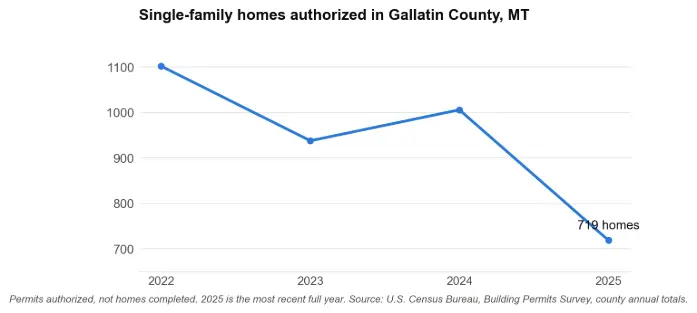
Building here has not slowed to a stop, whatever the local chatter suggests. Census Bureau permit data shows Gallatin County authorized 307 single-family homes through May 2026, carrying roughly $87 million in reported construction value. What changed is which lots are still for sale. Ten years ago a buyer could find a flat, dry parcel a short run from an existing water main, and the site budget was a driveway and a footing trench. The easy ground sold first, and it sold years ago. Today's parcels sit farther out, sit lower, or sit on soil that needs help. Every one of those conditions carries a price.
So what actually moves an estimate? Haul distance drives it more than anything else. Say imported structural fill runs $18 a yard delivered and the pit sits eleven miles out. The cost climbs while nothing visible happens on the lot. Trench depth matters just as much, since footings go below frost here and wet utilities go deeper still. OSHA requires cave-in protection on any excavation five feet deep or greater unless it is cut entirely in stable rock. That is why a deep service trench carries shoring or benching costs a shallow one never sees. Call 811 before anything breaks ground, every single time. The locate is free, lead times vary by state so confirm yours with the one-call center, and a struck gas line is an emergency rather than a budget problem.
● How many yards of fill does this lot need, and where is it coming from? A good answer names a pit, a haul distance, and a per-yard price.
● What depth are the footings going to, and what happens if we hit gravel or groundwater? Expect a frost depth in inches and a contingency, not a shrug.
● Who files the utility locate request, and how many days before the machines roll in? The contractor should own that, with a lead time in days.
● Is topsoil being stripped and stockpiled on site, or hauled off and bought back later? Paying twice for your own dirt is a real line item.
Water And Septic Set The Real Schedule
On an unsewered lot the septic design, not the excavator, governs the calendar. A soil test, a design, and a county permit review can run weeks. What usually turns up is a drainfield location that fights the driveway the owner already sketched on a napkin. Move the house or move the field, and either way the dirt work changes. Build tank access into the plan while the machine is still on site. The EPA recommends a household system be inspected at least every three years, with the tank pumped every three to five, and a lid buried under a new patio makes that job miserable. Wells carry their own risk, since a driller quotes by the foot and nobody promises where water shows up. (Not a fun conversation to have with a lender, I know.)
Sequencing is the other half of it. A pad built in October and left through a wet spring is not the same pad in April. A good site plan orders compaction testing, culvert work, and the approach off the county road so the schedule survives weather. Approach permits and stormwater rules differ between the city limits and the county, so check with the jurisdiction that holds your parcel instead of borrowing your neighbor's answer. Three days of grading in the right week save a month of waiting in the wrong one.
Price The Ground Before You Price The House
The fix is boring, and it works. Before the lot closes, walk it with someone who digs for a living and ask for the excavation Belgrade MT contractors would actually quote. Get it in writing, with fill, trenching, septic, water service, and the driveway broken out line by line. A hundred extra feet of water line will not sink a project that budgeted for a hundred extra feet of water line. What sinks projects is learning in June that the pad wants another 300 yards of structural fill after the money went into cabinets. Buy the ground with its site cost attached, and the house on paper stays the house you can afford to finish.
