
Quick Answer
A helix piercing takes 6 to 12 months to fully heal. The outer skin may look healed in 3–4 months, but the cartilage underneath continues to repair itself for much longer. Patience — and consistent aftercare — is non-negotiable.
You finally did it. You walked into a piercing studio, sat in the chair, took a deep breath — and now you have a shiny new helix piercing sitting on your upper ear. Congratulations. The hard part is over.
Except, of course, it isn't quite over yet. Because now comes the healing process, and if you're Googling "how long does a helix piercing take to heal" at 11pm while staring at your slightly tender ear — you're in good company. This is one of the most common questions people ask after getting one.
The short answer is: longer than you'd like. The honest answer is that helix piercing healing is a proper process, not a quick fix — and the more you understand it, the better your outcome will be.
This guide covers the real healing timeline, what happens at each stage, how to look after it properly, and how to spot trouble early. Everything here comes from verified clinical and professional piercing sources. No fluff, no guesswork.
What Exactly Is a Helix Piercing?
The helix is the curved outer rim of your upper ear — the bit that curls around the top. A helix piercing goes through that cartilage, usually with a flatback stud or small barbell. It's one of the most popular ear piercings in the world right now, and for good reason. It looks great. It's versatile. And it works with everything from a simple stud to a constellation of stacked gems.
There are several variations: a single helix, a double or triple helix (two or three piercings stacked along the rim), a forward helix at the front curve near your head, and a flat helix on the flatter inner section of the upper cartilage.

All of these sit in cartilage, which is the key thing to understand. Cartilage is thicker, less vascular tissue. It has far less blood supply than your earlobe, which is soft, fatty, and full of vessels. That difference in blood flow is exactly why cartilage piercings take so much longer to heal than lobe piercings.
The Real Helix Piercing Healing Timeline
Let's be direct: most guides online give you a vague "3 to 12 months" range and leave you to figure it out. Here's what's actually happening inside your ear at each stage — based on clinical information from sources including Healthline and professional piercing associations.
-
Weeks 1–2: Inflammatory Stage
Redness, warmth, mild swelling, and some throbbing are completely normal. You may also see a clear or faintly yellowish discharge — that's lymph fluid, not pus. Your body is responding to the wound. Don't panic. Don't touch it.
-
Weeks 3–12: Proliferative Stage
Swelling begins to reduce. New tissue forms around the jewelry, slowly building the piercing channel. The outside can start to look healed, but internally the cartilage is nowhere near finished. This is the stage where most people make the costly mistake of changing their jewelry early.
-
Months 3–6: Apparent Healing
The surface looks and feels fine. No more crusties, no obvious soreness day-to-day. But the cartilage channel is still soft and fragile inside. Think of it like a freshly plastered wall — it looks dry on the surface, but the structure underneath isn't solid yet.
-
Months 6–12: Full Maturation
The piercing channel firms up and stabilises. Most piercers consider full healing to happen somewhere between six and twelve months, with some people — particularly those who sleep on the piercing or use poor-quality jewelry — taking the full twelve months or beyond.
| Piercing Type | Approximate Healing Time | Notes |
|---|---|---|
| Earlobe | 4–6 months | Fastest due to high blood supply |
| Helix (single) | 6–12 months | Cartilage; requires more patience |
| Forward Helix | 6–12 months | Can be faster with diligent care |
| Double/Triple Helix | 9–12+ months | Multiple wounds; longer process |
| Industrial (2× helix) | 12+ months | Most demanding cartilage piercing |
Data sourced from Studs Aftercare Guide and MADAJ Piercings.
Why Does Cartilage Heal So Slowly?
It comes down to biology, and it's not complicated. Blood carries oxygen and nutrients — the essential ingredients your body needs to rebuild damaged tissue. Your earlobe has a generous blood supply, so it gets those ingredients quickly. Cartilage, by contrast, is avascular in many areas, meaning it has minimal direct blood flow. Fewer vessels = slower delivery = slower healing. Simple as that.
This is also why cartilage piercings are more prone to complications. When healing is slow, there are more opportunities for things to go wrong — bacteria to take hold, irritation to build up, scar tissue to form. That's not a reason to avoid a helix piercing; it's a reason to take the aftercare seriously.
"Cartilage piercings always have a significantly longer healing time than earlobe piercings — expect anywhere from six to twelve months for full recovery."
— Pierced.co, Helix Piercing Guide
How to Look After Your Helix Piercing
Good aftercare isn't complicated. It doesn't require expensive products or a complicated routine. It requires consistency. The Association of Professional Piercers (APP) recommends a simple protocol — and it's worth following closely.

The Core Routine
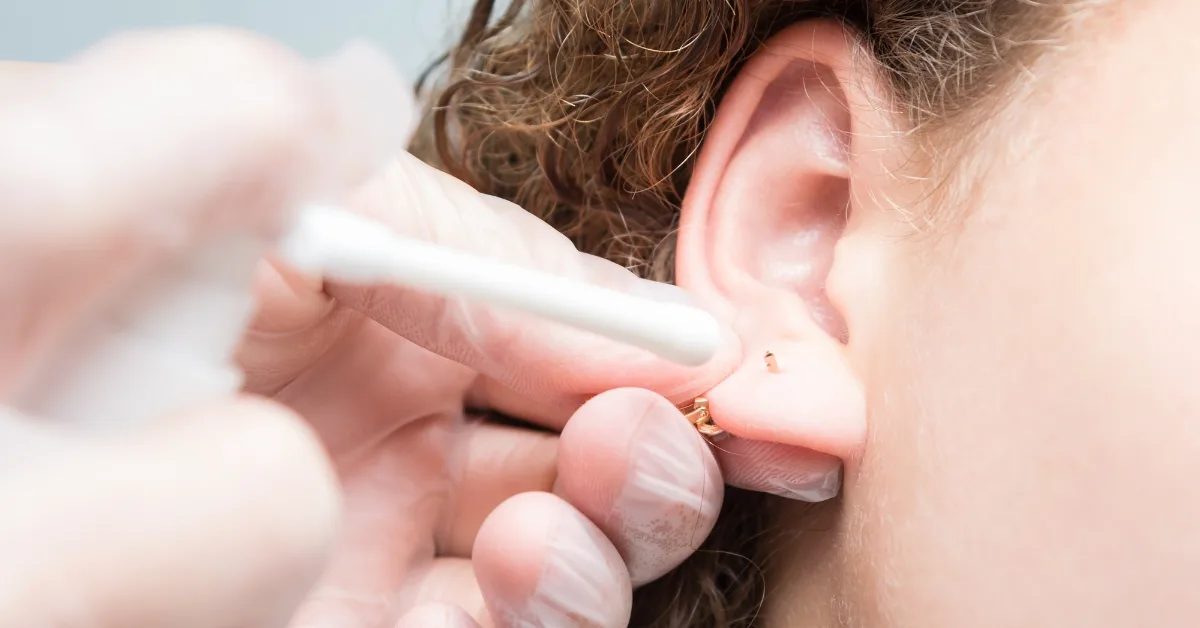
Spray sterile saline solution (0.9% sodium chloride wound wash) on the piercing twice daily — once in the morning, once at night. Let it sit for 30 seconds, then gently pat dry with a clean non-woven gauze or paper towel. In the shower, let warm water run gently over the area to rinse away any softened crust. That's genuinely all you need.
Don't use alcohol, hydrogen peroxide, or antibiotic ointments as part of your daily routine. According to Healthline, these can irritate the piercing and actually slow down healing rather than helping it.
✓ Do These
- Clean twice daily with sterile saline spray
- Wash hands before touching the area
- Sleep on the opposite side
- Use a travel pillow with a centre hole if needed
- Keep hair tied back away from the piercing
- Downsize jewelry at 6–8 weeks with your piercer
- Use implant-grade titanium or 14k/18k gold jewelry
- Stay consistent for the full healing period
✗ Avoid These
- Touching the piercing with unwashed hands
- Rotating or twisting the jewelry
- Sleeping directly on the piercing
- Submerging in pools, baths, or hot tubs
- Using alcohol, peroxide, or harsh antiseptics daily
- Changing jewelry before full healing
- Wearing over-ear headphones during early healing
- Letting hairspray or dry shampoo sit on the area
About Jewelry: Material Matters More Than You Think
The jewelry you start with is one of the most important decisions you'll make. Implant-grade titanium (ASTM F-136) is widely considered the gold standard for initial piercings. It's lightweight, hypoallergenic, and corrosion-resistant — ideal for a wound that needs space to heal without interference. Solid 14k or 18k gold is another excellent option.
Avoid surgical steel if you have any nickel sensitivity. Despite the name, surgical steel can contain trace amounts of nickel, which is a common irritant. And please, avoid cheap mystery metals from fast-fashion jewellery kiosks entirely.
As noted by professional piercers at Vital Piercing, flatback labret studs are the recommended initial jewelry for helix piercings — they sit flush against the back of the ear, don't snag, and allow room for swelling. Hoops are beautiful, but they move too much during the healing phase and significantly increase the chance of irritation bumps.
The Downsize Appointment: Why It's Not Optional
Around six to eight weeks after your piercing, swelling should have reduced enough for you to go back to your piercer for a downsize. This means swapping out the initial longer post for a shorter one that fits your actual anatomy.
This step is important. The extra length in the initial jewelry is deliberate — it accommodates swelling. But once that swelling goes down, that extra post length can move around, catch on things, and create unnecessary trauma to the piercing channel. Downsizing on schedule is one of the simplest things you can do to stay on track.
Warning Signs: When to Take It Seriously
Most discomfort in the first few weeks is completely normal. But there are signs that something more serious is going on, and knowing the difference matters.
According to the Cleveland Clinic, cartilage piercings carry a higher infection risk than lobe piercings, and cartilage infections can occasionally be serious. Minor infections may clear with careful saline cleaning. More significant ones may require a course of oral antibiotics from a doctor.
Do not remove the jewelry if you suspect infection. Removing it can cause the hole to close, trapping the infection inside. Keep it in and see a healthcare professional.
Irritation Bumps vs Keloids: Know the Difference
The most common complication people encounter is an irritation bump — a small, raised bump around the piercing. These are not keloids (true keloids are rare, genetic, and feel firm and rubbery). Irritation bumps are your body saying "something is bothering this wound." The fix is usually to eliminate the irritant: switch to better jewelry, stop sleeping on the piercing, or review your cleaning routine.
According to experts at The Minor Surgery Center, most irritation bumps resolve within a few weeks once the source of irritation is removed. Gentle saline compresses can help. Popping or squeezing them is not an option — it almost always makes things worse.
Lifestyle Factors That Affect How Fast You Heal
Two people can get the same helix piercing from the same piercer on the same day and heal at completely different speeds. That's not a design flaw — it's biology. Here are the things that genuinely affect your healing timeline.
Overall immune health. If your immune system is compromised or under stress, healing slows down. Illness, high stress levels, poor sleep, and nutritional deficiencies all play a role.
Sleep position. Sleeping on the pierced ear is one of the most consistent causes of prolonged healing. Even a few seconds of pressure each night adds up to a lot of irritation over weeks and months. A travel pillow — with your ear placed in the centre hole — is the practical solution.
Aftercare consistency. A clinical study cited by Body Candy found that people who maintained strict aftercare — avoiding pressure and using daily saline soaks — had a 34% lower risk of complications compared to those who were inconsistent. Consistency really does make a measurable difference.
Jewelry quality. Poor-quality metals irritate healing tissue and trigger reactions that prolong recovery. Implant-grade materials simply perform better in an open wound environment.
Exposure to irritants. Hairspray, dry shampoo, perfume, sweat, chlorinated pool water — all of these can interfere with the healing piercing channel. None of them are impossible to manage, but they need to be consciously avoided, especially in the early months.
When Can You Finally Change Your Jewelry?
This is arguably the most googled follow-up question after the initial healing one. The answer is: wait longer than you think you need to.
Most professional piercers advise waiting at least six months before making any jewelry change, and many recommend waiting the full twelve months. The reason is that the outside of the piercing can look and feel completely healed while the interior channel is still fragile and rebuilding.
If you change jewelry too early, you risk damaging that internal tissue, introducing bacteria, and potentially setting your healing back by months. It's simply not worth the impatience.
When you do change your jewelry, do it with clean hands or, ideally, have your piercer do it for you at a studio. This is particularly helpful the first time, as they can confirm the piercing has truly healed before attempting a change.
A Word on Piercing Guns (Please Read This)
If you're considering getting a helix piercing or advising someone who is — avoid piercing guns for cartilage. Full stop.
Piercing guns work by forcing blunt-ended jewelry through tissue with a spring-loaded mechanism. For the soft tissue of an earlobe, this is already not ideal. For cartilage, it can cause shattering of the cartilage structure, significant tissue damage, and a much higher risk of permanent scarring and complications.
Professional piercers use sharp, sterile needles. The needle creates a clean, precise channel. Healing is faster, cleaner, and with far fewer complications. The cost of going to a reputable professional piercer is worth every penny — in the UK, expect to pay around £30–£50 for a well-done helix piercing with quality initial jewelry.
Frequently Asked Questions
Is it normal for a helix piercing to still be sore after 3 months?
Yes, it can be. Cartilage takes time, and occasional soreness — particularly after sleeping on it or accidentally catching it — is common well into the healing period. Persistent, worsening pain is different and warrants attention.
What are those crusty bits around my piercing?
That's dried lymph fluid — a normal part of the healing process. Your body pushes it out as it repairs the piercing channel. Let your saline spray soften it and rinse it away gently. Never pick at it with your fingers.
Can I wear headphones with a helix piercing?
In-ear earbuds are generally fine. Over-ear headphones that press directly on the helix piercing site should be avoided during the healing period, as the pressure can cause irritation and slow recovery.
Can I go swimming with a new helix piercing?
It's advised to avoid pools, hot tubs, and open water for at least the first four to six weeks. Chlorine and bacteria in water can disrupt the healing wound and raise infection risk significantly.
My helix looks healed at 4 months. Can I change the jewelry?
It's tempting, but the inside is very likely still healing. Most piercers recommend waiting the full six to twelve months. Changing too early risks undoing months of progress. Patience is the smartest play here.
Does a helix piercing hurt?
There's a quick, sharp sensation during the piercing itself — usually rated as moderate on the pain scale, less than a rook or industrial but more than an earlobe. The days afterward can involve some tenderness, especially when accidentally knocked. Most people find it very manageable.
The Bottom Line
A helix piercing takes six to twelve months to fully heal — and that's genuinely fine. It's a small piercing that you're going to love for years. A few months of patience is a reasonable trade.
The things that consistently produce great outcomes are simple: go to a professional piercer who uses a needle, choose implant-grade jewelry, clean twice daily with sterile saline, don't sleep on it, and resist the urge to change the jewelry before it's ready. Follow those rules and your helix piercing will reward you.
If you ever have genuine concerns about infection or unusual symptoms, see a doctor or return to your piercer — both are reasonable first calls and far better than guessing.
For more lifestyle and wellness content, browse the Health and Fashion sections on BigWriteHook.
Sources & References
- Cleveland Clinic. (2025). Infected Ear Piercing: Symptoms, Treatment & Prevention. my.clevelandclinic.org
- Healthline. (2025). Ear Piercing Infection: Causes, Symptoms, Treatment. healthline.com
- Association of Professional Piercers. (2020). Suggested Aftercare Guidelines for Body Piercings. safepiercing.org
- Urban Body Jewelry. Helix Piercing: Information & Aftercare Guide. urbanbodyjewelry.com
- Body Candy. (2025). The Ultimate Guide to Helix Piercing Healing. bodycandy.com
- MADAJ Piercings. Ear Piercings Healing Time Full Guide. madajpiercings.com
- Vital Piercing. (2026). Helix Piercing: The Complete Guide. vitalpiercing.com
- The Minor Surgery Center. (2025). How to Heal Helix Piercing Bump. theminorsurgerycenter.com
- Studs. The Complete STUDS Guide to Ear Piercing Aftercare. studs.com
- Envy Body Piercing. (2024). Ultimate Guide to Helix Piercing. envybodypiercing.com
Quick Answer
A helix piercing takes 6 to 12 months to fully heal. The outer skin may look healed in 3–4 months, but the cartilage underneath continues to repair itself for much longer. Patience — and consistent aftercare — is non-negotiable.
You finally did it. You walked into a piercing studio, sat in the chair, took a deep breath — and now you have a shiny new helix piercing sitting on your upper ear. Congratulations. The hard part is over.
Except, of course, it isn't quite over yet. Because now comes the healing process, and if you're Googling "how long does a helix piercing take to heal" at 11pm while staring at your slightly tender ear — you're in good company. This is one of the most common questions people ask after getting one.
The short answer is: longer than you'd like. The honest answer is that helix piercing healing is a proper process, not a quick fix — and the more you understand it, the better your outcome will be.
This guide covers the real healing timeline, what happens at each stage, how to look after it properly, and how to spot trouble early. Everything here comes from verified clinical and professional piercing sources. No fluff, no guesswork.
What Exactly Is a Helix Piercing?
The helix is the curved outer rim of your upper ear — the bit that curls around the top. A helix piercing goes through that cartilage, usually with a flatback stud or small barbell. It's one of the most popular ear piercings in the world right now, and for good reason. It looks great. It's versatile. And it works with everything from a simple stud to a constellation of stacked gems.
There are several variations: a single helix, a double or triple helix (two or three piercings stacked along the rim), a forward helix at the front curve near your head, and a flat helix on the flatter inner section of the upper cartilage.
All of these sit in cartilage, which is the key thing to understand. Cartilage is thicker, less vascular tissue. It has far less blood supply than your earlobe, which is soft, fatty, and full of vessels. That difference in blood flow is exactly why cartilage piercings take so much longer to heal than lobe piercings.
The Real Helix Piercing Healing Timeline
Let's be direct: most guides online give you a vague "3 to 12 months" range and leave you to figure it out. Here's what's actually happening inside your ear at each stage — based on clinical information from sources including Healthline and professional piercing associations.
-
Weeks 1–2: Inflammatory Stage
Redness, warmth, mild swelling, and some throbbing are completely normal. You may also see a clear or faintly yellowish discharge — that's lymph fluid, not pus. Your body is responding to the wound. Don't panic. Don't touch it.
-
Weeks 3–12: Proliferative Stage
Swelling begins to reduce. New tissue forms around the jewelry, slowly building the piercing channel. The outside can start to look healed, but internally the cartilage is nowhere near finished. This is the stage where most people make the costly mistake of changing their jewelry early.
-
Months 3–6: Apparent Healing
The surface looks and feels fine. No more crusties, no obvious soreness day-to-day. But the cartilage channel is still soft and fragile inside. Think of it like a freshly plastered wall — it looks dry on the surface, but the structure underneath isn't solid yet.
-
Months 6–12: Full Maturation
The piercing channel firms up and stabilises. Most piercers consider full healing to happen somewhere between six and twelve months, with some people — particularly those who sleep on the piercing or use poor-quality jewelry — taking the full twelve months or beyond.
| Piercing Type | Approximate Healing Time | Notes |
|---|---|---|
| Earlobe | 4–6 months | Fastest due to high blood supply |
| Helix (single) | 6–12 months | Cartilage; requires more patience |
| Forward Helix | 6–12 months | Can be faster with diligent care |
| Double/Triple Helix | 9–12+ months | Multiple wounds; longer process |
| Industrial (2× helix) | 12+ months | Most demanding cartilage piercing |
Data sourced from Studs Aftercare Guide and MADAJ Piercings.
Why Does Cartilage Heal So Slowly?
It comes down to biology, and it's not complicated. Blood carries oxygen and nutrients — the essential ingredients your body needs to rebuild damaged tissue. Your earlobe has a generous blood supply, so it gets those ingredients quickly. Cartilage, by contrast, is avascular in many areas, meaning it has minimal direct blood flow. Fewer vessels = slower delivery = slower healing. Simple as that.
This is also why cartilage piercings are more prone to complications. When healing is slow, there are more opportunities for things to go wrong — bacteria to take hold, irritation to build up, scar tissue to form. That's not a reason to avoid a helix piercing; it's a reason to take the aftercare seriously.
"Cartilage piercings always have a significantly longer healing time than earlobe piercings — expect anywhere from six to twelve months for full recovery."
— Pierced.co, Helix Piercing Guide
How to Look After Your Helix Piercing
Good aftercare isn't complicated. It doesn't require expensive products or a complicated routine. It requires consistency. The Association of Professional Piercers (APP) recommends a simple protocol — and it's worth following closely.
The Core Routine
Spray sterile saline solution (0.9% sodium chloride wound wash) on the piercing twice daily — once in the morning, once at night. Let it sit for 30 seconds, then gently pat dry with a clean non-woven gauze or paper towel. In the shower, let warm water run gently over the area to rinse away any softened crust. That's genuinely all you need.
Don't use alcohol, hydrogen peroxide, or antibiotic ointments as part of your daily routine. According to Healthline, these can irritate the piercing and actually slow down healing rather than helping it.
✓ Do These
- Clean twice daily with sterile saline spray
- Wash hands before touching the area
- Sleep on the opposite side
- Use a travel pillow with a centre hole if needed
- Keep hair tied back away from the piercing
- Downsize jewelry at 6–8 weeks with your piercer
- Use implant-grade titanium or 14k/18k gold jewelry
- Stay consistent for the full healing period
✗ Avoid These
- Touching the piercing with unwashed hands
- Rotating or twisting the jewelry
- Sleeping directly on the piercing
- Submerging in pools, baths, or hot tubs
- Using alcohol, peroxide, or harsh antiseptics daily
- Changing jewelry before full healing
- Wearing over-ear headphones during early healing
- Letting hairspray or dry shampoo sit on the area
About Jewelry: Material Matters More Than You Think
The jewelry you start with is one of the most important decisions you'll make. Implant-grade titanium (ASTM F-136) is widely considered the gold standard for initial piercings. It's lightweight, hypoallergenic, and corrosion-resistant — ideal for a wound that needs space to heal without interference. Solid 14k or 18k gold is another excellent option.
Avoid surgical steel if you have any nickel sensitivity. Despite the name, surgical steel can contain trace amounts of nickel, which is a common irritant. And please, avoid cheap mystery metals from fast-fashion jewellery kiosks entirely.
As noted by professional piercers at Vital Piercing, flatback labret studs are the recommended initial jewelry for helix piercings — they sit flush against the back of the ear, don't snag, and allow room for swelling. Hoops are beautiful, but they move too much during the healing phase and significantly increase the chance of irritation bumps.
The Downsize Appointment: Why It's Not Optional
Around six to eight weeks after your piercing, swelling should have reduced enough for you to go back to your piercer for a downsize. This means swapping out the initial longer post for a shorter one that fits your actual anatomy.
This step is important. The extra length in the initial jewelry is deliberate — it accommodates swelling. But once that swelling goes down, that extra post length can move around, catch on things, and create unnecessary trauma to the piercing channel. Downsizing on schedule is one of the simplest things you can do to stay on track.
Warning Signs: When to Take It Seriously
Most discomfort in the first few weeks is completely normal. But there are signs that something more serious is going on, and knowing the difference matters.
According to the Cleveland Clinic, cartilage piercings carry a higher infection risk than lobe piercings, and cartilage infections can occasionally be serious. Minor infections may clear with careful saline cleaning. More significant ones may require a course of oral antibiotics from a doctor.
Do not remove the jewelry if you suspect infection. Removing it can cause the hole to close, trapping the infection inside. Keep it in and see a healthcare professional.
Irritation Bumps vs Keloids: Know the Difference
The most common complication people encounter is an irritation bump — a small, raised bump around the piercing. These are not keloids (true keloids are rare, genetic, and feel firm and rubbery). Irritation bumps are your body saying "something is bothering this wound." The fix is usually to eliminate the irritant: switch to better jewelry, stop sleeping on the piercing, or review your cleaning routine.
According to experts at The Minor Surgery Center, most irritation bumps resolve within a few weeks once the source of irritation is removed. Gentle saline compresses can help. Popping or squeezing them is not an option — it almost always makes things worse.
Lifestyle Factors That Affect How Fast You Heal
Two people can get the same helix piercing from the same piercer on the same day and heal at completely different speeds. That's not a design flaw — it's biology. Here are the things that genuinely affect your healing timeline.
Overall immune health. If your immune system is compromised or under stress, healing slows down. Illness, high stress levels, poor sleep, and nutritional deficiencies all play a role.
Sleep position. Sleeping on the pierced ear is one of the most consistent causes of prolonged healing. Even a few seconds of pressure each night adds up to a lot of irritation over weeks and months. A travel pillow — with your ear placed in the centre hole — is the practical solution.
Aftercare consistency. A clinical study cited by Body Candy found that people who maintained strict aftercare — avoiding pressure and using daily saline soaks — had a 34% lower risk of complications compared to those who were inconsistent. Consistency really does make a measurable difference.
Jewelry quality. Poor-quality metals irritate healing tissue and trigger reactions that prolong recovery. Implant-grade materials simply perform better in an open wound environment.
Exposure to irritants. Hairspray, dry shampoo, perfume, sweat, chlorinated pool water — all of these can interfere with the healing piercing channel. None of them are impossible to manage, but they need to be consciously avoided, especially in the early months.
When Can You Finally Change Your Jewelry?
This is arguably the most googled follow-up question after the initial healing one. The answer is: wait longer than you think you need to.
Most professional piercers advise waiting at least six months before making any jewelry change, and many recommend waiting the full twelve months. The reason is that the outside of the piercing can look and feel completely healed while the interior channel is still fragile and rebuilding.
If you change jewelry too early, you risk damaging that internal tissue, introducing bacteria, and potentially setting your healing back by months. It's simply not worth the impatience.
When you do change your jewelry, do it with clean hands or, ideally, have your piercer do it for you at a studio. This is particularly helpful the first time, as they can confirm the piercing has truly healed before attempting a change.
A Word on Piercing Guns (Please Read This)
If you're considering getting a helix piercing or advising someone who is — avoid piercing guns for cartilage. Full stop.
Piercing guns work by forcing blunt-ended jewelry through tissue with a spring-loaded mechanism. For the soft tissue of an earlobe, this is already not ideal. For cartilage, it can cause shattering of the cartilage structure, significant tissue damage, and a much higher risk of permanent scarring and complications.
Professional piercers use sharp, sterile needles. The needle creates a clean, precise channel. Healing is faster, cleaner, and with far fewer complications. The cost of going to a reputable professional piercer is worth every penny — in the UK, expect to pay around £30–£50 for a well-done helix piercing with quality initial jewelry.
Frequently Asked Questions
Is it normal for a helix piercing to still be sore after 3 months?
Yes, it can be. Cartilage takes time, and occasional soreness — particularly after sleeping on it or accidentally catching it — is common well into the healing period. Persistent, worsening pain is different and warrants attention.
What are those crusty bits around my piercing?
That's dried lymph fluid — a normal part of the healing process. Your body pushes it out as it repairs the piercing channel. Let your saline spray soften it and rinse it away gently. Never pick at it with your fingers.
Can I wear headphones with a helix piercing?
In-ear earbuds are generally fine. Over-ear headphones that press directly on the helix piercing site should be avoided during the healing period, as the pressure can cause irritation and slow recovery.
Can I go swimming with a new helix piercing?
It's advised to avoid pools, hot tubs, and open water for at least the first four to six weeks. Chlorine and bacteria in water can disrupt the healing wound and raise infection risk significantly.
My helix looks healed at 4 months. Can I change the jewelry?
It's tempting, but the inside is very likely still healing. Most piercers recommend waiting the full six to twelve months. Changing too early risks undoing months of progress. Patience is the smartest play here.
Does a helix piercing hurt?
There's a quick, sharp sensation during the piercing itself — usually rated as moderate on the pain scale, less than a rook or industrial but more than an earlobe. The days afterward can involve some tenderness, especially when accidentally knocked. Most people find it very manageable.
The Bottom Line
A helix piercing takes six to twelve months to fully heal — and that's genuinely fine. It's a small piercing that you're going to love for years. A few months of patience is a reasonable trade.
The things that consistently produce great outcomes are simple: go to a professional piercer who uses a needle, choose implant-grade jewelry, clean twice daily with sterile saline, don't sleep on it, and resist the urge to change the jewelry before it's ready. Follow those rules and your helix piercing will reward you.
If you ever have genuine concerns about infection or unusual symptoms, see a doctor or return to your piercer — both are reasonable first calls and far better than guessing.
For more lifestyle and wellness content, browse the Health and Fashion sections on BigWriteHook.
Sources & References
- Cleveland Clinic. (2025). Infected Ear Piercing: Symptoms, Treatment & Prevention. my.clevelandclinic.org
- Healthline. (2025). Ear Piercing Infection: Causes, Symptoms, Treatment. healthline.com
- Association of Professional Piercers. (2020). Suggested Aftercare Guidelines for Body Piercings. safepiercing.org
- Urban Body Jewelry. Helix Piercing: Information & Aftercare Guide. urbanbodyjewelry.com
- Body Candy. (2025). The Ultimate Guide to Helix Piercing Healing. bodycandy.com
- MADAJ Piercings. Ear Piercings Healing Time Full Guide. madajpiercings.com
- Vital Piercing. (2026). Helix Piercing: The Complete Guide. vitalpiercing.com
- The Minor Surgery Center. (2025). How to Heal Helix Piercing Bump. theminorsurgerycenter.com
- Studs. The Complete STUDS Guide to Ear Piercing Aftercare. studs.com
- Envy Body Piercing. (2024). Ultimate Guide to Helix Piercing. envybodypiercing.com
