
A plain-English, fact-checked guide to black soled shoes: what the term actually means, and why schools, employers, and black-tie dress codes each define it a little differently.
A "black soled shoe" is a shoe whose entire outsole is black, not just the upper. This single detail decides school uniform checks, black-tie invitations, hospital dress codes, and even who gets onto a badminton court.
Here's the twist: "black sole" and "non-marking sole" are two separate rules. Confuse them, and you'll end up back at the shoe shop, or off the court entirely. This guide untangles both, using real policies and cited sources rather than guesswork.
What "Black Soled Shoes" Actually Means
Every shoe has layers. The outsole is the part that touches the ground. The midsole sits above it for cushioning. On quality dress shoes, a welt strip joins the upper to the sole.
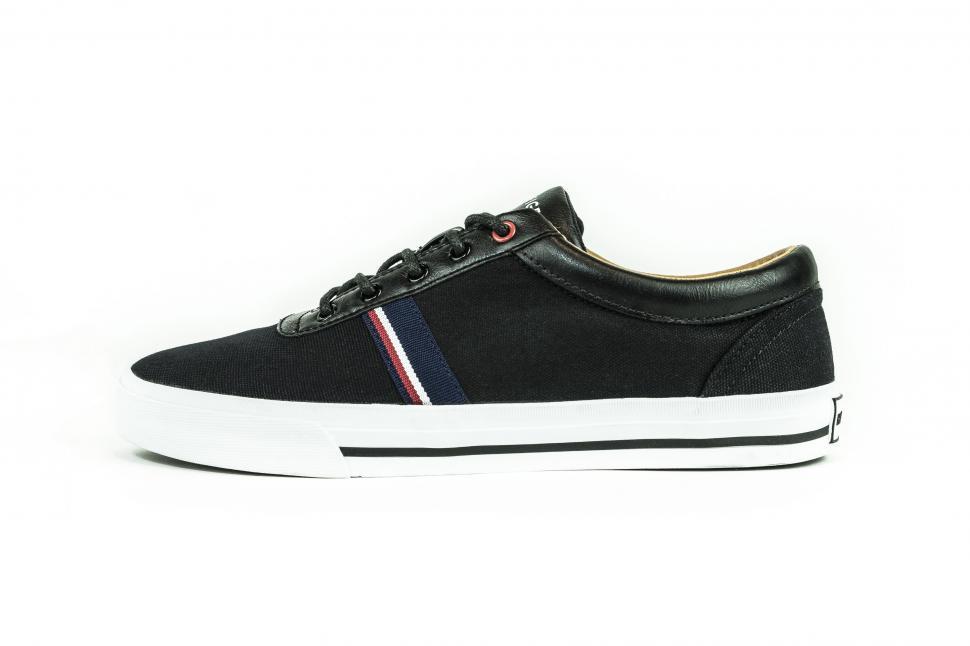
"Black soled" refers only to the outsole colour. A shoe can have a fully black leather upper and still fail a black-sole rule if its outsole is white rubber.
- Outsole: the ground-contact layer, usually rubber, leather, or a rubber-and-leather hybrid.
- Midsole: the cushioning layer between the outsole and the foot.
- Welt: the stitched strip joining the upper to the sole on Goodyear-welted shoes.
Two Different Rules: Black Sole vs Non-Marking Sole
These two rules sound similar but control different things. One is about colour. The other is about the rubber compound and whether it scuffs a floor.
| Rule | What It Controls | Typical Setting | Sole Colour Requirement |
|---|---|---|---|
| Black sole rule | Outsole colour | Schools, offices, black-tie events | Fully black, no white trim or logos |
| Non-marking rule | Rubber compound and residue | Gyms, sports halls, dance studios, boats | Often light gum, clear, or pale — usually not black |
These rules can even contradict each other. A shoe that passes a school's black-sole check can still get banned from an indoor court, because standard black rubber tends to leave scuff marks. According to footwear guide Love At First Fit, a non-marking shoe typically "has a soft sole and will not have a black sole."
Why Schools Demand a "Plain Black Sole"
UK schools rarely leave this to interpretation. Sale High School's published 2025-26 uniform policy states that shoes must have "black leather, black laces, and a plain black sole." Other schools word it differently, but the intent stays the same.
Trainers that look sporty usually fail, even when every panel is black. As footwear guide My School Agent explains, staff judge by appearance first and label second.
- White, cream, or grey soles, even as a thin strip
- Coloured stitching or branded logos on the sole
- Bold, chunky athletic tread patterns
- Canvas, mesh, or suede uppers instead of leather or leather-look
- Reflective strips or air-bubble detailing
Black Soles in Formal Menswear
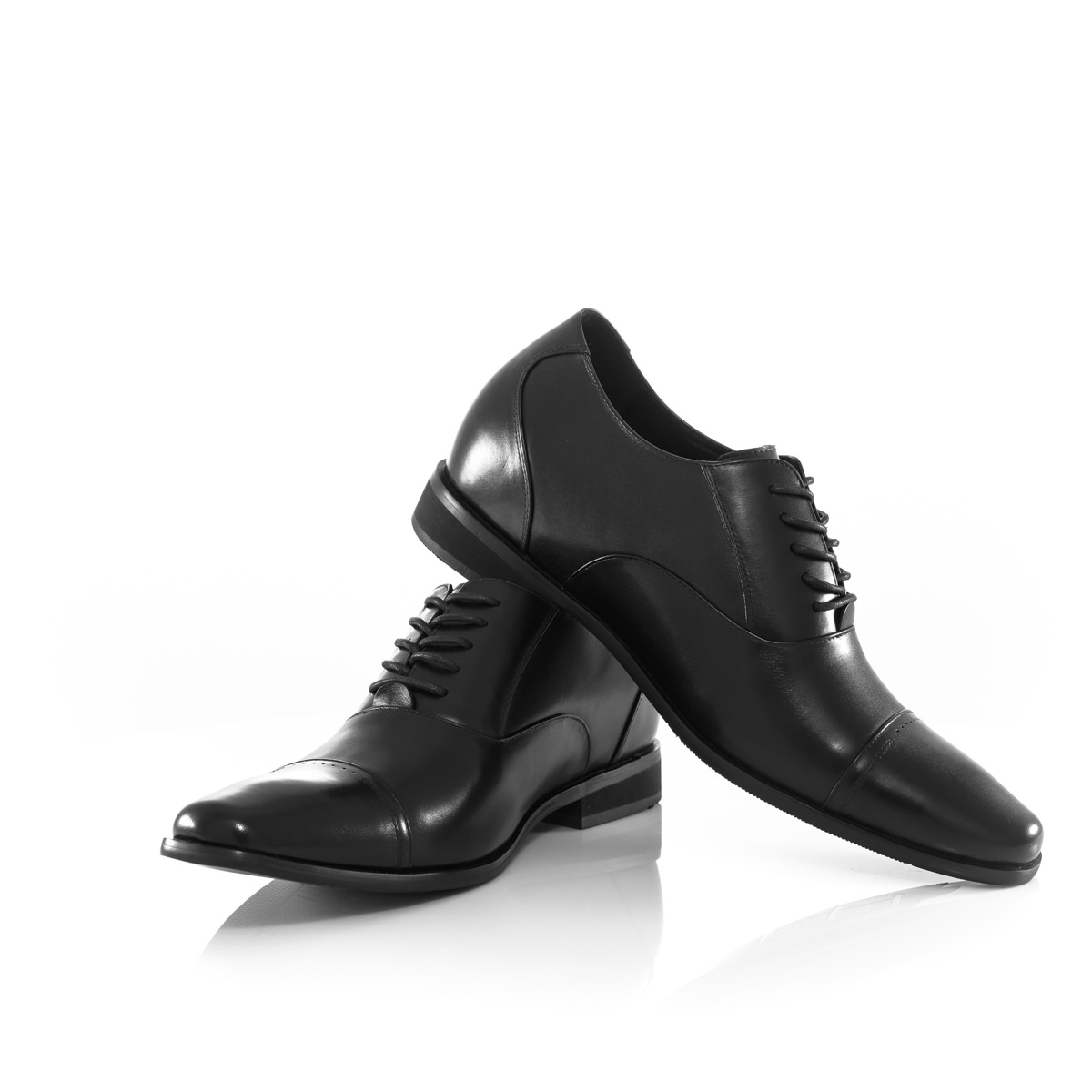
For black-tie dress codes, the sole matters as much as the upper. A visible pale sole under a dinner trouser reads as a mistake, not a style choice.
Footwear brand John White notes that contrasting soles break the clean line a formal trouser needs, and that a slim, dark sole is treated as non-negotiable at black tie.
- Patent leather is the most formal, competition-grade choice
- Polished plain calf leather is the practical everyday standard
- The sole should stay slim, dark, and free of visible tread
- Brogue perforations and suede are considered too casual for black tie
Black Soles at Work: What OSHA Actually Requires
Here's the part many workplace guides get wrong. US federal rule 29 CFR 1910.136 requires employers to assess hazards and provide protective footwear. It does not specify sole colour anywhere in the text.
Compliant footwear is tested under ASTM F2412 and F2413, covering impact, compression, and slip resistance. Many employers simply choose black soles for a tidy, uniform look, not because the regulation demands that colour.
| Hazard Type | Governing Standard | What It Tests |
|---|---|---|
| Impact / compression | ASTM F2413 | Toe protection against falling or rolling objects |
| General foot hazards | 29 CFR 1910.136 | Employer-led workplace hazard assessment |
| Slip resistance | ASTM F3445 | Traction on wet or oily surfaces (not yet formally referenced by OSHA) |
Leather Sole vs Rubber Sole: Which Black Do You Need?
Once colour is settled, material decides comfort and grip. Leather and rubber behave very differently underfoot.
| Feature | Leather Sole | Rubber Sole |
|---|---|---|
| Traction on wet floors | Lower; can feel slick when new | Higher; better grip in rain |
| Outdoor durability | Wears faster on hard pavement | More resistant to abrasion |
| Formality | Traditional standard for black tie | Reads slightly more casual, unless hybrid |
| Maintenance | Needs conditioning and periodic resoling | Lower maintenance overall |
According to John White's sole comparison guide, rubber grips substantially better on wet or uneven ground, while leather remains the standard for formal dress. Some brands now combine both, stitching a thin rubber layer onto a black leather sole for extra grip without losing the formal silhouette.
Non-Marking Sports Shoes Aren't Always Black
Gyms and dance studios protect their floors differently than schools protect their dress code. A hard black rubber outsole, the very thing a school wants, can scuff a polished court.
Comfort-focused, wellness-driven footwear choices have become part of a broader shift in how people dress for daily movement, a trend covered in our guide to modern aesthetics and wellness outfit fashion. Non-marking soles fit squarely into that shift, prioritising function over strict colour rules.
Healthcare Settings: Slip Resistance Over Colour
Hospitals rarely mandate a specific sole colour. What they consistently require is slip resistance and an easy-to-clean surface.
According to NurseJournal.org, nursing footwear should be non-permeable, low-heeled, and non-slip, since spilled fluids raise both fall risk and infection risk. Exact colour rules vary by employer.
Quick Checklist: Is This Sole "School Black" or "Non-Marking"?
- Flip the shoe over. Is the entire outsole one solid black, with no coloured trim?
- Press a fingernail into the sole. A quick spring-back usually signals a soft, non-marking compound.
- Rub the sole across clean white paper. Any grey or black smudge means it likely marks floors.
- Check the tongue label for a "non-marking" tag or an ASTM F2413 marking.
- For black tie, confirm the sole stays slim, dark, and free of visible tread.
Frequently Asked Questions
Do all schools require a fully black sole?
No single national rule exists. Most UK secondary schools publish their own policy, and many specify a plain black sole alongside black leather and laces, as shown in published documents like Sale High School's uniform policy.
Are black soles required by OSHA?
No. OSHA's 29 CFR 1910.136 requires slip-resistant, protective footwear tested under ASTM F2412 and F2413, but it never specifies sole colour. Employers often pick black for a uniform look, not for legal compliance.
What's the difference between a black sole and a non-marking sole?
A black sole rule controls colour only. A non-marking rule controls the rubber compound so it won't scuff indoor floors, and many non-marking soles are light-coloured rather than black.
Can rubber soles be as formal as leather soles?
Rubber soles grip better and last longer outdoors, but leather remains the traditional standard for black-tie and formal business dress, according to footwear guides such as John White's black-tie shoe guide.
The Bottom Line
"Black soled shoes" means different things in different rooms. A school wants uniform colour. A gym wants floor protection. A hospital wants slip resistance. A black-tie event wants an unbroken formal line.
Before buying, check the actual written policy for your school, employer, or venue rather than assuming one rule covers every setting. For more style guidance, browse the full Fashion section on Big Write Hook.
Sources & Further Reading
- Sale High School — School Uniform Policy 2025-26
- Occupational Safety and Health Administration — 29 CFR 1910.136, Foot Protection
- John White Shoes — Black Tie Shoe Guide
- John White Shoes — Leather Soles vs Rubber Soles
- Love At First Fit — Non-Marking Shoes Explained
- NurseJournal.org — A Guide to Nursing Dress Codes
- My School Agent — School Shoes Guide
- HexArmor — OSHA and ASTM Footwear Standards
A plain-English, fact-checked guide to black soled shoes: what the term actually means, and why schools, employers, and black-tie dress codes each define it a little differently.
A "black soled shoe" is a shoe whose entire outsole is black, not just the upper. This single detail decides school uniform checks, black-tie invitations, hospital dress codes, and even who gets onto a badminton court.
Here's the twist: "black sole" and "non-marking sole" are two separate rules. Confuse them, and you'll end up back at the shoe shop, or off the court entirely. This guide untangles both, using real policies and cited sources rather than guesswork.
What "Black Soled Shoes" Actually Means
Every shoe has layers. The outsole is the part that touches the ground. The midsole sits above it for cushioning. On quality dress shoes, a welt strip joins the upper to the sole.
"Black soled" refers only to the outsole colour. A shoe can have a fully black leather upper and still fail a black-sole rule if its outsole is white rubber.
- Outsole: the ground-contact layer, usually rubber, leather, or a rubber-and-leather hybrid.
- Midsole: the cushioning layer between the outsole and the foot.
- Welt: the stitched strip joining the upper to the sole on Goodyear-welted shoes.
Two Different Rules: Black Sole vs Non-Marking Sole
These two rules sound similar but control different things. One is about colour. The other is about the rubber compound and whether it scuffs a floor.
| Rule | What It Controls | Typical Setting | Sole Colour Requirement |
|---|---|---|---|
| Black sole rule | Outsole colour | Schools, offices, black-tie events | Fully black, no white trim or logos |
| Non-marking rule | Rubber compound and residue | Gyms, sports halls, dance studios, boats | Often light gum, clear, or pale — usually not black |
These rules can even contradict each other. A shoe that passes a school's black-sole check can still get banned from an indoor court, because standard black rubber tends to leave scuff marks. According to footwear guide Love At First Fit, a non-marking shoe typically "has a soft sole and will not have a black sole."
Why Schools Demand a "Plain Black Sole"
UK schools rarely leave this to interpretation. Sale High School's published 2025-26 uniform policy states that shoes must have "black leather, black laces, and a plain black sole." Other schools word it differently, but the intent stays the same.
Trainers that look sporty usually fail, even when every panel is black. As footwear guide My School Agent explains, staff judge by appearance first and label second.
- White, cream, or grey soles, even as a thin strip
- Coloured stitching or branded logos on the sole
- Bold, chunky athletic tread patterns
- Canvas, mesh, or suede uppers instead of leather or leather-look
- Reflective strips or air-bubble detailing
Black Soles in Formal Menswear
For black-tie dress codes, the sole matters as much as the upper. A visible pale sole under a dinner trouser reads as a mistake, not a style choice.
Footwear brand John White notes that contrasting soles break the clean line a formal trouser needs, and that a slim, dark sole is treated as non-negotiable at black tie.
- Patent leather is the most formal, competition-grade choice
- Polished plain calf leather is the practical everyday standard
- The sole should stay slim, dark, and free of visible tread
- Brogue perforations and suede are considered too casual for black tie
Black Soles at Work: What OSHA Actually Requires
Here's the part many workplace guides get wrong. US federal rule 29 CFR 1910.136 requires employers to assess hazards and provide protective footwear. It does not specify sole colour anywhere in the text.
Compliant footwear is tested under ASTM F2412 and F2413, covering impact, compression, and slip resistance. Many employers simply choose black soles for a tidy, uniform look, not because the regulation demands that colour.
| Hazard Type | Governing Standard | What It Tests |
|---|---|---|
| Impact / compression | ASTM F2413 | Toe protection against falling or rolling objects |
| General foot hazards | 29 CFR 1910.136 | Employer-led workplace hazard assessment |
| Slip resistance | ASTM F3445 | Traction on wet or oily surfaces (not yet formally referenced by OSHA) |
Leather Sole vs Rubber Sole: Which Black Do You Need?
Once colour is settled, material decides comfort and grip. Leather and rubber behave very differently underfoot.
| Feature | Leather Sole | Rubber Sole |
|---|---|---|
| Traction on wet floors | Lower; can feel slick when new | Higher; better grip in rain |
| Outdoor durability | Wears faster on hard pavement | More resistant to abrasion |
| Formality | Traditional standard for black tie | Reads slightly more casual, unless hybrid |
| Maintenance | Needs conditioning and periodic resoling | Lower maintenance overall |
According to John White's sole comparison guide, rubber grips substantially better on wet or uneven ground, while leather remains the standard for formal dress. Some brands now combine both, stitching a thin rubber layer onto a black leather sole for extra grip without losing the formal silhouette.
Non-Marking Sports Shoes Aren't Always Black
Gyms and dance studios protect their floors differently than schools protect their dress code. A hard black rubber outsole, the very thing a school wants, can scuff a polished court.
Comfort-focused, wellness-driven footwear choices have become part of a broader shift in how people dress for daily movement, a trend covered in our guide to modern aesthetics and wellness outfit fashion. Non-marking soles fit squarely into that shift, prioritising function over strict colour rules.
Healthcare Settings: Slip Resistance Over Colour
Hospitals rarely mandate a specific sole colour. What they consistently require is slip resistance and an easy-to-clean surface.
According to NurseJournal.org, nursing footwear should be non-permeable, low-heeled, and non-slip, since spilled fluids raise both fall risk and infection risk. Exact colour rules vary by employer.
Quick Checklist: Is This Sole "School Black" or "Non-Marking"?
- Flip the shoe over. Is the entire outsole one solid black, with no coloured trim?
- Press a fingernail into the sole. A quick spring-back usually signals a soft, non-marking compound.
- Rub the sole across clean white paper. Any grey or black smudge means it likely marks floors.
- Check the tongue label for a "non-marking" tag or an ASTM F2413 marking.
- For black tie, confirm the sole stays slim, dark, and free of visible tread.
Frequently Asked Questions
Do all schools require a fully black sole?
No single national rule exists. Most UK secondary schools publish their own policy, and many specify a plain black sole alongside black leather and laces, as shown in published documents like Sale High School's uniform policy.
Are black soles required by OSHA?
No. OSHA's 29 CFR 1910.136 requires slip-resistant, protective footwear tested under ASTM F2412 and F2413, but it never specifies sole colour. Employers often pick black for a uniform look, not for legal compliance.
What's the difference between a black sole and a non-marking sole?
A black sole rule controls colour only. A non-marking rule controls the rubber compound so it won't scuff indoor floors, and many non-marking soles are light-coloured rather than black.
Can rubber soles be as formal as leather soles?
Rubber soles grip better and last longer outdoors, but leather remains the traditional standard for black-tie and formal business dress, according to footwear guides such as John White's black-tie shoe guide.
The Bottom Line
"Black soled shoes" means different things in different rooms. A school wants uniform colour. A gym wants floor protection. A hospital wants slip resistance. A black-tie event wants an unbroken formal line.
Before buying, check the actual written policy for your school, employer, or venue rather than assuming one rule covers every setting. For more style guidance, browse the full Fashion section on Big Write Hook.
Sources & Further Reading
- Sale High School — School Uniform Policy 2025-26
- Occupational Safety and Health Administration — 29 CFR 1910.136, Foot Protection
- John White Shoes — Black Tie Shoe Guide
- John White Shoes — Leather Soles vs Rubber Soles
- Love At First Fit — Non-Marking Shoes Explained
- NurseJournal.org — A Guide to Nursing Dress Codes
- My School Agent — School Shoes Guide
- HexArmor — OSHA and ASTM Footwear Standards
