
If you've ever sat in front of a barrel blank order form and stared at "MTU" and "M24" like they're the same thing spelled differently — you're not alone. Honestly, they do look suspiciously similar on paper. Same general size family. Both loved by precision shooters. Both showing up in the top 30% of competitive barrel choices according to data collected by Precision Rifle Blog.
But they're not the same. And picking the wrong one for your build won't end the world, but it will leave you either lugging around extra weight you didn't need, or wishing you had a stiffer tube when your groups start walking during a long string of fire.
So let's clear it up properly.
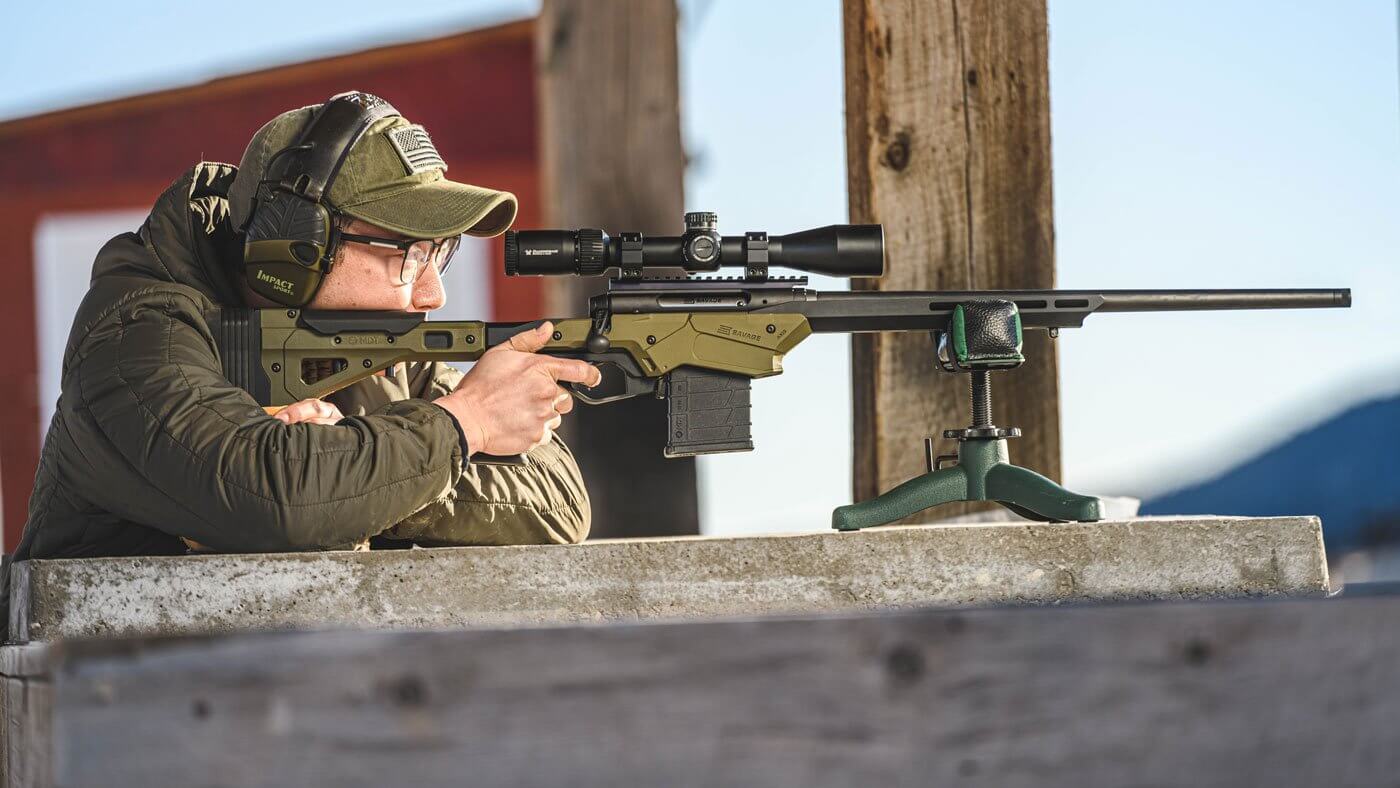
A precision bolt-action rifle — barrel contour choice shapes both accuracy potential and real-world usability.
What Is a Barrel Contour, Anyway?
A barrel contour is simply the shape of the outside of the barrel — how thick it is at the breech end, how it tapers (or doesn't) toward the muzzle, and how long that shank section stays at full diameter before dropping off.
This matters for three practical reasons: weight, stiffness, and heat management. A fatter barrel resists flexing during the shot cycle. It also holds more heat before things start getting spicy. But it also adds real weight — and on a long day at a field match or a mountain hunt, weight stops being a number on a spec sheet and starts being something you feel in your shoulders.
The MTU and M24 both belong to what barrel makers call the "varmint" family of profiles — a straight shank near the breech that transitions into a single continuous taper toward the muzzle. They look similar. They're not identical.
MTU Barrel Contour: The Serious Competition Profile
The MTU is the heavier of the two. It features a 1.25-inch diameter shank that holds its diameter for a shorter section before beginning its taper, ending up around 0.9 inches at the muzzle on a 26-inch barrel. Think of it as sitting just below a Heavy Varmint contour — all the stiffness-focused thinking, with just enough taper to technically not be a straight tube.
As noted by the team at Preferred Barrel Blanks, the MTU and M24 are both fixed varmint profiles with a specific muzzle diameter at 26 inches — and they note that the PRS Varmint is essentially an MTU with a slightly extended 5-inch shank. That tells you a lot about where the MTU sits in the hierarchy.
In practical competition terms, Precision Rifle Blog's survey data found that MTU and M24 contours together represented roughly 30% of barrel choices among the top 50 precision rifle competitors. Among top-20 finishers specifically, the heavier profiles — including MTU — dominated. Accuracy-focused shooters vote with their builds.
That last point is worth reading twice. The MTU won't cool your barrel down faster — it just delays the problem. If you're shooting long strings in F-Class or bench competition, that delay is exactly what you need. If you're shooting five rounds and going home, it's mostly irrelevant.
M24 Barrel Contour: The Tactical Workhorse
The M24 contour takes its name from the US Army's M24 Sniper Weapon System — a Remington 700-based bolt gun that saw serious field service. Military snipers need precision, but they also need a rifle they can carry through terrain that doesn't care about their fitness level. The M24 contour was designed with that balance in mind.
It has a similar starting diameter at the breech but tapers more aggressively toward the muzzle compared to the MTU. The result is a barrel that's noticeably lighter toward the front — which shifts the balance point back and makes a long rifle much more manageable in the field.
Shooters on the Maryland Shooters Forum have noted that the M24 works particularly well for tactical and practical matches where you're expected to move with the rifle — not just plant it on a bench and dial. GA Precision, a builder well-respected in precision circles, has historically used M24/M40 contours as a baseline for their builds. That's not an accident.
The M24 still delivers excellent accuracy. It's not a compromise barrel — it's a thoughtfully engineered one. The taper saves weight where it helps most: at the front, where muzzle-heaviness would otherwise kill your balance and your hold stability in field positions.
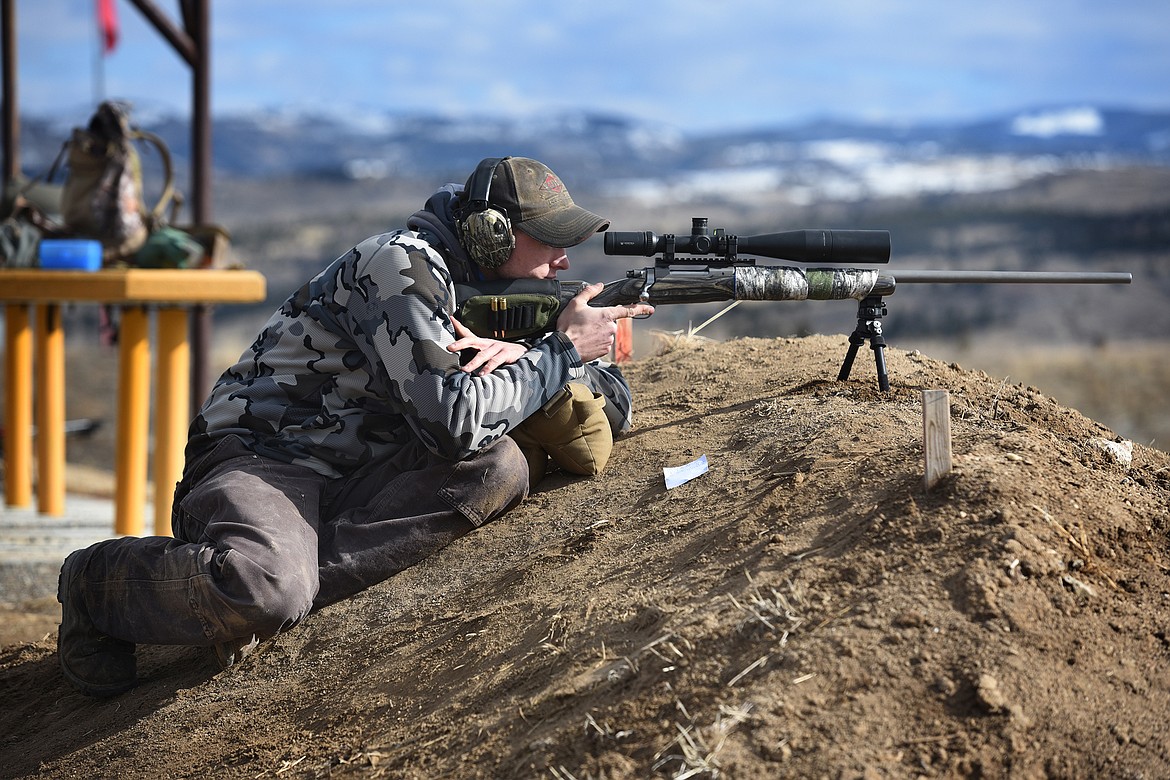
Field-position shooters feel the weight difference between MTU and M24 over the course of a full match day.
MTU vs M24 Side-by-Side
| Feature | MTU Contour | M24 Contour |
|---|---|---|
| Shank Diameter | ~1.25 inches | ~1.25 inches (similar start) |
| Taper Rate | Shorter shank, slower taper | Longer, more gradual taper |
| Muzzle Diameter (26") | ~0.90 inches | ~0.90 inches (very similar) |
| Weight vs M24 | Heavier | Lighter (0.5–1 lb. less) |
| Stiffness | Slightly stiffer overall | Very good — just behind MTU |
| Best For | F-Class, bench, dedicated range builds | PRS, hunting, tactical, versatile builds |
| Stock Compatibility | Needs MTU-inletted stock | Wider stock compatibility (M24 inlet common) |
| Carry Ergonomics | Front-heavy, less ideal afield | Better balanced, more comfortable to carry |
Data compiled from Preferred Barrel Blanks, Sniper's Hide Forum, and Precision Rifle Blog survey data.
The Weight Question (This Is Where It Gets Real)
Here's the thing about weight: it only becomes a number on a spec sheet until you're four hours into a field match, shooting from weird positions off a pile of rocks in the wind. Then it becomes a very personal conversation.
Discussions among F-TR competitors at Accurate Shooter Forum show shooters with 30-inch MTU contour Bartlein barrels coming in right at the 18.0 lb class weight limit. The M24 gives builders more breathing room — on a .308 or 6.5 Creedmoor build, you might recover 0.5 to 1 lb by choosing M24 over MTU at the same length. That's not nothing. That's a quality bipod, a muzzle brake, or just a rifle you can actually hold steady when you're tired.
For hunters especially, the M24 makes serious sense. The Long Range Hunting Forum reflects this — shooters who run suppressors (adding 7+ inches to overall length) or who shoot from field positions regularly gravitate toward M24 because balance matters as much as raw stiffness when you're working from a pack or a tree line.
Does the MTU Actually Shoot Better?
This is the question everyone wants answered with a clean "yes" or "no." The honest answer is: marginally, in controlled conditions, the MTU's additional stiffness can reduce barrel whip slightly — which can tighten groups, particularly during fast follow-up shots or longer strings of fire. That's real physics, not marketing.
But in practical terms? The M24 is accurate enough to win matches, take game at distance, and hold its own in any serious precision application. The difference between the two profiles is small enough that most shooters will never separate it from other variables — their trigger, their load development, their fundamentals. A great shooter with an M24 will consistently outperform a mediocre shooter with an MTU.
As noted on the Sniper's Hide Forum, "A heavier rifle is not more accurate. There is less barrel whip with a thicker barrel, so it may be easier to tune your load." That's the balanced view — and it's accurate.
Stock and Chassis Compatibility
This one trips people up more than it should. The MTU and M24 are close in profile, but not identical — and that matters when you're choosing a stock or chassis. Many stocks are inletted specifically for one or the other, and shoehorning an MTU into an M24-inletted channel (or vice versa) is a headache you don't need.
Practical experience shared on the Sniper's Hide Forum confirms that some shooters have successfully used an MTU in an M24-cut stock, but it depends heavily on the specific stock and action combination. The safe approach: confirm the inlet spec with your stock manufacturer before ordering the barrel. MDT, Manners, and McMillan all publish their inlet dimensions — use them.
If you're building on a chassis system like MDT ACC or similar, you often have more flexibility since chassis systems are machined rather than inletted, and most accommodate the MTU/M24 family without issue.
Who Should Choose Which?
Choose the MTU if:
- You're building a dedicated bench rifle or F-Class / F-Open competition gun
- Weight limits in your class allow for a heavier build
- The rifle will rarely leave the bench or a flat range
- You're chasing the last bit of group size performance and nothing else matters
- Your stock is already inletted for MTU
Choose the M24 if:
- You're building a PRS, tactical, or field precision rifle
- You hunt with the rifle or carry it over terrain
- You're running a suppressor and already adding front-end weight
- You're near the top of your class weight limit in competition
- You want a versatile build that performs well across multiple uses
- You're on a 24–26-inch barrel where the difference is most pronounced

The right barrel contour shapes how a precision rifle balances, handles, and performs under your specific conditions.
The Bottom Line
For most precision rifle shooters, the M24 is the more practical choice. It's lighter, better balanced, easier to carry, and still accurate enough to win serious competitions. The MTU makes sense when you're building a dedicated bench or F-Class gun where every possible accuracy advantage is worth the extra weight penalty.
Neither will let you down. The real mistake is picking the wrong one for your actual use case — and then wondering why the rifle feels wrong. Match your contour to your mission, and both profiles will serve you well.
Final Thoughts
The MTU vs M24 barrel contour debate doesn't have a universal winner — it has a right answer for your specific rifle build. If you're shooting from a bench in organised competition and weight is someone else's problem, go MTU. If you're carrying the rifle, shooting awkward positions, or just building a versatile precision tool that can do multiple jobs, the M24 is the smarter call for most people.
Either way, you're working in a calibre of barrel quality that most factory rifles will never see. The contour choice is one variable. Load development, trigger work, optics, and time behind the rifle matter far more than whether your taper starts 2 inches earlier or later. Don't let this decision become the bottleneck. Order the barrel, get it fitted, and go shoot.
For more general knowledge and gear breakdowns, explore related reading on optical comparisons and specifications at Big Write Hook — covering everything from camera optics to precision gear in plain, readable English.
Sources used in this article:
Precision Rifle Blog — "Rifle Barrels: What The Pros Use" (survey data, top 50 competitors) · Preferred Barrel Blanks — Contour specifications and definitions · Sniper's Hide Forum — Real-world barrel contour discussions (barrel stiffness, weight, stock fit) · Accurate Shooter Forum — F-TR class weight considerations · Long Range Hunting Forum — Field use and suppressor integration · Maryland Shooters Forum — Tactical match barrel selection context
If you've ever sat in front of a barrel blank order form and stared at "MTU" and "M24" like they're the same thing spelled differently — you're not alone. Honestly, they do look suspiciously similar on paper. Same general size family. Both loved by precision shooters. Both showing up in the top 30% of competitive barrel choices according to data collected by Precision Rifle Blog.
But they're not the same. And picking the wrong one for your build won't end the world, but it will leave you either lugging around extra weight you didn't need, or wishing you had a stiffer tube when your groups start walking during a long string of fire.
So let's clear it up properly.
A precision bolt-action rifle — barrel contour choice shapes both accuracy potential and real-world usability.
What Is a Barrel Contour, Anyway?
A barrel contour is simply the shape of the outside of the barrel — how thick it is at the breech end, how it tapers (or doesn't) toward the muzzle, and how long that shank section stays at full diameter before dropping off.
This matters for three practical reasons: weight, stiffness, and heat management. A fatter barrel resists flexing during the shot cycle. It also holds more heat before things start getting spicy. But it also adds real weight — and on a long day at a field match or a mountain hunt, weight stops being a number on a spec sheet and starts being something you feel in your shoulders.
The MTU and M24 both belong to what barrel makers call the "varmint" family of profiles — a straight shank near the breech that transitions into a single continuous taper toward the muzzle. They look similar. They're not identical.
MTU Barrel Contour: The Serious Competition Profile
The MTU is the heavier of the two. It features a 1.25-inch diameter shank that holds its diameter for a shorter section before beginning its taper, ending up around 0.9 inches at the muzzle on a 26-inch barrel. Think of it as sitting just below a Heavy Varmint contour — all the stiffness-focused thinking, with just enough taper to technically not be a straight tube.
As noted by the team at Preferred Barrel Blanks, the MTU and M24 are both fixed varmint profiles with a specific muzzle diameter at 26 inches — and they note that the PRS Varmint is essentially an MTU with a slightly extended 5-inch shank. That tells you a lot about where the MTU sits in the hierarchy.
In practical competition terms, Precision Rifle Blog's survey data found that MTU and M24 contours together represented roughly 30% of barrel choices among the top 50 precision rifle competitors. Among top-20 finishers specifically, the heavier profiles — including MTU — dominated. Accuracy-focused shooters vote with their builds.
That last point is worth reading twice. The MTU won't cool your barrel down faster — it just delays the problem. If you're shooting long strings in F-Class or bench competition, that delay is exactly what you need. If you're shooting five rounds and going home, it's mostly irrelevant.
M24 Barrel Contour: The Tactical Workhorse
The M24 contour takes its name from the US Army's M24 Sniper Weapon System — a Remington 700-based bolt gun that saw serious field service. Military snipers need precision, but they also need a rifle they can carry through terrain that doesn't care about their fitness level. The M24 contour was designed with that balance in mind.
It has a similar starting diameter at the breech but tapers more aggressively toward the muzzle compared to the MTU. The result is a barrel that's noticeably lighter toward the front — which shifts the balance point back and makes a long rifle much more manageable in the field.
Shooters on the Maryland Shooters Forum have noted that the M24 works particularly well for tactical and practical matches where you're expected to move with the rifle — not just plant it on a bench and dial. GA Precision, a builder well-respected in precision circles, has historically used M24/M40 contours as a baseline for their builds. That's not an accident.
The M24 still delivers excellent accuracy. It's not a compromise barrel — it's a thoughtfully engineered one. The taper saves weight where it helps most: at the front, where muzzle-heaviness would otherwise kill your balance and your hold stability in field positions.
Field-position shooters feel the weight difference between MTU and M24 over the course of a full match day.
MTU vs M24 Side-by-Side
| Feature | MTU Contour | M24 Contour |
|---|---|---|
| Shank Diameter | ~1.25 inches | ~1.25 inches (similar start) |
| Taper Rate | Shorter shank, slower taper | Longer, more gradual taper |
| Muzzle Diameter (26") | ~0.90 inches | ~0.90 inches (very similar) |
| Weight vs M24 | Heavier | Lighter (0.5–1 lb. less) |
| Stiffness | Slightly stiffer overall | Very good — just behind MTU |
| Best For | F-Class, bench, dedicated range builds | PRS, hunting, tactical, versatile builds |
| Stock Compatibility | Needs MTU-inletted stock | Wider stock compatibility (M24 inlet common) |
| Carry Ergonomics | Front-heavy, less ideal afield | Better balanced, more comfortable to carry |
Data compiled from Preferred Barrel Blanks, Sniper's Hide Forum, and Precision Rifle Blog survey data.
The Weight Question (This Is Where It Gets Real)
Here's the thing about weight: it only becomes a number on a spec sheet until you're four hours into a field match, shooting from weird positions off a pile of rocks in the wind. Then it becomes a very personal conversation.
Discussions among F-TR competitors at Accurate Shooter Forum show shooters with 30-inch MTU contour Bartlein barrels coming in right at the 18.0 lb class weight limit. The M24 gives builders more breathing room — on a .308 or 6.5 Creedmoor build, you might recover 0.5 to 1 lb by choosing M24 over MTU at the same length. That's not nothing. That's a quality bipod, a muzzle brake, or just a rifle you can actually hold steady when you're tired.
For hunters especially, the M24 makes serious sense. The Long Range Hunting Forum reflects this — shooters who run suppressors (adding 7+ inches to overall length) or who shoot from field positions regularly gravitate toward M24 because balance matters as much as raw stiffness when you're working from a pack or a tree line.
Does the MTU Actually Shoot Better?
This is the question everyone wants answered with a clean "yes" or "no." The honest answer is: marginally, in controlled conditions, the MTU's additional stiffness can reduce barrel whip slightly — which can tighten groups, particularly during fast follow-up shots or longer strings of fire. That's real physics, not marketing.
But in practical terms? The M24 is accurate enough to win matches, take game at distance, and hold its own in any serious precision application. The difference between the two profiles is small enough that most shooters will never separate it from other variables — their trigger, their load development, their fundamentals. A great shooter with an M24 will consistently outperform a mediocre shooter with an MTU.
As noted on the Sniper's Hide Forum, "A heavier rifle is not more accurate. There is less barrel whip with a thicker barrel, so it may be easier to tune your load." That's the balanced view — and it's accurate.
Stock and Chassis Compatibility
This one trips people up more than it should. The MTU and M24 are close in profile, but not identical — and that matters when you're choosing a stock or chassis. Many stocks are inletted specifically for one or the other, and shoehorning an MTU into an M24-inletted channel (or vice versa) is a headache you don't need.
Practical experience shared on the Sniper's Hide Forum confirms that some shooters have successfully used an MTU in an M24-cut stock, but it depends heavily on the specific stock and action combination. The safe approach: confirm the inlet spec with your stock manufacturer before ordering the barrel. MDT, Manners, and McMillan all publish their inlet dimensions — use them.
If you're building on a chassis system like MDT ACC or similar, you often have more flexibility since chassis systems are machined rather than inletted, and most accommodate the MTU/M24 family without issue.
Who Should Choose Which?
Choose the MTU if:
- You're building a dedicated bench rifle or F-Class / F-Open competition gun
- Weight limits in your class allow for a heavier build
- The rifle will rarely leave the bench or a flat range
- You're chasing the last bit of group size performance and nothing else matters
- Your stock is already inletted for MTU
Choose the M24 if:
- You're building a PRS, tactical, or field precision rifle
- You hunt with the rifle or carry it over terrain
- You're running a suppressor and already adding front-end weight
- You're near the top of your class weight limit in competition
- You want a versatile build that performs well across multiple uses
- You're on a 24–26-inch barrel where the difference is most pronounced
The right barrel contour shapes how a precision rifle balances, handles, and performs under your specific conditions.
The Bottom Line
For most precision rifle shooters, the M24 is the more practical choice. It's lighter, better balanced, easier to carry, and still accurate enough to win serious competitions. The MTU makes sense when you're building a dedicated bench or F-Class gun where every possible accuracy advantage is worth the extra weight penalty.
Neither will let you down. The real mistake is picking the wrong one for your actual use case — and then wondering why the rifle feels wrong. Match your contour to your mission, and both profiles will serve you well.
Final Thoughts
The MTU vs M24 barrel contour debate doesn't have a universal winner — it has a right answer for your specific rifle build. If you're shooting from a bench in organised competition and weight is someone else's problem, go MTU. If you're carrying the rifle, shooting awkward positions, or just building a versatile precision tool that can do multiple jobs, the M24 is the smarter call for most people.
Either way, you're working in a calibre of barrel quality that most factory rifles will never see. The contour choice is one variable. Load development, trigger work, optics, and time behind the rifle matter far more than whether your taper starts 2 inches earlier or later. Don't let this decision become the bottleneck. Order the barrel, get it fitted, and go shoot.
For more general knowledge and gear breakdowns, explore related reading on optical comparisons and specifications at Big Write Hook — covering everything from camera optics to precision gear in plain, readable English.
Sources used in this article:
Precision Rifle Blog — "Rifle Barrels: What The Pros Use" (survey data, top 50 competitors) · Preferred Barrel Blanks — Contour specifications and definitions · Sniper's Hide Forum — Real-world barrel contour discussions (barrel stiffness, weight, stock fit) · Accurate Shooter Forum — F-TR class weight considerations · Long Range Hunting Forum — Field use and suppressor integration · Maryland Shooters Forum — Tactical match barrel selection context
