
The C7 Corvette uses upper and lower radiator hoses (~1.50"–1.75" inner diameter), oil-to-water cooler lines (~3/4" / 19 mm standard), and heater core hoses (~5/8" inner diameter). Aftermarket oil cooler upgrades commonly use -10AN lines (~0.625" ID). The factory coolant system holds 11.3 quarts of GM DexCool at a 40/60 ratio.
So you're knuckle-deep under the hood of your C7, and someone says "just swap the coolant lines." Simple enough — until you realise there are about four different hose sizes running through there, and grabbing the wrong one is the kind of mistake that turns a Saturday job into a three-week coolant leak investigation.
This guide gives you the exact C7 water coolant line sizes, a full breakdown of each line's purpose, a maintenance schedule, and honest upgrade advice — all backed by verified sources.
How the C7 Cooling System Actually Works
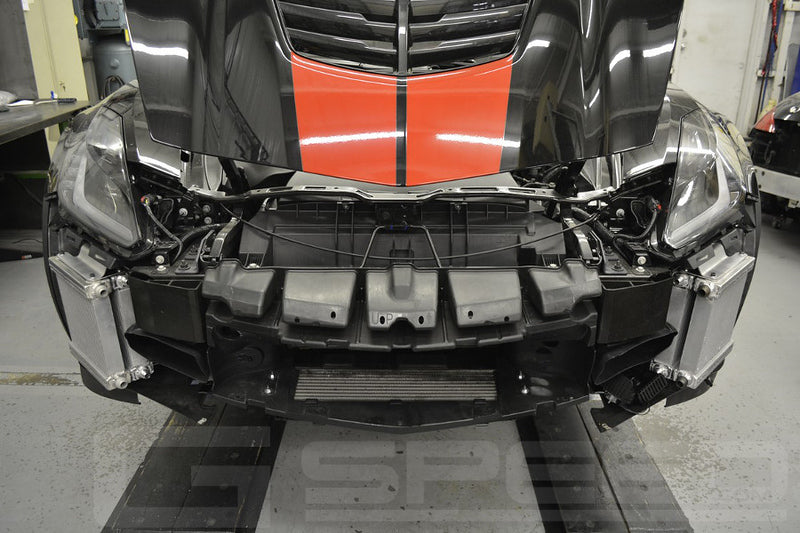
The C7 Corvette (2014–2019) runs a water-cooled 6.2L V8. The LT1 produces 455 hp naturally aspirated, and the supercharged LT4 in the Z06 delivers 650 hp. Those numbers generate serious heat — and the cooling system has to handle every last BTU.
The system has three key cooling circuits working together:
- Main engine cooling loop — circulates coolant between the engine block, radiator, and thermostat housing via the upper and lower radiator hoses.
- Oil-to-water heat exchanger loop — transfers engine oil heat into the coolant, which is then routed to the radiator. This is built into the radiator itself on stock C7s.
- Heater core loop — diverts hot coolant through the cabin heater core for interior heating.
Source: MotoIQ — Project C7 Z51 Cooling
C7 Coolant Line Size Chart — All Hoses at a Glance
Here is the full breakdown of every major coolant hose on a 2014–2019 C7 Corvette. Bookmark this table — you'll want it before heading to the parts counter.
| Hose / Line | Inner Diameter (ID) | Outer Diameter (OD) | Material (OEM) | Applies To |
|---|---|---|---|---|
| Upper Radiator Hose | ~1.50"–1.75" (38–44 mm) | ~1.65"–1.75" OD | EPDM Rubber | LT1, LT4, LT5 |
| Lower Radiator Hose | ~1.50"–1.75" (38–44 mm) | ~1.65"–1.75" OD | EPDM Rubber | LT1, LT4, LT5 |
| Heater Core Hoses | ~5/8" (15.9 mm) | ~7/8" (22 mm) | EPDM Rubber | LT1, LT4 |
| Oil-to-Water Cooler Lines (OEM) | ~3/4" (19 mm) | ~1" (25 mm) | Rubber / Hard Line | LT1, LT4 |
| Aftermarket Oil Cooler Lines (-10AN) | 0.625" / ~5/8" | Varies by brand | Braided AN Hose | LT1, LT4, LT5 |
| Intercooler Coolant Lines (Z06 LT4) | ~3/4" (19 mm) | ~1" (25 mm) | OEM Pushlock | LT4 only |
| Coolant Overflow / Reservoir Line | ~3/8" (9.5 mm) | ~5/8" (16 mm) | Rubber | LT1, LT4, LT5 |
Sources: CorvetteForum — Radiator Hose Size Discussion | Improved Racing C7 Oil Cooler Delete Kit | Weapon-X Motorsports Cooling Kit
Upper & Lower Radiator Hose Sizes — Detailed Breakdown
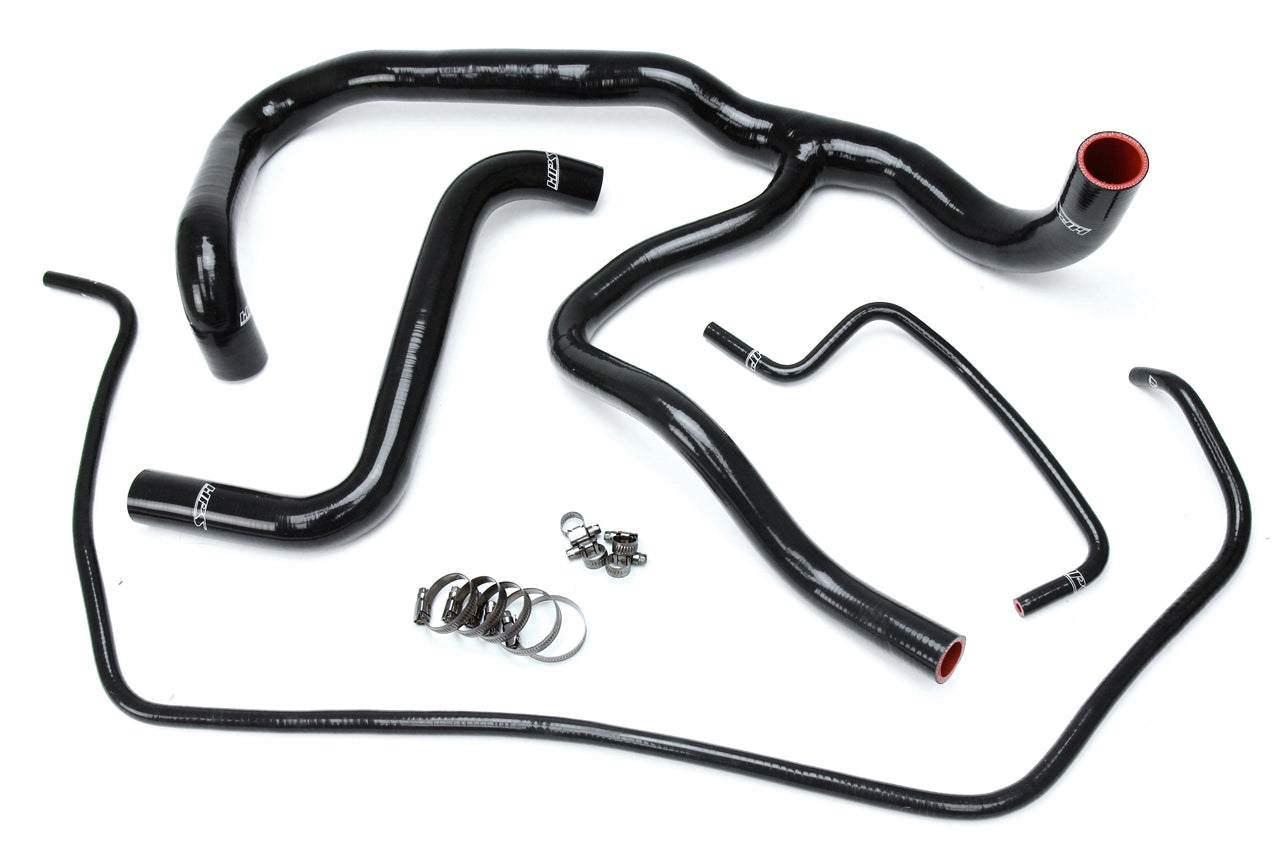
These are the two biggest hoses in the system, and they carry the bulk of coolant flow between the engine and radiator. Getting the inner diameter wrong means leaks, poor flow, or both.
- Inner Diameter: Approximately 1.50"–1.75" depending on the specific connection point. Factory clamps are typically rated at 42 mm nominal.
- Outer Diameter: Around 1.675" OD — confirmed by CorvetteForum members using dial calipers on OEM units.
- Length: Upper hose runs approximately 26–27 inches including S-bends.
- Temperature rating: OEM EPDM hoses handle -40°F to 275°F (-40°C to 135°C).
- Pressure rating: Designed for the OEM system cap pressure of 20–21 PSI.
Source: Mishimoto C7 Corvette Silicone Hose Kit
Oil-to-Water Coolant Line Sizes — The Critical One
This is where most C7 owners get confused — and where most of the questions about "C7 coolant line size" actually come from. The oil-to-water heat exchanger sits inside the radiator on stock C7s.
OEM Oil Cooler Line Dimensions
- Standard OEM diameter: ~3/4 inch (19 mm) inner diameter
- Fitting standard: O-ring boss (ORB) fittings on the engine block side
- Equivalent AN size: -12AN (0.75" ID) at the block; -10AN at cooler connections
- 2014–2016 C7 (without auxiliary radiator): Engine block coolant passage can be plugged independently
- 2014–2016 C7 (with auxiliary radiator): Coolant lines must be looped using an FO-10 straight female O-ring boss union in -10AN
Aftermarket AN Line Sizing — What Builders Use
The moment you delete the OEM oil-to-water cooler and add an external air-to-oil cooler, you enter the world of AN fittings. Here is the standard sizing used by brands like DeWitts, Improved Racing, and ProSpeed.
| AN Size | Inner Diameter | Use Case | C7 Recommendation |
|---|---|---|---|
| -8AN | 0.500" (12.7 mm) | Short runs, few bends | Marginal — not recommended for track |
| -10AN | 0.625" (15.9 mm) | Standard external cooler | ✅ Most common — used by DeWitts, Improved Racing |
| -12AN | 0.750" (19 mm) | High-flow, longer runs | Preferred for high-HP builds and long routing |
Source: CorvetteForum — Engine Oil Cooler Hose & Fitting Size | Improved Racing C7 Delete Kit Specs
Source: CorvetteForum — Roadracing Section
Coolant Flow Capacity by Hose Size — Visual Comparison
Bigger isn't always better — but when it comes to high-heat track driving, restricted flow can send your temps into a dangerous range. Here's how relative flow capacity scales with line size.
Flow capacity is illustrative based on cross-sectional area ratios (area = π × r²). Actual flow depends on pump pressure, bends, and line length.
C7 Coolant Capacity & System Specifications
Getting the sizes right means nothing if the fluid spec is wrong. Here are the official GM numbers for the C7 cooling system.
| Specification | Value | Source |
|---|---|---|
| Total Coolant Capacity | 11.3 quarts (10.7 litres) | GM / CorvetteForum Community Verified |
| Factory Coolant Mix Ratio | 40% DexCool / 60% water | GM Factory Specification |
| Approved Coolant Type | GM DexCool (OAT) | GM Owner's Manual |
| Coolant Change Interval | 5 years or 150,000 miles | GM Service Schedule |
| Radiator Cap Pressure Rating | 20–21 PSI | OEM Spec / CPR Motorsports Confirmed |
| Normal Operating Temp | 195–215°F (90–102°C) | CorvetteForum Member Reports |
| Track Oil Temp (Before Intervention) | Up to 289°F (143°C) | ProSpeed Autosports Track Testing |
| Track Coolant Temp (Before Intervention) | Up to 261°F (127°C) | ProSpeed Autosports Track Testing |
Sources: CorvetteForum C7 Coolant Thread | ProSpeed Autosports C7 Testing Data | CPR / Mont Motorsports Coolant Tank Specs
Source: CorvetteForum — C7 Coolant Discussion
Z06 LT4: Intercooler Coolant Lines — Extra Complexity
If you have a Z06 with the supercharged LT4, your cooling system is more complex. The LT4 runs a separate intercooler cooling loop in addition to the main engine coolant circuit.
- Intercooler coolant lines: ~3/4" (19 mm) inner diameter — same as the oil cooler lines
- Intercooler pump: WEAPON-X and others confirm 3/4" OEM diameter pushlock fittings at the heat exchanger pump
- Coolant reservoir capacity (intercooler side): Lingenfelter's aftermarket tank adds 2.5 gallons additional capacity
- Heat exchanger type: Water-to-air, aluminium construction with plastic end brackets (OEM)
Tracked Z06 owners frequently swap the OEM intercooler pump for higher-flow alternatives. The WEAPON-X cooling kit uses a reprogrammed Stewart EMP 25A pump rated at 7.7 GPM — that's 60% more flow than the stock ZL1 pump.
Source: WEAPON-X Motorsports — C7 Z06 Cooling Kit | Lingenfelter Intercooler Coolant Tank Specs
When to Upgrade: Street vs Track Cooling Needs
The OEM coolant lines are fine for street driving. They start showing their limits on a track — particularly the oil-to-water heat exchanger design, which introduces oil heat directly into the main coolant loop.
| Use Case | OEM Lines OK? | Recommended Action |
|---|---|---|
| Daily street driving | ✅ Yes | Maintain OEM hoses. Replace at first sign of cracking or swelling. |
| Occasional canyon runs / spirited driving | ✅ Yes | Consider silicone hose upgrade for longevity. No line size change needed. |
| Track days (2–4 per year) | ⚠️ Borderline | Upgrade radiator hoses to silicone. Consider auxiliary radiator or oil-to-air cooler. |
| Regular track / autocross use | ❌ No | External air-to-oil cooler (-10AN lines minimum). Upgrade radiator. Auxiliary coolant tank. |
| High-HP builds (600+ whp) | ❌ No | Full cooling system overhaul. -12AN oil lines. Upgraded radiator. Chiller systems for Z06. |
Source: MotoIQ — C7 Z51 Track Cooling Project | DeWitts Radiator C7 Oil Cooler
Coolant Line Maintenance Schedule
Most C7 owners ignore the hoses until they fail. That's a risky strategy when engine temperatures during track use can push coolant to 261°F. Here's a sensible maintenance schedule.
| Interval | Task | Why It Matters |
|---|---|---|
| Every 6 months / 6,000 miles | Visual inspection of all hoses for swelling, cracking, or soft spots | Early detection prevents a £0 issue becoming a £2,000 engine problem |
| Every 2 years | Check hose clamp torque. Inspect connection points for seepage. | Vibration and thermal cycling loosen clamps over time |
| 5 years or 150,000 miles | Full coolant flush and replacement (GM specification) | DexCool degrades, loses pH buffering, and causes internal corrosion |
| 5–7 years (rubber hoses) | Replace upper and lower radiator hoses | EPDM rubber fatigues, especially if the car sees track use |
| Pre / post every track day | Check coolant level and inspect oil cooler line condition | Track heat accelerates hose degradation significantly |
Source: CorvetteForum C7 Coolant Maintenance Thread
Common Problems With C7 Coolant Lines
You're not the first person to chase a coolant leak on a C7. These are the failures that come up again and again on the forums and in workshops.
- OEM plastic coolant tank cracking: The two-piece OEM reservoir is prone to swelling and separation over time. CPR Motorsports and others offer aluminium replacements. This is a known C7 weak point.
- Oil cooler line hardline corrosion: The OEM hybrid hard-line/rubber oil cooler lines can crack where the rubber meets the hard line — especially in climates with road salt exposure.
- Z06 oil cooler line heat soak: The Z06 oil cooler lines run near the catalytic converter, which produces over 1,200°F. Design Engineering's heat shroud (fits 2"–2.5" lines) is a widely used solution.
- Radiator plastic end tank failure: Like many modern vehicles, the C7 uses crimped plastic end tanks. Under extended hard use, these can crack at mounting points. DeWitts and others offer aluminium replacement radiators.
- Coolant leaks at hose clamps: Often caused by thermal cycling loosening factory clamps. Replacing with quality worm-gear clamps at the correct torque solves this.
Sources: DeWitts Radiator — C7 Radiator Issues | Design Engineering Oil Cooler Line Heat Shroud (Amazon) | CPR C7 Coolant Tank
Frequently Asked Questions
Final Word
The C7 Corvette coolant system is well-engineered for street use but leaves genuine room for improvement on track. Knowing your hose sizes — upper/lower radiator hoses at ~1.50"–1.75" ID, oil cooler lines at ~3/4" OEM or -10AN aftermarket, and heater core hoses at ~5/8" — puts you in control of every maintenance and upgrade decision.
If your C7 is a pure street car, OEM rubber hoses and clean DexCool at the right ratio are all you need. If it sees a track, the oil-to-water heat exchanger is the first thing to address — and -10AN lines with an external air-to-oil cooler is the path most experienced Corvette builders take.
Don't guess on hose sizes. Measure. Cross-reference with the specs above. And always torque your clamps after every coolant service — your engine will thank you for it.
Sources & References
- MotoIQ — Project C7 Z51 Corvette Cooling System
- CorvetteForum — C7 Coolant Capacity & Maintenance
- CorvetteForum — Oil Cooler Hose & Fitting Size Discussion
- Improved Racing — C7 Oil Cooler Delete Kit (-10AN Fittings)
- DeWitts Radiator — C7 Corvette Oil Cooler (-10AN Lines)
- DeWitts Radiator — C7 Corvette Direct Fit Radiator
- ProSpeed Autosports — C7 Oil Cooler System (Track Data)
- WEAPON-X Motorsports — C7 Z06 LT4 Cooling Kit (3/4" Hose Spec)
- Lingenfelter — C7 Intercooler Coolant Tank
- CPR / Mont Motorsports — C7 Coolant Tank (20–21 PSI Cap Spec)
- Mishimoto — C7 Corvette Silicone Hose Kit
- Design Engineering — Z06 Oil Cooler Line Heat Shroud (2"–2.5")
The C7 Corvette uses upper and lower radiator hoses (~1.50"–1.75" inner diameter), oil-to-water cooler lines (~3/4" / 19 mm standard), and heater core hoses (~5/8" inner diameter). Aftermarket oil cooler upgrades commonly use -10AN lines (~0.625" ID). The factory coolant system holds 11.3 quarts of GM DexCool at a 40/60 ratio.
So you're knuckle-deep under the hood of your C7, and someone says "just swap the coolant lines." Simple enough — until you realise there are about four different hose sizes running through there, and grabbing the wrong one is the kind of mistake that turns a Saturday job into a three-week coolant leak investigation.
This guide gives you the exact C7 water coolant line sizes, a full breakdown of each line's purpose, a maintenance schedule, and honest upgrade advice — all backed by verified sources.
How the C7 Cooling System Actually Works
The C7 Corvette (2014–2019) runs a water-cooled 6.2L V8. The LT1 produces 455 hp naturally aspirated, and the supercharged LT4 in the Z06 delivers 650 hp. Those numbers generate serious heat — and the cooling system has to handle every last BTU.
The system has three key cooling circuits working together:
- Main engine cooling loop — circulates coolant between the engine block, radiator, and thermostat housing via the upper and lower radiator hoses.
- Oil-to-water heat exchanger loop — transfers engine oil heat into the coolant, which is then routed to the radiator. This is built into the radiator itself on stock C7s.
- Heater core loop — diverts hot coolant through the cabin heater core for interior heating.
Source: MotoIQ — Project C7 Z51 Cooling
C7 Coolant Line Size Chart — All Hoses at a Glance
Here is the full breakdown of every major coolant hose on a 2014–2019 C7 Corvette. Bookmark this table — you'll want it before heading to the parts counter.
| Hose / Line | Inner Diameter (ID) | Outer Diameter (OD) | Material (OEM) | Applies To |
|---|---|---|---|---|
| Upper Radiator Hose | ~1.50"–1.75" (38–44 mm) | ~1.65"–1.75" OD | EPDM Rubber | LT1, LT4, LT5 |
| Lower Radiator Hose | ~1.50"–1.75" (38–44 mm) | ~1.65"–1.75" OD | EPDM Rubber | LT1, LT4, LT5 |
| Heater Core Hoses | ~5/8" (15.9 mm) | ~7/8" (22 mm) | EPDM Rubber | LT1, LT4 |
| Oil-to-Water Cooler Lines (OEM) | ~3/4" (19 mm) | ~1" (25 mm) | Rubber / Hard Line | LT1, LT4 |
| Aftermarket Oil Cooler Lines (-10AN) | 0.625" / ~5/8" | Varies by brand | Braided AN Hose | LT1, LT4, LT5 |
| Intercooler Coolant Lines (Z06 LT4) | ~3/4" (19 mm) | ~1" (25 mm) | OEM Pushlock | LT4 only |
| Coolant Overflow / Reservoir Line | ~3/8" (9.5 mm) | ~5/8" (16 mm) | Rubber | LT1, LT4, LT5 |
Sources: CorvetteForum — Radiator Hose Size Discussion | Improved Racing C7 Oil Cooler Delete Kit | Weapon-X Motorsports Cooling Kit
Upper & Lower Radiator Hose Sizes — Detailed Breakdown
These are the two biggest hoses in the system, and they carry the bulk of coolant flow between the engine and radiator. Getting the inner diameter wrong means leaks, poor flow, or both.
- Inner Diameter: Approximately 1.50"–1.75" depending on the specific connection point. Factory clamps are typically rated at 42 mm nominal.
- Outer Diameter: Around 1.675" OD — confirmed by CorvetteForum members using dial calipers on OEM units.
- Length: Upper hose runs approximately 26–27 inches including S-bends.
- Temperature rating: OEM EPDM hoses handle -40°F to 275°F (-40°C to 135°C).
- Pressure rating: Designed for the OEM system cap pressure of 20–21 PSI.
Source: Mishimoto C7 Corvette Silicone Hose Kit
Oil-to-Water Coolant Line Sizes — The Critical One
This is where most C7 owners get confused — and where most of the questions about "C7 coolant line size" actually come from. The oil-to-water heat exchanger sits inside the radiator on stock C7s.
OEM Oil Cooler Line Dimensions
- Standard OEM diameter: ~3/4 inch (19 mm) inner diameter
- Fitting standard: O-ring boss (ORB) fittings on the engine block side
- Equivalent AN size: -12AN (0.75" ID) at the block; -10AN at cooler connections
- 2014–2016 C7 (without auxiliary radiator): Engine block coolant passage can be plugged independently
- 2014–2016 C7 (with auxiliary radiator): Coolant lines must be looped using an FO-10 straight female O-ring boss union in -10AN
Aftermarket AN Line Sizing — What Builders Use
The moment you delete the OEM oil-to-water cooler and add an external air-to-oil cooler, you enter the world of AN fittings. Here is the standard sizing used by brands like DeWitts, Improved Racing, and ProSpeed.
| AN Size | Inner Diameter | Use Case | C7 Recommendation |
|---|---|---|---|
| -8AN | 0.500" (12.7 mm) | Short runs, few bends | Marginal — not recommended for track |
| -10AN | 0.625" (15.9 mm) | Standard external cooler | ✅ Most common — used by DeWitts, Improved Racing |
| -12AN | 0.750" (19 mm) | High-flow, longer runs | Preferred for high-HP builds and long routing |
Source: CorvetteForum — Engine Oil Cooler Hose & Fitting Size | Improved Racing C7 Delete Kit Specs
Source: CorvetteForum — Roadracing Section
Coolant Flow Capacity by Hose Size — Visual Comparison
Bigger isn't always better — but when it comes to high-heat track driving, restricted flow can send your temps into a dangerous range. Here's how relative flow capacity scales with line size.
Flow capacity is illustrative based on cross-sectional area ratios (area = π × r²). Actual flow depends on pump pressure, bends, and line length.
C7 Coolant Capacity & System Specifications
Getting the sizes right means nothing if the fluid spec is wrong. Here are the official GM numbers for the C7 cooling system.
| Specification | Value | Source |
|---|---|---|
| Total Coolant Capacity | 11.3 quarts (10.7 litres) | GM / CorvetteForum Community Verified |
| Factory Coolant Mix Ratio | 40% DexCool / 60% water | GM Factory Specification |
| Approved Coolant Type | GM DexCool (OAT) | GM Owner's Manual |
| Coolant Change Interval | 5 years or 150,000 miles | GM Service Schedule |
| Radiator Cap Pressure Rating | 20–21 PSI | OEM Spec / CPR Motorsports Confirmed |
| Normal Operating Temp | 195–215°F (90–102°C) | CorvetteForum Member Reports |
| Track Oil Temp (Before Intervention) | Up to 289°F (143°C) | ProSpeed Autosports Track Testing |
| Track Coolant Temp (Before Intervention) | Up to 261°F (127°C) | ProSpeed Autosports Track Testing |
Sources: CorvetteForum C7 Coolant Thread | ProSpeed Autosports C7 Testing Data | CPR / Mont Motorsports Coolant Tank Specs
Source: CorvetteForum — C7 Coolant Discussion
Z06 LT4: Intercooler Coolant Lines — Extra Complexity
If you have a Z06 with the supercharged LT4, your cooling system is more complex. The LT4 runs a separate intercooler cooling loop in addition to the main engine coolant circuit.
- Intercooler coolant lines: ~3/4" (19 mm) inner diameter — same as the oil cooler lines
- Intercooler pump: WEAPON-X and others confirm 3/4" OEM diameter pushlock fittings at the heat exchanger pump
- Coolant reservoir capacity (intercooler side): Lingenfelter's aftermarket tank adds 2.5 gallons additional capacity
- Heat exchanger type: Water-to-air, aluminium construction with plastic end brackets (OEM)
Tracked Z06 owners frequently swap the OEM intercooler pump for higher-flow alternatives. The WEAPON-X cooling kit uses a reprogrammed Stewart EMP 25A pump rated at 7.7 GPM — that's 60% more flow than the stock ZL1 pump.
Source: WEAPON-X Motorsports — C7 Z06 Cooling Kit | Lingenfelter Intercooler Coolant Tank Specs
When to Upgrade: Street vs Track Cooling Needs
The OEM coolant lines are fine for street driving. They start showing their limits on a track — particularly the oil-to-water heat exchanger design, which introduces oil heat directly into the main coolant loop.
| Use Case | OEM Lines OK? | Recommended Action |
|---|---|---|
| Daily street driving | ✅ Yes | Maintain OEM hoses. Replace at first sign of cracking or swelling. |
| Occasional canyon runs / spirited driving | ✅ Yes | Consider silicone hose upgrade for longevity. No line size change needed. |
| Track days (2–4 per year) | ⚠️ Borderline | Upgrade radiator hoses to silicone. Consider auxiliary radiator or oil-to-air cooler. |
| Regular track / autocross use | ❌ No | External air-to-oil cooler (-10AN lines minimum). Upgrade radiator. Auxiliary coolant tank. |
| High-HP builds (600+ whp) | ❌ No | Full cooling system overhaul. -12AN oil lines. Upgraded radiator. Chiller systems for Z06. |
Source: MotoIQ — C7 Z51 Track Cooling Project | DeWitts Radiator C7 Oil Cooler
Coolant Line Maintenance Schedule
Most C7 owners ignore the hoses until they fail. That's a risky strategy when engine temperatures during track use can push coolant to 261°F. Here's a sensible maintenance schedule.
| Interval | Task | Why It Matters |
|---|---|---|
| Every 6 months / 6,000 miles | Visual inspection of all hoses for swelling, cracking, or soft spots | Early detection prevents a £0 issue becoming a £2,000 engine problem |
| Every 2 years | Check hose clamp torque. Inspect connection points for seepage. | Vibration and thermal cycling loosen clamps over time |
| 5 years or 150,000 miles | Full coolant flush and replacement (GM specification) | DexCool degrades, loses pH buffering, and causes internal corrosion |
| 5–7 years (rubber hoses) | Replace upper and lower radiator hoses | EPDM rubber fatigues, especially if the car sees track use |
| Pre / post every track day | Check coolant level and inspect oil cooler line condition | Track heat accelerates hose degradation significantly |
Source: CorvetteForum C7 Coolant Maintenance Thread
Common Problems With C7 Coolant Lines
You're not the first person to chase a coolant leak on a C7. These are the failures that come up again and again on the forums and in workshops.
- OEM plastic coolant tank cracking: The two-piece OEM reservoir is prone to swelling and separation over time. CPR Motorsports and others offer aluminium replacements. This is a known C7 weak point.
- Oil cooler line hardline corrosion: The OEM hybrid hard-line/rubber oil cooler lines can crack where the rubber meets the hard line — especially in climates with road salt exposure.
- Z06 oil cooler line heat soak: The Z06 oil cooler lines run near the catalytic converter, which produces over 1,200°F. Design Engineering's heat shroud (fits 2"–2.5" lines) is a widely used solution.
- Radiator plastic end tank failure: Like many modern vehicles, the C7 uses crimped plastic end tanks. Under extended hard use, these can crack at mounting points. DeWitts and others offer aluminium replacement radiators.
- Coolant leaks at hose clamps: Often caused by thermal cycling loosening factory clamps. Replacing with quality worm-gear clamps at the correct torque solves this.
Sources: DeWitts Radiator — C7 Radiator Issues | Design Engineering Oil Cooler Line Heat Shroud (Amazon) | CPR C7 Coolant Tank
Frequently Asked Questions
Final Word
The C7 Corvette coolant system is well-engineered for street use but leaves genuine room for improvement on track. Knowing your hose sizes — upper/lower radiator hoses at ~1.50"–1.75" ID, oil cooler lines at ~3/4" OEM or -10AN aftermarket, and heater core hoses at ~5/8" — puts you in control of every maintenance and upgrade decision.
If your C7 is a pure street car, OEM rubber hoses and clean DexCool at the right ratio are all you need. If it sees a track, the oil-to-water heat exchanger is the first thing to address — and -10AN lines with an external air-to-oil cooler is the path most experienced Corvette builders take.
Don't guess on hose sizes. Measure. Cross-reference with the specs above. And always torque your clamps after every coolant service — your engine will thank you for it.
Sources & References
- MotoIQ — Project C7 Z51 Corvette Cooling System
- CorvetteForum — C7 Coolant Capacity & Maintenance
- CorvetteForum — Oil Cooler Hose & Fitting Size Discussion
- Improved Racing — C7 Oil Cooler Delete Kit (-10AN Fittings)
- DeWitts Radiator — C7 Corvette Oil Cooler (-10AN Lines)
- DeWitts Radiator — C7 Corvette Direct Fit Radiator
- ProSpeed Autosports — C7 Oil Cooler System (Track Data)
- WEAPON-X Motorsports — C7 Z06 LT4 Cooling Kit (3/4" Hose Spec)
- Lingenfelter — C7 Intercooler Coolant Tank
- CPR / Mont Motorsports — C7 Coolant Tank (20–21 PSI Cap Spec)
- Mishimoto — C7 Corvette Silicone Hose Kit
- Design Engineering — Z06 Oil Cooler Line Heat Shroud (2"–2.5")
