
What Botty Actually Is
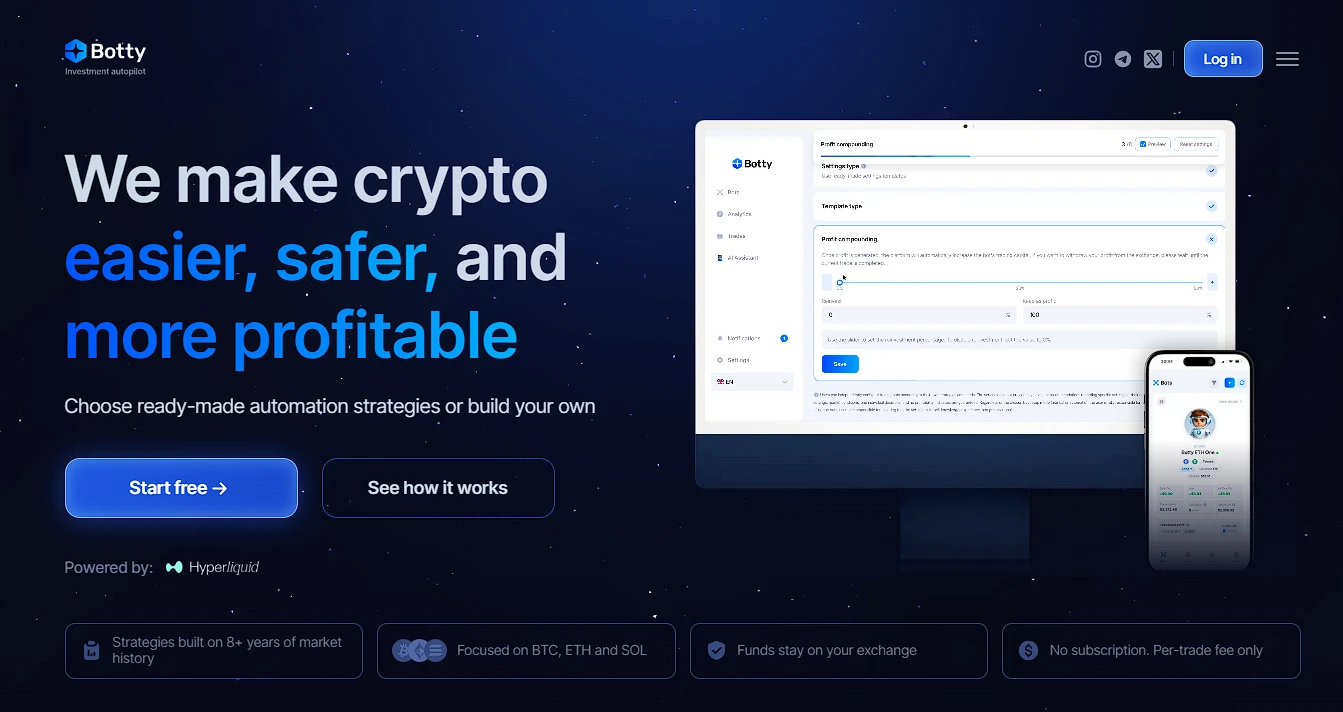
Botty is a platform for automated trading in cryptocurrency and stocks across spot and futures markets. It connects to a user's exchange account through a wallet signature with trading-only permissions rather than holding funds itself. A person picks a ready-made configuration or builds a custom one, connects an exchange account, and the bot then opens and closes trades according to the selected parameters without requiring each order to be placed manually. Botty currently focuses on a selection of highly liquid markets.
The platform positions itself less as a speculative tool for chasing quick gains and more as an automation layer for a defined trading logic. The stated intent is to remove emotional decision-making from the process: no manual guessing about when to buy or sell, no need to watch charts continuously, and no requirement for prior trading experience. Whether that intent translates into a smooth day-to-day experience is the question this review sets out to answer, drawing on the platform's own descriptions of its mechanics alongside a sample of independently sourced Botty reviews collected from open review platforms in English, Russian and Ukrainian.
It is worth being precise about what Botty is not. It does not custody user funds, operate its own exchange, or issue a token. Assets stay on the connected exchange account at all times, and the bot's role is limited to executing trades within the rules a user has set. That non-custodial structure is central to the platform's security model, and it shows up repeatedly in user feedback too.
How the Underlying Trading Logic Works
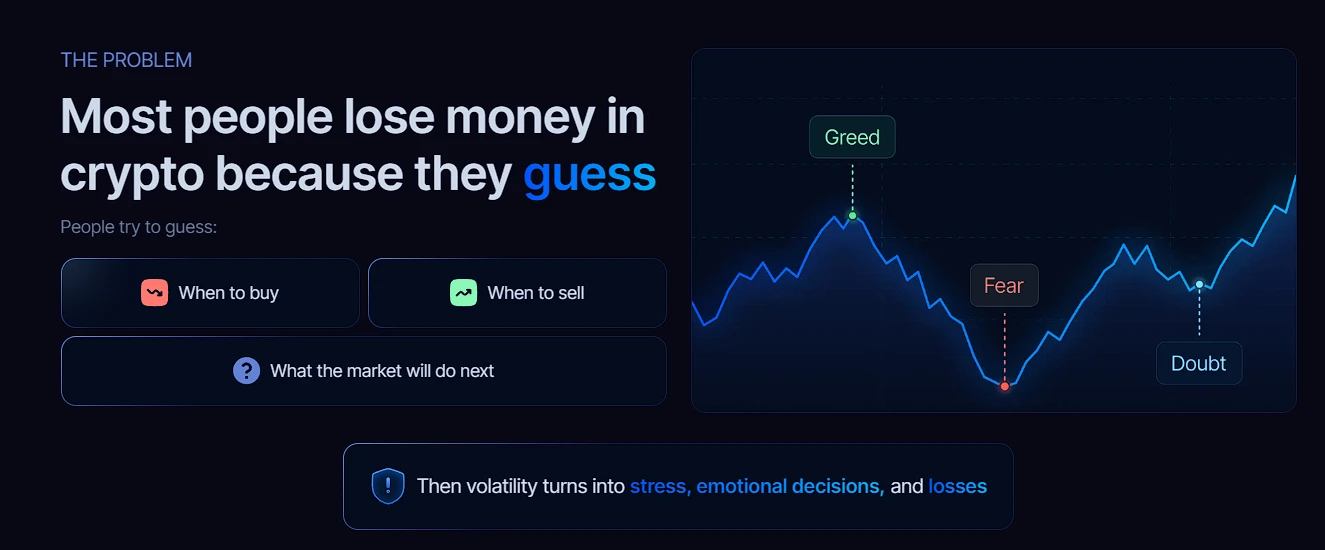
The mechanism behind most Botty templates is a variation on grid and dollar-cost-averaging trading rather than predictive signal generation. Instead of forecasting whether a price will rise or fall, the bot enters a position with only a fraction of the allocated budget, for example, one eighth or one tenth of the total, and sets a modest profit target such as 0.8%. If the price rises to that target, the position closes and the bot waits for the next entry. If it falls instead, the bot adds another portion of the budget at the lower price, bringing down the average entry price. It continues in increments as the price moves, with order sizing calculated mathematically rather than laid out as a simple even grid.
The practical effect, according to the platform, is that the strategy performs best in choppy, range-bound conditions rather than markets moving steadily in one direction. A market that only rises without pullbacks limits the bot to profiting on the first small slice of the budget, while a market that dips and then recovers, even partially, lets the averaged position close in profit without the price needing to return to its original entry point.
For futures templates, the same averaging logic is applied through leveraged contracts. Botty uses capped leverage, staggered order grids, position-sizing rules, and predefined parameters rather than leaving exposure open-ended. Users can choose between conservative, balanced, and aggressive templates depending on their experience and preferred risk profile.
Getting Started With Botty
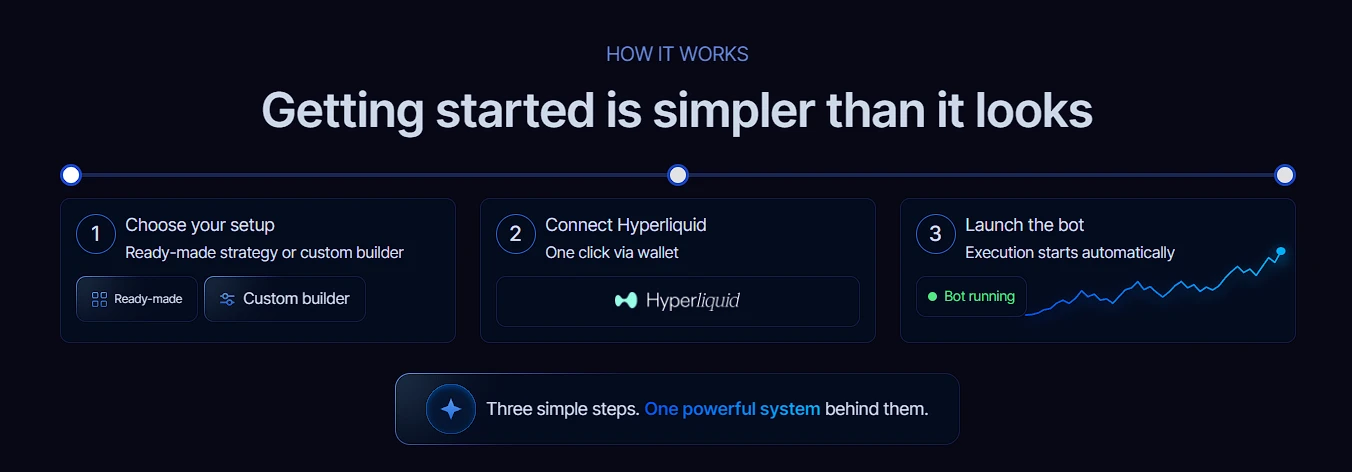
One of the more distinctive claims Botty makes about itself, and one that shows up consistently in the review sample, is that the initial setup is straightforward. A user chooses a ready-made template or configures a bot manually, connects an exchange account through a wallet signature, and launches the selected strategy. There is no mandatory monthly subscription; Botty uses an activity-based fee built into Hyperliquid's trading fee.
Setup speed is one of the most frequently repeated observations in the English-language reviews. Several reviewers describe connecting an exchange and launching a bot relatively quickly, despite expecting the process to be more complicated. Another user, who had found other platforms difficult to navigate, described choosing a conservative template and starting the bot without extensive prior trading experience. These are individual accounts rather than measured usability data, but the pattern aligns with the platform's emphasis on reducing friction during the first-time experience.
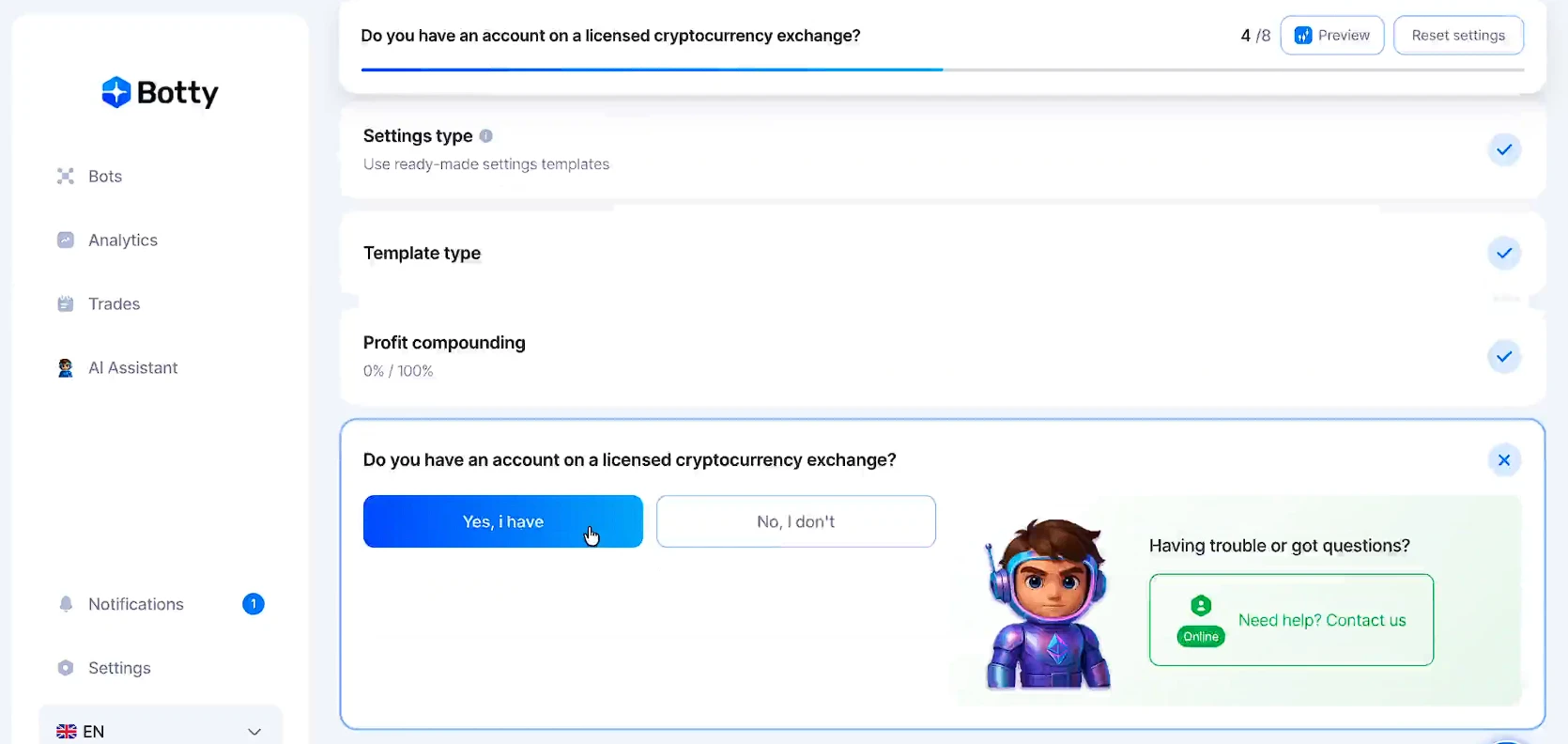
The platform also provides AI-powered guidance that helps users understand template parameters and configuration options. Several reviewers mention these AI explanations as a convenient way to receive quick clarification while setting up or managing a bot.
Botty Trading Templates and Strategy Types
Botty offers a menu of preset templates rather than requiring every user to build a configuration from scratch, while still allowing manual customization. The main distinction is between spot and futures templates, with conservative, balanced, and aggressive approaches available for different user preferences.
Spot templates buy the underlying asset itself. If the price falls after entry, the bot buys more to average the entry price down. If the price rises, it locks in the configured profit target and closes the position, typically into a stablecoin such as USDT or USDC. Because spot trading means owning the asset rather than a leveraged contract, there is no liquidation mechanism on this side.
Futures templates use leveraged contracts rather than holding the underlying asset. Botty applies leverage caps, position-sizing rules, and staggered order grids as built-in controls. The available templates let users select a conservative, balanced, or aggressive approach depending on their experience, goals, and preferred risk profile.
Automation in Daily Use
Once a bot is running, the described experience is largely passive: it monitors prices and executes entries and exits according to its configuration without requiring the user to be present. This is the feature that shows up most often across the review sample, framed less around raw returns and more around the removal of manual decision-making and the stress that comes with it.
Several reviewers describe demanding schedules, including hospital shifts, as the context in which automation mattered most, with one writing about coming home from a 12-hour shift to "30 or 40 small trades already opened and closed" without having watched a chart. Others describe the psychological shift more directly: one reviewer said the biggest thing the bot fixed "was my own psychology, not the market," describing years of panic-selling dips and buying tops before handing execution to a rules-based system. Another described running a conservative ETH grid for two months, checking in later to find it had "quietly compounded tiny wins the whole time."
This pattern of small, frequent trades is consistent with the grid and DCA mechanics described earlier. According to the platform, the bot can open hundreds or even more than a thousand trades in a year using one conservative configuration — a volume no manual trader could realistically sustain. Reviewers describe this less as excitement and more as low-drama consistency, which appears to be exactly what the platform is designed to produce.

Analytics and Historical Template Performance
When choosing a ready-made Botty template, users can view its historical performance based on backtesting across more than five years of market data. The displayed figures help users compare available strategies alongside their parameters, trading approach, and risk level.
Botty does not currently offer a separate feature that allows users to run their own backtests with custom settings. Instead, the historical results shown for each ready-made template are based on testing conducted over a period of more than five years. The platform's materials show historical annual returns ranging from approximately 7% to 58%, depending on the selected template and its parameters.
Once a bot is live, ongoing analytics are available through a dashboard and performance summaries showing trade history and other key indicators. Several reviewers praise the transparency of this reporting, describing the ability to see every trade and understand the bot's actions without the sense of a "black box."
Security and the Wallet Connection Model
Botty's security model is built around a non-custodial structure: user funds remain on the connected exchange account at all times, and Botty itself never takes custody of them. The connection is authorized through a wallet signature with trading-only permissions using Hyperliquid's Builder Code mechanism. This allows the bot to open and close positions according to the user's chosen settings without receiving withdrawal access, with that restriction enforced at the exchange level.
This structure is referenced repeatedly in the review sample, more than almost any other single feature. One reviewer called the non-custodial setup "the real dealbreaker, in the best way," explaining that knowing the bot had "zero withdrawal access" was the reason they stopped anxiously checking charts at odd hours. Others echoed the point more briefly: "Botty non-custodial or nothing, my coins never leave my own exchange," while another said keeping custody of their own coins was specifically what earned their trust.
The wallet-based connection gives users an important level of control because assets remain in their own exchange account throughout the process. The permissions granted through the connection can be reviewed during setup. Botty has also completed an independent security audit by DigVel, with information about the audit available on the platform's website.

Fees and the Activity-Based Model
Botty uses an activity-based fee structure rather than a fixed subscription. The Botty fee is built into Hyperliquid's trading fee and applies when the bot actively executes trades. If the bot is idle, there is no Botty fee.
This model is mentioned favorably in the review sample, particularly because it does not require a recurring monthly payment simply to retain access to the platform. Users pay in connection with the bot's trading activity rather than paying a flat fee regardless of whether the bot is active.
What Botty reviews say in practice
Looking across the English-language sample of user reviews collected from independent review platforms and open review sites, several themes recur with enough consistency to be treated as genuine patterns in user experience rather than isolated anecdotes. At the same time, they should be read as qualitative testimonial evidence rather than a measured survey.
The most common theme is psychological rather than financial. A large share of reviewers describe a prior history of emotionally driven trading, including panic-selling during downturns and impulsively buying during rallies, and credit the bot with removing that decision-making from their process. Several describe themselves as former skeptics of trading bots, citing bad past experiences with scams, who initially approached Botty cautiously while becoming familiar with how it works.
A second recurring theme is the value placed on transparency, referenced in relation to visible trade history, clear analytics, and the non-custodial wallet-based connection. A third is accessibility for people without trading backgrounds or significant screen time, including reviewers describing demanding jobs, shift work, or limited technical experience. Several users also highlight AI guidance as a convenient way to understand settings and receive quick explanations.
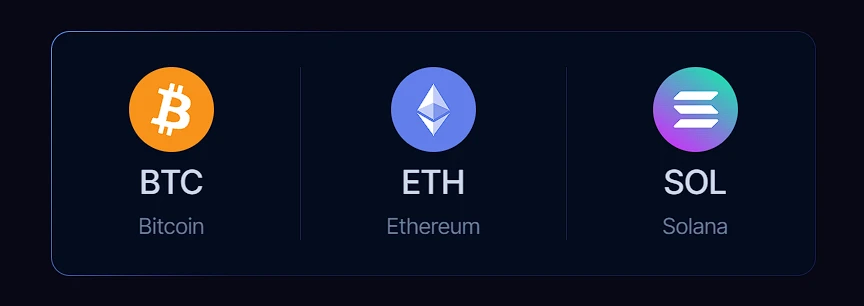
Within this particular sample, no clearly negative or critical reviews were present in the English-language column, aside from one reviewer wishing there were more trading pairs beyond BTC, ETH, and SOL. That is an observation about this specific sample gathered from independent sources, not a claim that no negative experiences with Botty exist anywhere. A sample of this kind cannot be treated as statistically representative of the full user base.
Final Assessment
Botty presents itself less as a shortcut to outsized crypto returns and more as an automation layer for a specific, disciplined trading logic: grid and DCA-based averaging, applied consistently and without the emotional interference that undermines many manual traders.
Based on the platform's own descriptions and a modest but consistent sample of independently sourced Botty reviews, the strongest and most repeated theme is not extraordinary returns but a reduction in stress and impulsive decision-making, paired with a non-custodial security model that users appear to trust specifically because their funds never leave their own exchange account.

FAQ about Botty
Is Botty a custodial platform that holds my crypto?
No. Botty connects to a user's exchange account through a wallet signature with trading-only permissions and no withdrawal access. The connection uses Hyperliquid's Builder Code mechanism, while funds remain on the user's own exchange account.
Do I need trading experience to use Botty?
The platform provides ready-made templates with conservative, balanced, and aggressive approaches, together with AI-powered guidance that explains settings and configuration options. Users can also adjust parameters manually.
Does Botty charge a subscription fee?
No. Botty uses an activity-based fee model. Its fee is built into Hyperliquid's trading fee and applies when the bot actively executes trades. If the bot is idle, there is no Botty fee.
What is the difference between spot and futures templates on Botty?
Spot templates trade the underlying asset without leverage and are generally the more conservative option. Futures templates use leveraged contracts together with predefined parameters, position-sizing rules, leverage limits, and staggered order grids.
Can users run their own backtests in Botty?
Botty does not currently offer a separate feature for users to run custom backtests. Instead, users can view the historical performance of each ready-made template based on more than five years of backtesting data.
What do Botty reviews say about the overall experience?
In the independently sourced English-language reviews examined for this article, common themes include a relatively quick setup, transparent trade history, helpful AI guidance, appreciation for the non-custodial wallet-based connection, and reduced emotional involvement in trade execution. These are individual user experiences rather than a comprehensive survey of the full user base.
