
You are sitting quietly, minding your own business, and then — crackle. Like someone scrunching a crisp packet inside your skull. Not painful, but deeply annoying. And if it keeps happening, more than a little worrying.
That crackling, popping, or Rice Krispies-in-milk sound inside your ear is more common than most people realise. It has several possible causes, and in most cases — thankfully — a clear solution. This article walks you through everything you need to know, based on trusted medical sources, not guesswork.
What Is That Crackling Sound in Your Ear?
Medically, crackling in the ear often falls under the umbrella of tinnitus — a term for sounds heard in the ear without an external source. That said, not every crackle is textbook tinnitus. Sometimes it is a physical, mechanical problem happening inside your ear canal or middle ear.
According to Healthline Medically Reviewed, the sound is often compared to the noise a bowl of Rice Krispies makes after you pour milk over them — a rapid, irregular crackling. Some people hear it only when they swallow or yawn. Others notice it while chewing, changing altitude, or seemingly out of nowhere.
The important thing to understand: the sound itself is a symptom, not a diagnosis. What you hear tells you something is off — but what exactly requires a bit of detective work.
Quick fact: Eustachian tube dysfunction — one of the most common causes of ear crackling — affects around 4% of adults worldwide, and is even more prevalent in children, according to Medical News Today Peer-reviewed.
Common Causes of Crackling Sound in the Ear
Here are the main culprits, explained clearly — no unnecessary jargon.
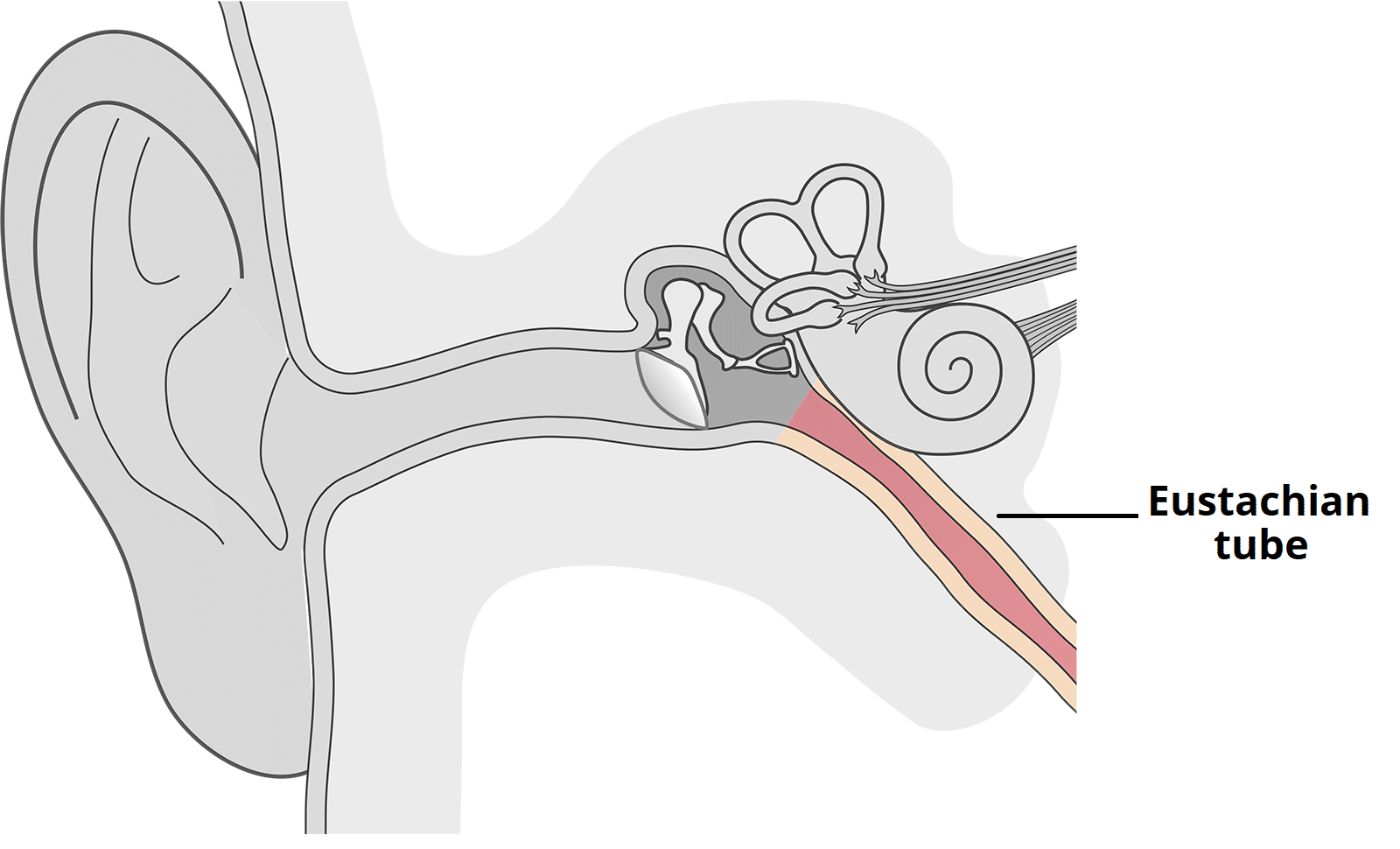
The Eustachian tube connects the middle ear to the throat — when it gets blocked, crackling sounds often follow.
1. Earwax Buildup (Cerumen Impaction)
Your ears produce wax for good reason — it traps dust, repels water, and keeps the canal healthy. Most of the time, wax exits naturally. But sometimes it accumulates, hardens, and blocks sound transmission. When that happens, crackling, muffled hearing, and a feeling of fullness can follow.
Cotton buds are a classic villain here. They do not clean ears — they push wax deeper. According to Midwest ENT Centre ENT Specialist, avoiding cotton swabs and using OTC drops to soften wax is the first sensible step.
2. Eustachian Tube Dysfunction (ETD)
The Eustachian tube is a narrow passage connecting your middle ear to the back of your nose and throat. Its job is to equalise pressure. When it gets blocked — from a cold, allergies, sinus infection, or altitude changes — it stops functioning correctly.
The crackling you hear when you swallow or yawn? That is almost textbook ETD. The tube tries to open, air rushes through a partially blocked passage, and — crackle. As noted by Link Audiology Audiologist, ETD also makes your ear feel full or clogged, with symptoms often worse during swallowing or yawning.
3. Middle Ear Infection (Acute Otitis Media)
When fluid becomes trapped behind the eardrum — typically during or after a respiratory infection — it can produce crackling, pain, and pressure. This is acute otitis media, one of the most common ear conditions in young children, though adults are not immune.
According to the CDC Government Authority, mild infections may resolve on their own. Bacterial infections that persist beyond two to three days usually need antibiotics.
4. TMJ Disorder (Temporomandibular Joint)
Your jaw joint sits directly beside your ear canal — close enough that problems there sound as though they are happening inside your ear. If crackling appears when you open your mouth, chew, or clench your jaw, TMJ disorder is worth investigating.
TMJ-related crackling often pairs with jaw pain, headaches, or difficulty chewing. The ear connection surprises many people, but anatomically, it makes complete sense.
5. Middle Ear Myoclonus (MEM)
A rarer condition where the stapedius or tensor tympani muscles inside the middle ear twitch involuntarily. As Healthline Medically Reviewed explains, these spasms produce clicking, buzzing, or crackling sounds that vary in pitch — often linked to stress or nerve-related issues.
6. Age-Related Hearing Changes
Gradual hearing loss (presbycusis) affects roughly one in three people aged 65 to 74, and nearly half of those over 75, according to research cited by ScopeAround. As hearing shifts with age, crackling or popping sounds can become more noticeable.
Home Remedies for Crackling Sound in the Ear
Before booking a GP appointment, several things are worth trying at home — particularly if the crackling is mild, recent, or clearly linked to a cold or altitude change.

Simple techniques like swallowing, yawning, or the Valsalva manoeuvre can help relieve pressure-related ear crackling.
🫁 The Valsalva Manoeuvre
Pinch your nose, close your mouth, and gently blow as if clearing your ears. This helps equalise pressure in the Eustachian tube. Use gently — too much force can strain the eardrum.
🍬 Swallow, Yawn, or Chew Gum
These actions activate the muscles that open the Eustachian tube. Simple, but effective for altitude-related or mild congestion-related crackling.
💧 OTC Ear Drops
If earwax is the culprit, over-the-counter softening drops (like sodium bicarbonate drops) can loosen compacted wax and reduce crackling. Give them a few days to work.
🌊 Saline Nasal Rinse
Rinsing the nasal passages with a saline solution reduces congestion, which improves Eustachian tube function. Particularly useful when a cold or allergy is the root cause.
🔥 Warm Compress
A warm, damp cloth held against the affected ear can ease discomfort and reduce inflammation around the Eustachian tube. Ten minutes is usually enough.
💊 OTC Decongestants
Oral decongestants or nasal sprays reduce swelling in the sinus and nasal passages, making it easier for the Eustachian tube to drain. Use as directed to avoid rebound congestion.
⚠️ Important: Never insert cotton buds, bobby pins, or any object into your ear canal to investigate crackling or dislodge wax. You risk pushing the blockage deeper — or damaging your eardrum entirely.
Some practitioners suggest gentle massage behind the ears to encourage Eustachian tube drainage. Scientific evidence is limited, but the technique is low-risk and some people find it helpful, as noted by Healthline.
If you want to understand how nutrients connect to nerve health and ear function, this breakdown of Vitamin B1 Thiamine on Big Write Hook is worth a read.
Medical Treatments for Ear Crackling
When home remedies do not fix the problem, or when the crackling has a specific underlying cause, medical treatment is the right path. What your doctor recommends depends entirely on what is causing the sound.
| Cause | Medical Treatment |
|---|---|
| Earwax impaction | Ear irrigation or microsuction by a professional |
| Eustachian tube dysfunction | Nasal steroid sprays, antihistamines, or balloon dilation |
| Middle ear infection | Antibiotics (bacterial), ear tubes if fluid persists |
| TMJ disorder | Bite guards, physical therapy, jaw exercises, or surgery (rare) |
| Middle ear myoclonus | Muscle relaxants, CBT, sound therapy, or TRT |
| Meniere's disease | Specialist referral, medication to manage fluid and symptoms |

A doctor will examine your ear using an otoscope and may order hearing tests to pinpoint the cause of crackling.
For persistent ETD that does not respond to medication, balloon dilation of the Eustachian tube is a viable option. A small balloon catheter gently opens the tube — it sounds alarming but is generally well-tolerated, according to Medical News Today Peer-reviewed.
For tinnitus-linked crackling, treatments like Cognitive Behavioural Therapy (CBT) and Tinnitus Retraining Therapy (TRT) help patients manage the psychological impact of ongoing sounds, as outlined by Hearing Health Center Audiologist.
For a broader look at how medical research translates into treatments like these, the Big Write Hook article on what medical scientists actually do offers useful context.
When to See a Doctor About Crackling in the Ear
Occasional crackling — when flying, after a swim, or during a cold — is usually nothing to worry about. Your body is equalising pressure, and it does so with sound effects.
But some situations need prompt medical attention. Do not wait if you experience:
- Sudden or significant hearing loss — treat this as a medical emergency; treatment within 48 hours gives the best recovery chances
- Dizziness or vertigo alongside crackling, which may indicate an inner ear infection or vestibular disorder
- Discharge from the ear — blood, pus, or clear fluid are red flags
- Crackling lasting more than a week without improvement from home remedies
- Worsening ear pain rather than gradual improvement
- Crackling paired with jaw pain or difficulty opening your mouth
As Hearing Health Center Audiologist points out, sudden hearing loss that accompanies crackling is a genuine emergency — the sooner treatment begins, the better the odds of full recovery.
Note: This article provides general information drawn from trusted medical sources. It does not replace professional medical advice. If you are unsure about your symptoms, speak to a GP, audiologist, or ENT specialist.
How to Prevent Crackling Sound in the Ear

Ear protection in loud environments is one of the most effective long-term prevention strategies for crackling and tinnitus.
Not all causes are preventable — but many are. Here is what you can do to keep your ears healthier for longer.
Protect your ears from loud noise. Prolonged exposure to loud sound is one of the most common triggers of tinnitus, according to ScopeAround. Use ear protection at concerts, in noisy workplaces, or when operating loud machinery.
Keep ears dry and clean — the right way. After swimming or showering, tilt your head gently to let water drain. Do not use cotton buds. The ear has a natural self-cleaning system — let it do its job.
Manage allergies proactively. Since allergies are a major driver of Eustachian tube blockage, staying on top of allergy treatment — antihistamines, nasal sprays, or trigger avoidance — can significantly reduce crackling episodes.
Avoid or reduce smoking. Smoking irritates the Eustachian tube and raises the risk of dysfunction. As noted by the Ear & Sinus Institute ENT Specialist, cutting out smoke exposure is one of the more meaningful lifestyle changes for ear health.
Manage your stress. Stress links to muscle tension in the jaw and middle ear — both potential contributors to crackling. Regular sleep, exercise, and stress-reduction habits all feed into ear health in ways that might surprise you.
Equalise pressure when flying. Chew gum or swallow during take-off and landing. If you have a cold, consider a nasal decongestant before boarding to prevent Eustachian tube dysfunction mid-flight.
Frequently Asked Questions
Why does my ear crackle when I swallow?
Swallowing activates the muscles that open the Eustachian tube. If the tube is partially blocked, air tries to push through the obstruction and produces a crackling sound. This is one of the most common signs of Eustachian tube dysfunction.
Is crackling in the ear dangerous?
In most cases, no. Occasional crackling linked to colds, altitude changes, or earwax is harmless. However, crackling accompanied by hearing loss, dizziness, or discharge needs prompt medical attention.
Can allergies cause crackling in the ear?
Yes. Allergic reactions cause inflammation and mucus buildup that can block the Eustachian tubes, leading to pressure imbalance and crackling. Managing allergies often reduces or eliminates the sound entirely.
How long does ear crackling last?
It depends on the cause. Crackling from a cold or altitude change typically resolves within days. Earwax-related crackling clears once wax is removed. ETD can persist for weeks without treatment. If crackling continues beyond a week, see a doctor.
Should I use ear candles to fix crackling in the ear?
No. Ear candling has no proven medical benefit and carries real risks — including burns, candle wax blockages, and eardrum damage. Medical associations do not recommend it. Stick to ear drops, saline rinses, or professional removal.
Can stress cause crackling in the ear?
Indirectly, yes. Stress can trigger spasms in the middle ear muscles (middle ear myoclonus) and worsen jaw tension (TMJ disorder) — both of which produce crackling or clicking sounds in the ear.
Is crackling in the ear the same as tinnitus?
Not always. Tinnitus covers many sounds — ringing, buzzing, hissing — that have no external source. Crackling can be a form of tinnitus, but it can also be a purely mechanical symptom caused by earwax, ETD, or TMJ. The distinction matters for treatment.
Final Thoughts
A crackling sound in the ear is almost always telling you something — but it rarely means anything catastrophic. The most common causes (earwax, a blocked Eustachian tube, a cold) are manageable with home remedies or straightforward medical treatment.
The key is not to ignore it if it lingers. Ears are remarkable instruments — they detect sound, maintain balance, and filter the world around you. They deserve proper care, not a cotton bud shoved in hopefully.
If the crackling has lasted more than a week, is getting worse, or comes with pain, dizziness, or hearing loss — book an appointment. Catching and treating the underlying cause early is always better than waiting until it becomes a bigger problem.
For more health content written clearly and without fluff, explore the health section at Big Write Hook — covering topics from supplements to skin health, all properly sourced.
Disclaimer: This article is for informational purposes only and does not constitute medical advice. Always consult a qualified healthcare professional for diagnosis and treatment. Sources include Healthline, Medical News Today, Hearing Health Center, Ear & Sinus Institute, Link Audiology, Midwest ENT Centre, and the CDC.
You are sitting quietly, minding your own business, and then — crackle. Like someone scrunching a crisp packet inside your skull. Not painful, but deeply annoying. And if it keeps happening, more than a little worrying.
That crackling, popping, or Rice Krispies-in-milk sound inside your ear is more common than most people realise. It has several possible causes, and in most cases — thankfully — a clear solution. This article walks you through everything you need to know, based on trusted medical sources, not guesswork.
What Is That Crackling Sound in Your Ear?
Medically, crackling in the ear often falls under the umbrella of tinnitus — a term for sounds heard in the ear without an external source. That said, not every crackle is textbook tinnitus. Sometimes it is a physical, mechanical problem happening inside your ear canal or middle ear.
According to Healthline Medically Reviewed, the sound is often compared to the noise a bowl of Rice Krispies makes after you pour milk over them — a rapid, irregular crackling. Some people hear it only when they swallow or yawn. Others notice it while chewing, changing altitude, or seemingly out of nowhere.
The important thing to understand: the sound itself is a symptom, not a diagnosis. What you hear tells you something is off — but what exactly requires a bit of detective work.
Quick fact: Eustachian tube dysfunction — one of the most common causes of ear crackling — affects around 4% of adults worldwide, and is even more prevalent in children, according to Medical News Today Peer-reviewed.
Common Causes of Crackling Sound in the Ear
Here are the main culprits, explained clearly — no unnecessary jargon.
The Eustachian tube connects the middle ear to the throat — when it gets blocked, crackling sounds often follow.
1. Earwax Buildup (Cerumen Impaction)
Your ears produce wax for good reason — it traps dust, repels water, and keeps the canal healthy. Most of the time, wax exits naturally. But sometimes it accumulates, hardens, and blocks sound transmission. When that happens, crackling, muffled hearing, and a feeling of fullness can follow.
Cotton buds are a classic villain here. They do not clean ears — they push wax deeper. According to Midwest ENT Centre ENT Specialist, avoiding cotton swabs and using OTC drops to soften wax is the first sensible step.
2. Eustachian Tube Dysfunction (ETD)
The Eustachian tube is a narrow passage connecting your middle ear to the back of your nose and throat. Its job is to equalise pressure. When it gets blocked — from a cold, allergies, sinus infection, or altitude changes — it stops functioning correctly.
The crackling you hear when you swallow or yawn? That is almost textbook ETD. The tube tries to open, air rushes through a partially blocked passage, and — crackle. As noted by Link Audiology Audiologist, ETD also makes your ear feel full or clogged, with symptoms often worse during swallowing or yawning.
3. Middle Ear Infection (Acute Otitis Media)
When fluid becomes trapped behind the eardrum — typically during or after a respiratory infection — it can produce crackling, pain, and pressure. This is acute otitis media, one of the most common ear conditions in young children, though adults are not immune.
According to the CDC Government Authority, mild infections may resolve on their own. Bacterial infections that persist beyond two to three days usually need antibiotics.
4. TMJ Disorder (Temporomandibular Joint)
Your jaw joint sits directly beside your ear canal — close enough that problems there sound as though they are happening inside your ear. If crackling appears when you open your mouth, chew, or clench your jaw, TMJ disorder is worth investigating.
TMJ-related crackling often pairs with jaw pain, headaches, or difficulty chewing. The ear connection surprises many people, but anatomically, it makes complete sense.
5. Middle Ear Myoclonus (MEM)
A rarer condition where the stapedius or tensor tympani muscles inside the middle ear twitch involuntarily. As Healthline Medically Reviewed explains, these spasms produce clicking, buzzing, or crackling sounds that vary in pitch — often linked to stress or nerve-related issues.
6. Age-Related Hearing Changes
Gradual hearing loss (presbycusis) affects roughly one in three people aged 65 to 74, and nearly half of those over 75, according to research cited by ScopeAround. As hearing shifts with age, crackling or popping sounds can become more noticeable.
Home Remedies for Crackling Sound in the Ear
Before booking a GP appointment, several things are worth trying at home — particularly if the crackling is mild, recent, or clearly linked to a cold or altitude change.
Simple techniques like swallowing, yawning, or the Valsalva manoeuvre can help relieve pressure-related ear crackling.
🫁 The Valsalva Manoeuvre
Pinch your nose, close your mouth, and gently blow as if clearing your ears. This helps equalise pressure in the Eustachian tube. Use gently — too much force can strain the eardrum.
🍬 Swallow, Yawn, or Chew Gum
These actions activate the muscles that open the Eustachian tube. Simple, but effective for altitude-related or mild congestion-related crackling.
💧 OTC Ear Drops
If earwax is the culprit, over-the-counter softening drops (like sodium bicarbonate drops) can loosen compacted wax and reduce crackling. Give them a few days to work.
🌊 Saline Nasal Rinse
Rinsing the nasal passages with a saline solution reduces congestion, which improves Eustachian tube function. Particularly useful when a cold or allergy is the root cause.
🔥 Warm Compress
A warm, damp cloth held against the affected ear can ease discomfort and reduce inflammation around the Eustachian tube. Ten minutes is usually enough.
💊 OTC Decongestants
Oral decongestants or nasal sprays reduce swelling in the sinus and nasal passages, making it easier for the Eustachian tube to drain. Use as directed to avoid rebound congestion.
⚠️ Important: Never insert cotton buds, bobby pins, or any object into your ear canal to investigate crackling or dislodge wax. You risk pushing the blockage deeper — or damaging your eardrum entirely.
Some practitioners suggest gentle massage behind the ears to encourage Eustachian tube drainage. Scientific evidence is limited, but the technique is low-risk and some people find it helpful, as noted by Healthline.
If you want to understand how nutrients connect to nerve health and ear function, this breakdown of Vitamin B1 Thiamine on Big Write Hook is worth a read.
Medical Treatments for Ear Crackling
When home remedies do not fix the problem, or when the crackling has a specific underlying cause, medical treatment is the right path. What your doctor recommends depends entirely on what is causing the sound.
| Cause | Medical Treatment |
|---|---|
| Earwax impaction | Ear irrigation or microsuction by a professional |
| Eustachian tube dysfunction | Nasal steroid sprays, antihistamines, or balloon dilation |
| Middle ear infection | Antibiotics (bacterial), ear tubes if fluid persists |
| TMJ disorder | Bite guards, physical therapy, jaw exercises, or surgery (rare) |
| Middle ear myoclonus | Muscle relaxants, CBT, sound therapy, or TRT |
| Meniere's disease | Specialist referral, medication to manage fluid and symptoms |
A doctor will examine your ear using an otoscope and may order hearing tests to pinpoint the cause of crackling.
For persistent ETD that does not respond to medication, balloon dilation of the Eustachian tube is a viable option. A small balloon catheter gently opens the tube — it sounds alarming but is generally well-tolerated, according to Medical News Today Peer-reviewed.
For tinnitus-linked crackling, treatments like Cognitive Behavioural Therapy (CBT) and Tinnitus Retraining Therapy (TRT) help patients manage the psychological impact of ongoing sounds, as outlined by Hearing Health Center Audiologist.
For a broader look at how medical research translates into treatments like these, the Big Write Hook article on what medical scientists actually do offers useful context.
When to See a Doctor About Crackling in the Ear
Occasional crackling — when flying, after a swim, or during a cold — is usually nothing to worry about. Your body is equalising pressure, and it does so with sound effects.
But some situations need prompt medical attention. Do not wait if you experience:
- Sudden or significant hearing loss — treat this as a medical emergency; treatment within 48 hours gives the best recovery chances
- Dizziness or vertigo alongside crackling, which may indicate an inner ear infection or vestibular disorder
- Discharge from the ear — blood, pus, or clear fluid are red flags
- Crackling lasting more than a week without improvement from home remedies
- Worsening ear pain rather than gradual improvement
- Crackling paired with jaw pain or difficulty opening your mouth
As Hearing Health Center Audiologist points out, sudden hearing loss that accompanies crackling is a genuine emergency — the sooner treatment begins, the better the odds of full recovery.
Note: This article provides general information drawn from trusted medical sources. It does not replace professional medical advice. If you are unsure about your symptoms, speak to a GP, audiologist, or ENT specialist.
How to Prevent Crackling Sound in the Ear
Ear protection in loud environments is one of the most effective long-term prevention strategies for crackling and tinnitus.
Not all causes are preventable — but many are. Here is what you can do to keep your ears healthier for longer.
Protect your ears from loud noise. Prolonged exposure to loud sound is one of the most common triggers of tinnitus, according to ScopeAround. Use ear protection at concerts, in noisy workplaces, or when operating loud machinery.
Keep ears dry and clean — the right way. After swimming or showering, tilt your head gently to let water drain. Do not use cotton buds. The ear has a natural self-cleaning system — let it do its job.
Manage allergies proactively. Since allergies are a major driver of Eustachian tube blockage, staying on top of allergy treatment — antihistamines, nasal sprays, or trigger avoidance — can significantly reduce crackling episodes.
Avoid or reduce smoking. Smoking irritates the Eustachian tube and raises the risk of dysfunction. As noted by the Ear & Sinus Institute ENT Specialist, cutting out smoke exposure is one of the more meaningful lifestyle changes for ear health.
Manage your stress. Stress links to muscle tension in the jaw and middle ear — both potential contributors to crackling. Regular sleep, exercise, and stress-reduction habits all feed into ear health in ways that might surprise you.
Equalise pressure when flying. Chew gum or swallow during take-off and landing. If you have a cold, consider a nasal decongestant before boarding to prevent Eustachian tube dysfunction mid-flight.
Frequently Asked Questions
Why does my ear crackle when I swallow?
Swallowing activates the muscles that open the Eustachian tube. If the tube is partially blocked, air tries to push through the obstruction and produces a crackling sound. This is one of the most common signs of Eustachian tube dysfunction.
Is crackling in the ear dangerous?
In most cases, no. Occasional crackling linked to colds, altitude changes, or earwax is harmless. However, crackling accompanied by hearing loss, dizziness, or discharge needs prompt medical attention.
Can allergies cause crackling in the ear?
Yes. Allergic reactions cause inflammation and mucus buildup that can block the Eustachian tubes, leading to pressure imbalance and crackling. Managing allergies often reduces or eliminates the sound entirely.
How long does ear crackling last?
It depends on the cause. Crackling from a cold or altitude change typically resolves within days. Earwax-related crackling clears once wax is removed. ETD can persist for weeks without treatment. If crackling continues beyond a week, see a doctor.
Should I use ear candles to fix crackling in the ear?
No. Ear candling has no proven medical benefit and carries real risks — including burns, candle wax blockages, and eardrum damage. Medical associations do not recommend it. Stick to ear drops, saline rinses, or professional removal.
Can stress cause crackling in the ear?
Indirectly, yes. Stress can trigger spasms in the middle ear muscles (middle ear myoclonus) and worsen jaw tension (TMJ disorder) — both of which produce crackling or clicking sounds in the ear.
Is crackling in the ear the same as tinnitus?
Not always. Tinnitus covers many sounds — ringing, buzzing, hissing — that have no external source. Crackling can be a form of tinnitus, but it can also be a purely mechanical symptom caused by earwax, ETD, or TMJ. The distinction matters for treatment.
Final Thoughts
A crackling sound in the ear is almost always telling you something — but it rarely means anything catastrophic. The most common causes (earwax, a blocked Eustachian tube, a cold) are manageable with home remedies or straightforward medical treatment.
The key is not to ignore it if it lingers. Ears are remarkable instruments — they detect sound, maintain balance, and filter the world around you. They deserve proper care, not a cotton bud shoved in hopefully.
If the crackling has lasted more than a week, is getting worse, or comes with pain, dizziness, or hearing loss — book an appointment. Catching and treating the underlying cause early is always better than waiting until it becomes a bigger problem.
For more health content written clearly and without fluff, explore the health section at Big Write Hook — covering topics from supplements to skin health, all properly sourced.
Disclaimer: This article is for informational purposes only and does not constitute medical advice. Always consult a qualified healthcare professional for diagnosis and treatment. Sources include Healthline, Medical News Today, Hearing Health Center, Ear & Sinus Institute, Link Audiology, Midwest ENT Centre, and the CDC.
