
The cheapest dental work is the work you do early, and the second cheapest is the work you finally schedule today. If you have not been seen in five years, the sensible move is booking with a dentist in Rockville Centre NY this month instead of waiting for a tooth to make the decision for you. Nobody at the front desk is keeping score on your flossing. What a good office is actually sorting out is which problems can wait and which cannot, and how much each answer costs you.
The First Visit Back Is Mostly Conversation
A return exam after years away is an exam, a set of X-rays, and a talk about the order of operations. Almost nothing gets drilled on day one. What we see most often is a patient bracing for a lecture and walking out with a ranked list instead, sorted by what hurts, what is spreading, and what can safely hold for another year. That list is the real product of the appointment, and it is the thing to ask for by name.
Decay History Adds Up Quietly Over Decades
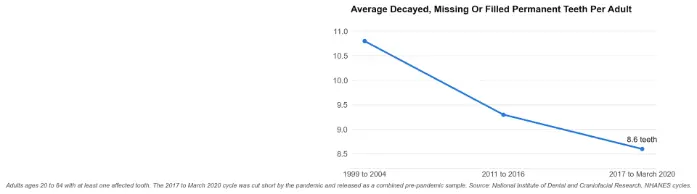
You are less of an outlier than you think. Survey data from the National Institute of Dental and Craniofacial Research shows working age adults with any decay history average 8.6 decayed, missing or filled permanent teeth, down from 10.8 in the survey run between 1999 and 2004. Better than a generation ago, sure, though hardly a clean bill. That is eight teeth per person that somebody had to drill, pull or patch, and the average shifts across decades rather than years.
Small Problems Get Expensive On A Predictable Schedule
Decay does not sit still. A cavity caught early is a short filling appointment; the same tooth left three years becomes a root canal, a buildup and a crown. That is a different order of money. Say a filling runs you $250 around Nassau County. Honestly, closer to $325 once the exam and a couple of X-rays land on the same bill, and that is still the cheap version of the story. The crown version starts north of $1,400 and keeps going.
Before you call anyone, run a sanity check on the numbers. FAIR Health Consumer publishes a free cost lookup tool that returns a ZIP code range for a crown, a root canal or a deep cleaning. It will not quote your mouth, but it tells you whether an estimate sits in the normal neighborhood for Long Island or somewhere well outside it.
Your Plan's Annual Cap Shapes The Treatment Plan
Dental insurance is not medical insurance, and the ceiling is the part people miss. In March 2026, KFF Health News reported that dental plans often cap what they pay at $1,000 to $2,000 a year, leaving the patient responsible for everything above that maximum. So a $4,000 treatment plan against a $1,500 cap leaves $2,500 for you to cover yourself. That arithmetic is the reason a decent office will split non urgent work across two benefit years rather than hand you one enormous quote.
Staging Treatment Beats Doing Nothing At All
Staging is the compromise hardly anyone asks for by name. Urgent items go first, meaning the infection, the fracture, the molar that wakes you at three in the morning. Cosmetic work waits, sometimes for years, and that is fine. The worst treatment plan is the one you abandon because the total scared you off. Ask for the sequence in writing with prices attached, and ask what changes if the second phase happens in January rather than December.
Booking The Overdue Visit Is The Cheapest Move
A five year gap is common enough that no reasonable office treats it as a character flaw. Bring whatever you remember about your last set of X-rays, plan on an hour, and leave with that ranked list and a written estimate. Patients who finally book with a dentist in Rockville Centre NY after a long absence usually report the same thing, that the first visit was the hardest and mostly out of dread. The teeth you keep are usually the ones somebody looked at this year.
