
Barn doors have had a strange journey. They started as a purely functional solution for old farm buildings, disappeared from mainstream design for decades, and then came roaring back as one of the most requested features in both homes and commercial spaces. Walk through any renovation show or scroll a few minutes on a design site and you'll run into one within seconds.
But here's what most people don't realize until they're halfway through a project: the door slab itself is the easy part. The hardware holding it up, guiding it, and keeping it running smoothly year after year is where a project either succeeds quietly in the background or turns into a recurring headache. I've seen both, and the difference almost always comes down to a handful of decisions made before installation even starts.
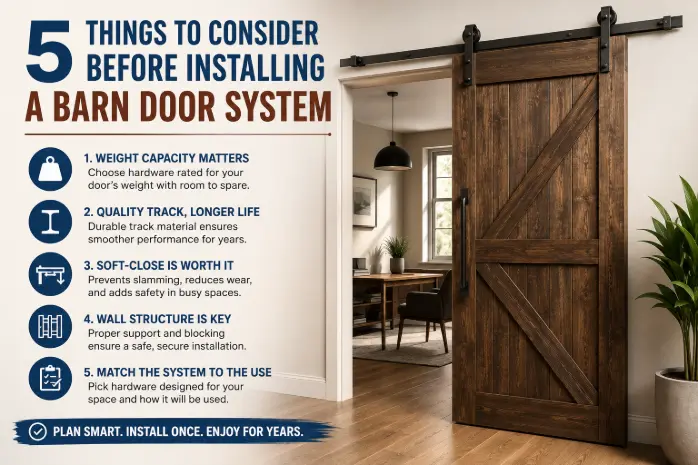
1. Weight Capacity Isn't Optional Math
This is the one people skip, and it's the one that causes the most trouble later. A solid wood barn door can weigh anywhere from 100 to well over 400 pounds depending on the material and size, and the track system needs to be rated for that weight with room to spare, not right at the edge of it.
Underrated hardware doesn't fail immediately. It sags gradually, starts sticking, and eventually the rollers wear out faster than they should. If you're specifying a system for a commercial space with heavier doors, this matters even more, since the door is likely getting opened and closed dozens of times a day.
2. Track Material Actually Affects Longevity
Not all tracks are built the same, and the difference shows up over time rather than on day one. Steel tracks with a proper finish hold up far better in humid environments or high-traffic commercial spaces than lighter-duty aluminum options marketed mostly for residential use.
If the door is going into a space with a lot of temperature swings, or somewhere near a kitchen or bathroom, it's worth asking directly what the track is rated for rather than assuming heavier-looking hardware automatically means better hardware.
3. Soft-Close Mechanisms Are Worth the Extra Cost
A door that slams shut every single time gets old fast, and in a commercial setting it's also a liability with foot traffic nearby. Soft-close mechanisms have gotten a lot more reliable in the last few years and are no longer the expensive add-on they used to be.
It's a small detail on paper, but it's usually the first thing people notice, good or bad, once the door is actually in daily use.
4. Wall Structure Matters More Than the Door Itself
This one catches people off guard. A barn door system relies almost entirely on whatever it's mounted to, so the wall needs enough blocking or structural support to handle the combined weight of the door and the constant motion over years of use. Drywall alone, without proper backing, just isn't going to cut it for anything beyond a very light decorative door.
Anyone specifying a system for a renovation should confirm wall structure before ordering hardware, not after, since retrofitting support behind finished drywall is a much bigger job than planning for it upfront.
5. Not All Systems Are Built for the Same Use Case
There's a real difference between hardware designed for a lightly used closet door in a home and hardware designed for a high-traffic commercial application opened dozens of times daily. Confusing the two is one of the most common mistakes in early-stage planning, and it's usually the reason projects need hardware replaced within a year or two.
For anyone comparing options, looking into properly rated barn door systems built for the actual application, rather than just picking whatever's available locally, makes a real difference in how the door performs five or ten years down the line.
Getting the Details Right Upfront
None of this is complicated once you know what to look for, but it's easy to overlook when a project is moving fast and the door itself feels like the main decision. Weight capacity, track material, soft-close hardware, wall structure, and matching the system to actual use all matter more than the visual style of the door slab.
Final Thoughts
A barn door can be a genuinely great addition to a space, both for the look and for saving floor space a swinging door would otherwise need. But the hardware is doing all the real work, quietly, every single day the door is in use. Getting it right at the planning stage costs a little more upfront thought, but it saves a lot of frustration, and money, later on.
