
The average American Bully life expectancy ranges from 10 to 14 years.
With responsible breeding, proper nutrition, and consistent vet care, many Bullies hit the upper end of that range comfortably.
Some well-cared-for dogs have reportedly lived past 16 years. The oldest known case reached an extraordinary 25 years — though that is very much the exception, not the rule.
📄 Table of Contents
📊 Lifespan Overview & Key Stats
Let's skip the fluff. Here is what the data actually says about how long American Bullies live.
Sources: A-Z Animals, AmericanBully.com, Dog-Weight.com
The breed was developed in the 1980s and 1990s by crossing American Pit Bull Terriers with American Staffordshire Terriers and various bulldog-type breeds. It was standardised by the American Bully Kennel Club (ABKC) in 2004 and recognised by the United Kennel Club in 2013.
The breed's relatively young history means long-term health data is still limited. That said, responsible ownership makes a measurable difference to how many years you get together.
🐾 Lifespan by American Bully Type
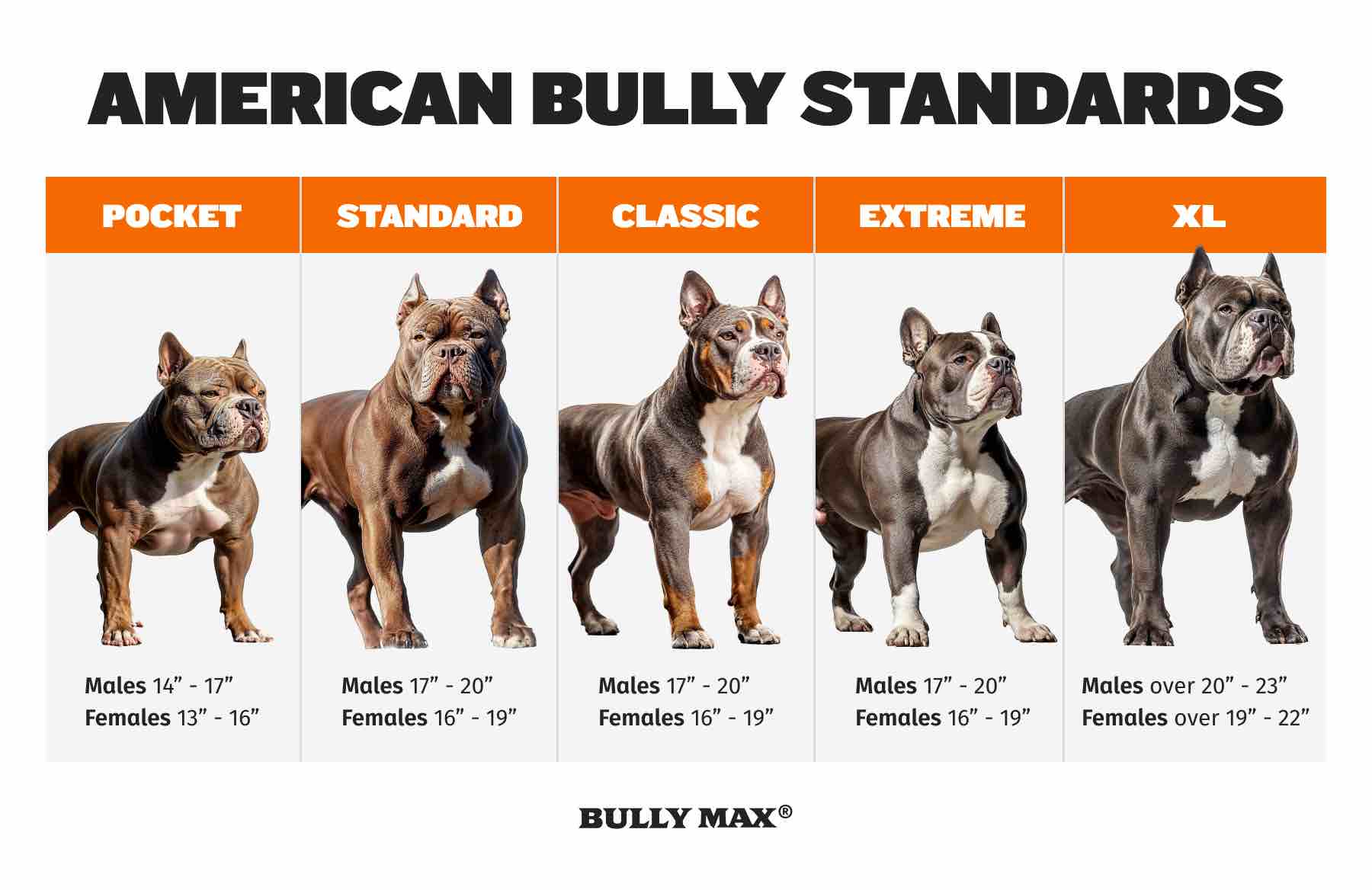
The ABKC recognises four official size varieties. Each has slightly different health profiles and lifespan trends. As a general rule, smaller dogs tend to live longer — and the data on Bullies follows that pattern.
| Type | Height (Male) | Weight Range | Est. Lifespan | Key Trait |
|---|---|---|---|---|
| 14–17 in | 30–45 lbs | 10–14 years | Compact, apartment-friendly | |
| Standard | 17–20 in | 65–85 lbs | 10–12 years | Balanced, family-focused |
| Classic | 17–20 in | 50–70 lbs | 10–13 years | Leaner, athletic build |
| XL | 20–23 in | 80–140 lbs | 8–12 years | Larger frame, more joint strain |
Size data sourced from Encyclopaedia Britannica and Wikipedia (American Bully)
The XL Bully carries more body mass and greater joint load. That extra size can accelerate the wear on hips and elbows — two of the breed's most common problem areas. The Pocket Bully, by contrast, often reaches the higher end of the lifespan range due to less skeletal strain.
"The smaller classifications of the American Bully will usually have a longer lifespan than the larger breeds, typically hitting the higher ends of the average life expectancy." — Dog Academy
☣ Common Health Problems That Shorten Life
Like all breeds, the American Bully has a handful of recurring health concerns. Knowing what to watch for is the first step in protecting your dog's longevity.
1. Hip & Elbow Dysplasia
- One of the most common structural issues in Bullies, especially in Pocket and XL types.
- Occurs when the joint fails to develop properly, leading to friction, pain, and eventually arthritis.
- Genetics play a major role, but excess body weight makes it significantly worse.
- Can be managed with diet, exercise control, supplements, and in severe cases — surgery.
Source: Figo Pet Insurance — Bully Breed Health
2. Congenital Heart Disease
- Bully breeds are genetically more vulnerable to cardiac conditions, including subaortic stenosis and mitral valve disease.
- Signs can be subtle early on: fatigue after light exercise, laboured breathing.
- Vets typically diagnose with echocardiograms or electrocardiograms.
- Regular bi-annual cardiac checks are strongly recommended.
3. Skin Conditions & Allergies
- American Bullies have sensitive skin. Dermatitis, hotspots, and eczema are common.
- Skin fold pyoderma — bacterial infection in skin folds — is particularly common in compact types.
- Food and environmental allergies can cause recurring ear infections and excessive itching.
- Identify the allergen early and remove it from the environment where possible.
4. Hypothyroidism
- The thyroid gland fails to produce sufficient hormone, causing weight gain and lethargy.
- Often caused by autoimmune disease or a genetic disorder in bully breeds.
- Manageable with daily medication once diagnosed.
5. Obesity
- Excess weight accelerates joint degeneration, strains the heart, and raises the risk of diabetes.
- American Bullies are prone to overeating if not carefully managed.
- A structured feeding routine with portion control is essential.
6. Eye Conditions
- The breed is more prone to cataracts, cherry eye, and entropion than average.
- Early veterinary screening helps catch issues before they impact quality of life.
Owning an American Bully also means staying on top of their emotional wellbeing. You might find our article on the role of an emotional support animal in mental health and daily life useful for understanding how the human-dog bond impacts both of your wellbeing.
Relative Prevalence of Health Issues in American Bullies
Relative risk based on data from Dogs Best Life and A-Z Animals. Chart is illustrative, not absolute frequency data.
📊 OFA Data: The Numbers Are Eye-Opening
The Orthopedic Foundation for Animals (OFA) maintains one of the most reliable health testing databases in canine medicine. Their findings on the American Bully are genuinely sobering.
- Only 55.7% of American Bullies tested pass OFA hip evaluations.
- Only 59.8% pass OFA elbow evaluations.
- American Bullies rank #2 worst for elbow scores across all breeds in the OFA database.
- They rank #10 worst for hip scores across all breeds.
- They hold the #1 worst position for basic cardiac scores in the OFA database.
Source: Border City Bullies — OFA Health Testing Data
These figures highlight why choosing a breeder who health-tests their breeding stock is not optional — it's essential. A dog from untested parents carries substantially higher risk of inheriting these conditions.
⚙ Factors That Affect American Bully Lifespan
Life expectancy is not just genetics and luck. It's largely a product of daily decisions. Here are the major variables at play:
| Factor | Impact on Lifespan | What You Can Do |
|---|---|---|
| Genetics | Very High | Choose a breeder who OFA-tests for hips, elbows, and heart. |
| Diet & Nutrition | High | Feed a high-protein diet; first ingredient should be whole meat. |
| Exercise | High | Regular but not excessive — avoid intense exercise in high heat. |
| Vet Care Frequency | High | Annual check-ups for adults, bi-annual for seniors (7+). |
| Weight Management | High | Monitor weight monthly; avoid free-feeding. |
| Dental Hygiene | Moderate | Brush teeth or use dental chews — periodontal disease affects heart health. |
| Temperature Control | Moderate | Short coats + stocky builds = heat sensitivity. Limit outdoor time in summer heat. |
| Mental Stimulation | Moderate | Bored Bullies can develop anxiety. Use enrichment toys and training games. |
For dogs that wear collars daily, comfort and fit matter more than people think. Poor collar design creates sustained pressure on the neck and upper spine. Check out our guide to ergonomic dog collars for recommendations that reduce unnecessary strain.
✅ Practical Tips to Help Your Bully Live Longer
You cannot change your dog's genes. But you can change almost everything else. Here is a straightforward action plan.
Nutrition
- Choose a food where the first ingredient is a named whole protein (chicken, beef, salmon).
- Avoid fillers like corn syrup and generic meat by-products — these contribute to obesity and inflammation.
- For muscular breeds, a high-protein diet supports lean mass and joint health.
- Never free-feed — portion control is essential for a breed prone to weight gain.
- Avoid table scraps; human food regularly disrupts a balanced canine diet.
Exercise
- 30–60 minutes of moderate exercise daily is ideal for most adult Bullies.
- Mix walking, play, and enrichment activities to support both body and mind.
- Swimming is an excellent low-impact option for Bullies with joint issues.
- Never over-exercise in high heat or humidity — these dogs overheat quickly due to their build.
- Avoid high-impact jumping exercises for dogs already showing hip or elbow stiffness.
Veterinary Care
- Annual blood panels can catch kidney and liver issues before they become life-threatening.
- Cardiac screening (echocardiogram) is highly recommended given the breed's OFA cardiac rankings.
- Ask your vet about OFA hip and elbow evaluations — even if your dog shows no symptoms.
- Senior dogs (7+) should visit the vet twice per year.
Dental Hygiene
- Periodontal disease is directly linked to heart problems in dogs, just as in humans.
- Brushing three times a week — or daily — makes a real difference.
- Dental chews are a useful supplement, not a replacement for brushing.
🕐 American Bully Life Stages: What to Expect
| Life Stage | Age Range | Key Focus Areas |
|---|---|---|
| Puppyhood | 0–12 months | Socialisation, vaccinations, early vet screening, joint monitoring |
| Adolescence | 12–24 months | Full growth reached by 18–24 months; consistent training; neutering decision |
| Adult | 2–7 years | Annual vet checks, exercise routine, weight management, dental care |
| Senior | 7+ years | Bi-annual vet visits, joint supplements, softer exercise, cognitive enrichment |
Most American Bullies reach their full-grown size by 18 to 24 months. Before that point, over-exercising a puppy can cause lasting damage to developing joints. Keep exercise gentle and age-appropriate in the first year.
If your senior Bully is slowing down, do not assume it's just age. Sudden changes in gait, appetite, or behaviour often signal an underlying condition that responds well to early treatment.
❓ Frequently Asked Questions
How long do American Bullies live on average?
Most American Bullies live between 10 and 14 years. With excellent care, some reach 15 or 16 years. The average most frequently cited in veterinary sources is 12 to 13 years.
Do XL Bullies have a shorter lifespan?
Generally, yes. Larger dogs carry more weight on their joints and hearts. XL Bullies typically fall at the lower end of the lifespan range — around 8 to 12 years — compared to their Pocket or Classic counterparts.
What is the most common cause of death in American Bullies?
Heart disease and joint-related deterioration (hip/elbow dysplasia) are among the leading health concerns. Given the OFA data showing the breed ranks worst for cardiac scores among all tested breeds, cardiac care deserves particular attention.
Can diet really extend my Bully's life?
Absolutely. Obesity accelerates virtually every health condition Bullies are prone to — joint damage, heart strain, diabetes. A properly managed diet is one of the highest-impact changes any owner can make.
At what age is an American Bully considered a senior?
Most vets consider Bullies to enter their senior years around age 7. At that point, increasing vet visits to twice per year helps catch conditions — particularly cardiac and kidney issues — earlier and more effectively.
Are American Bullies good family dogs despite their appearance?
Yes. The breed was specifically developed as a companion dog. As Encyclopaedia Britannica notes, with proper training and care, American Bullies can be excellent family dogs. Their appearance is considerably more intimidating than their temperament.
📗 More from Our Pet Health Blog
If you found this guide helpful, you may also enjoy these related reads from BigWriteHook:
- Dog Shoes: The Complete Guide to Protecting Your Dog's Paws
- Tank vs Pitbull: Complete Stats Comparison for Dog Lovers
- Pomerusky Puppies: Everything You Need to Know Before Getting One
- PetKey vs Home Again: Which Pet Microchip Service Is Safer?
💡 The Bottom Line
The American Bully life expectancy of 10–14 years is not fixed. It is a starting point.
Health-tested breeding, a high-protein diet, regular vet care, and consistent exercise can meaningfully extend how long your Bully stays healthy and active. The OFA data shows the breed's vulnerability is real — but so is your ability to manage it.
Your Bully does not care how long the average is. They care about today. Make today count.
📍 Sources referenced in this article: A-Z Animals · AmericanBully.com · Encyclopaedia Britannica · Dogs Best Life · Figo Pet Insurance · Border City Bullies / OFA · Wikipedia · Dog Academy
The average American Bully life expectancy ranges from 10 to 14 years.
With responsible breeding, proper nutrition, and consistent vet care, many Bullies hit the upper end of that range comfortably.
Some well-cared-for dogs have reportedly lived past 16 years. The oldest known case reached an extraordinary 25 years — though that is very much the exception, not the rule.
📄 Table of Contents
📊 Lifespan Overview & Key Stats
Let's skip the fluff. Here is what the data actually says about how long American Bullies live.
Sources: A-Z Animals, AmericanBully.com, Dog-Weight.com
The breed was developed in the 1980s and 1990s by crossing American Pit Bull Terriers with American Staffordshire Terriers and various bulldog-type breeds. It was standardised by the American Bully Kennel Club (ABKC) in 2004 and recognised by the United Kennel Club in 2013.
The breed's relatively young history means long-term health data is still limited. That said, responsible ownership makes a measurable difference to how many years you get together.
🐾 Lifespan by American Bully Type
The ABKC recognises four official size varieties. Each has slightly different health profiles and lifespan trends. As a general rule, smaller dogs tend to live longer — and the data on Bullies follows that pattern.
| Type | Height (Male) | Weight Range | Est. Lifespan | Key Trait |
|---|---|---|---|---|
| 14–17 in | 30–45 lbs | 10–14 years | Compact, apartment-friendly | |
| Standard | 17–20 in | 65–85 lbs | 10–12 years | Balanced, family-focused |
| Classic | 17–20 in | 50–70 lbs | 10–13 years | Leaner, athletic build |
| XL | 20–23 in | 80–140 lbs | 8–12 years | Larger frame, more joint strain |
Size data sourced from Encyclopaedia Britannica and Wikipedia (American Bully)
The XL Bully carries more body mass and greater joint load. That extra size can accelerate the wear on hips and elbows — two of the breed's most common problem areas. The Pocket Bully, by contrast, often reaches the higher end of the lifespan range due to less skeletal strain.
"The smaller classifications of the American Bully will usually have a longer lifespan than the larger breeds, typically hitting the higher ends of the average life expectancy." — Dog Academy
☣ Common Health Problems That Shorten Life
Like all breeds, the American Bully has a handful of recurring health concerns. Knowing what to watch for is the first step in protecting your dog's longevity.
1. Hip & Elbow Dysplasia
- One of the most common structural issues in Bullies, especially in Pocket and XL types.
- Occurs when the joint fails to develop properly, leading to friction, pain, and eventually arthritis.
- Genetics play a major role, but excess body weight makes it significantly worse.
- Can be managed with diet, exercise control, supplements, and in severe cases — surgery.
Source: Figo Pet Insurance — Bully Breed Health
2. Congenital Heart Disease
- Bully breeds are genetically more vulnerable to cardiac conditions, including subaortic stenosis and mitral valve disease.
- Signs can be subtle early on: fatigue after light exercise, laboured breathing.
- Vets typically diagnose with echocardiograms or electrocardiograms.
- Regular bi-annual cardiac checks are strongly recommended.
3. Skin Conditions & Allergies
- American Bullies have sensitive skin. Dermatitis, hotspots, and eczema are common.
- Skin fold pyoderma — bacterial infection in skin folds — is particularly common in compact types.
- Food and environmental allergies can cause recurring ear infections and excessive itching.
- Identify the allergen early and remove it from the environment where possible.
4. Hypothyroidism
- The thyroid gland fails to produce sufficient hormone, causing weight gain and lethargy.
- Often caused by autoimmune disease or a genetic disorder in bully breeds.
- Manageable with daily medication once diagnosed.
5. Obesity
- Excess weight accelerates joint degeneration, strains the heart, and raises the risk of diabetes.
- American Bullies are prone to overeating if not carefully managed.
- A structured feeding routine with portion control is essential.
6. Eye Conditions
- The breed is more prone to cataracts, cherry eye, and entropion than average.
- Early veterinary screening helps catch issues before they impact quality of life.
Owning an American Bully also means staying on top of their emotional wellbeing. You might find our article on the role of an emotional support animal in mental health and daily life useful for understanding how the human-dog bond impacts both of your wellbeing.
Relative Prevalence of Health Issues in American Bullies
Relative risk based on data from Dogs Best Life and A-Z Animals. Chart is illustrative, not absolute frequency data.
📊 OFA Data: The Numbers Are Eye-Opening
The Orthopedic Foundation for Animals (OFA) maintains one of the most reliable health testing databases in canine medicine. Their findings on the American Bully are genuinely sobering.
- Only 55.7% of American Bullies tested pass OFA hip evaluations.
- Only 59.8% pass OFA elbow evaluations.
- American Bullies rank #2 worst for elbow scores across all breeds in the OFA database.
- They rank #10 worst for hip scores across all breeds.
- They hold the #1 worst position for basic cardiac scores in the OFA database.
Source: Border City Bullies — OFA Health Testing Data
These figures highlight why choosing a breeder who health-tests their breeding stock is not optional — it's essential. A dog from untested parents carries substantially higher risk of inheriting these conditions.
⚙ Factors That Affect American Bully Lifespan
Life expectancy is not just genetics and luck. It's largely a product of daily decisions. Here are the major variables at play:
| Factor | Impact on Lifespan | What You Can Do |
|---|---|---|
| Genetics | Very High | Choose a breeder who OFA-tests for hips, elbows, and heart. |
| Diet & Nutrition | High | Feed a high-protein diet; first ingredient should be whole meat. |
| Exercise | High | Regular but not excessive — avoid intense exercise in high heat. |
| Vet Care Frequency | High | Annual check-ups for adults, bi-annual for seniors (7+). |
| Weight Management | High | Monitor weight monthly; avoid free-feeding. |
| Dental Hygiene | Moderate | Brush teeth or use dental chews — periodontal disease affects heart health. |
| Temperature Control | Moderate | Short coats + stocky builds = heat sensitivity. Limit outdoor time in summer heat. |
| Mental Stimulation | Moderate | Bored Bullies can develop anxiety. Use enrichment toys and training games. |
For dogs that wear collars daily, comfort and fit matter more than people think. Poor collar design creates sustained pressure on the neck and upper spine. Check out our guide to ergonomic dog collars for recommendations that reduce unnecessary strain.
✅ Practical Tips to Help Your Bully Live Longer
You cannot change your dog's genes. But you can change almost everything else. Here is a straightforward action plan.
Nutrition
- Choose a food where the first ingredient is a named whole protein (chicken, beef, salmon).
- Avoid fillers like corn syrup and generic meat by-products — these contribute to obesity and inflammation.
- For muscular breeds, a high-protein diet supports lean mass and joint health.
- Never free-feed — portion control is essential for a breed prone to weight gain.
- Avoid table scraps; human food regularly disrupts a balanced canine diet.
Exercise
- 30–60 minutes of moderate exercise daily is ideal for most adult Bullies.
- Mix walking, play, and enrichment activities to support both body and mind.
- Swimming is an excellent low-impact option for Bullies with joint issues.
- Never over-exercise in high heat or humidity — these dogs overheat quickly due to their build.
- Avoid high-impact jumping exercises for dogs already showing hip or elbow stiffness.
Veterinary Care
- Annual blood panels can catch kidney and liver issues before they become life-threatening.
- Cardiac screening (echocardiogram) is highly recommended given the breed's OFA cardiac rankings.
- Ask your vet about OFA hip and elbow evaluations — even if your dog shows no symptoms.
- Senior dogs (7+) should visit the vet twice per year.
Dental Hygiene
- Periodontal disease is directly linked to heart problems in dogs, just as in humans.
- Brushing three times a week — or daily — makes a real difference.
- Dental chews are a useful supplement, not a replacement for brushing.
🕐 American Bully Life Stages: What to Expect
| Life Stage | Age Range | Key Focus Areas |
|---|---|---|
| Puppyhood | 0–12 months | Socialisation, vaccinations, early vet screening, joint monitoring |
| Adolescence | 12–24 months | Full growth reached by 18–24 months; consistent training; neutering decision |
| Adult | 2–7 years | Annual vet checks, exercise routine, weight management, dental care |
| Senior | 7+ years | Bi-annual vet visits, joint supplements, softer exercise, cognitive enrichment |
Most American Bullies reach their full-grown size by 18 to 24 months. Before that point, over-exercising a puppy can cause lasting damage to developing joints. Keep exercise gentle and age-appropriate in the first year.
If your senior Bully is slowing down, do not assume it's just age. Sudden changes in gait, appetite, or behaviour often signal an underlying condition that responds well to early treatment.
❓ Frequently Asked Questions
How long do American Bullies live on average?
Most American Bullies live between 10 and 14 years. With excellent care, some reach 15 or 16 years. The average most frequently cited in veterinary sources is 12 to 13 years.
Do XL Bullies have a shorter lifespan?
Generally, yes. Larger dogs carry more weight on their joints and hearts. XL Bullies typically fall at the lower end of the lifespan range — around 8 to 12 years — compared to their Pocket or Classic counterparts.
What is the most common cause of death in American Bullies?
Heart disease and joint-related deterioration (hip/elbow dysplasia) are among the leading health concerns. Given the OFA data showing the breed ranks worst for cardiac scores among all tested breeds, cardiac care deserves particular attention.
Can diet really extend my Bully's life?
Absolutely. Obesity accelerates virtually every health condition Bullies are prone to — joint damage, heart strain, diabetes. A properly managed diet is one of the highest-impact changes any owner can make.
At what age is an American Bully considered a senior?
Most vets consider Bullies to enter their senior years around age 7. At that point, increasing vet visits to twice per year helps catch conditions — particularly cardiac and kidney issues — earlier and more effectively.
Are American Bullies good family dogs despite their appearance?
Yes. The breed was specifically developed as a companion dog. As Encyclopaedia Britannica notes, with proper training and care, American Bullies can be excellent family dogs. Their appearance is considerably more intimidating than their temperament.
📗 More from Our Pet Health Blog
If you found this guide helpful, you may also enjoy these related reads from BigWriteHook:
- Dog Shoes: The Complete Guide to Protecting Your Dog's Paws
- Tank vs Pitbull: Complete Stats Comparison for Dog Lovers
- Pomerusky Puppies: Everything You Need to Know Before Getting One
- PetKey vs Home Again: Which Pet Microchip Service Is Safer?
💡 The Bottom Line
The American Bully life expectancy of 10–14 years is not fixed. It is a starting point.
Health-tested breeding, a high-protein diet, regular vet care, and consistent exercise can meaningfully extend how long your Bully stays healthy and active. The OFA data shows the breed's vulnerability is real — but so is your ability to manage it.
Your Bully does not care how long the average is. They care about today. Make today count.
📍 Sources referenced in this article: A-Z Animals · AmericanBully.com · Encyclopaedia Britannica · Dogs Best Life · Figo Pet Insurance · Border City Bullies / OFA · Wikipedia · Dog Academy
