
AI image generation has quickly become an essential part of modern content creation. Whether you're designing social media graphics, creating advertising campaigns, editing product photos, or brainstorming creative concepts, AI can significantly reduce production time while expanding creative possibilities.
However, not every AI image model excels at the same tasks. Some are better at producing marketing-ready graphics with accurate text and layouts, while others specialize in photorealistic images or advanced editing. Rather than searching for a single "best" AI image generator, creators often achieve better results by choosing the right model for each project.
Here are four AI image models worth knowing in 2026 and where each one performs best.
1. GPT Image 2.0: Best for Marketing Graphics and Branded Content
When your goal is to create marketing visuals, promotional banners, social media posts, or advertising creatives, GPT Image 2.0 stands out as one of the strongest options.
Unlike many image-generation models that primarily focus on artistic output, GPT Image 2.0 generally performs well when prompts require structured layouts, typography, product labels, or marketing-focused compositions. This makes it particularly useful for content creators, digital marketers, and businesses producing visuals for websites, email campaigns, online ads, and social media.
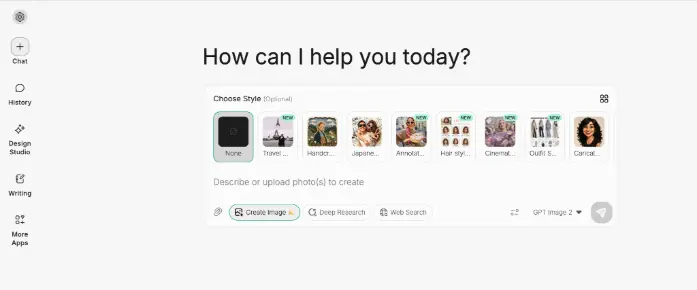
Another advantage is its ability to interpret detailed prompts. Users can specify design styles, colors, compositions, and branding elements with relatively little prompt engineering, reducing the number of iterations needed to reach a usable result.
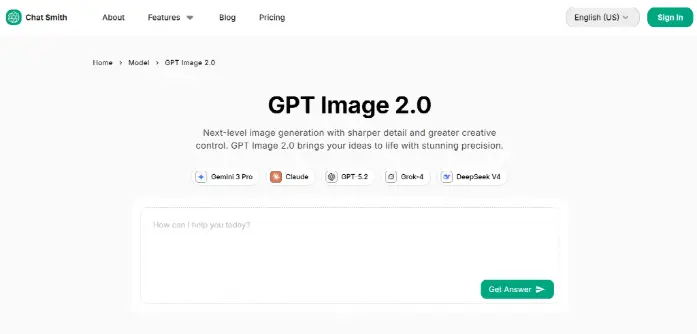
For creators looking to generate marketing assets within a broader AI workflow, Chat Smith provides access to GPT Image 2.0, allowing users to create promotional graphics alongside writing, brainstorming, and other AI-powered tasks without switching between multiple tools.
2. Nano Banana: A Flexible Choice for Everyday Image Creation
Nano Banana is well suited for users who need a versatile AI image model for everyday creative work.
It can generate original images from text prompts while also handling common editing tasks such as replacing backgrounds, removing unwanted objects, expanding images, or modifying existing visuals. This flexibility makes it useful for creators who regularly produce content for blogs, presentations, product listings, or social media.
Instead of specializing in one narrow use case, Nano Banana offers a balanced combination of image generation and editing capabilities, making it a practical option for daily creative workflows.
For users who primarily need quick visual iterations or lightweight image editing, Nano Banana often provides an efficient starting point before moving to more advanced editing when necessary.
3. Nano Banana Pro: Best for Photorealistic Images and Advanced Editing
While Nano Banana is designed for general creative work, Nano Banana Pro focuses on producing more realistic visuals and delivering higher-quality image editing.
This model is particularly well suited for product photography, lifestyle imagery, fashion campaigns, e-commerce assets, realistic portraits, and promotional visuals where natural lighting, textures, and fine details matter.
Its editing capabilities also make it valuable for marketers who already have existing creative assets. Rather than generating an entirely new image, users can refine photographs by replacing backgrounds, adjusting lighting, changing objects, improving compositions, or enhancing overall image quality while preserving a realistic appearance.
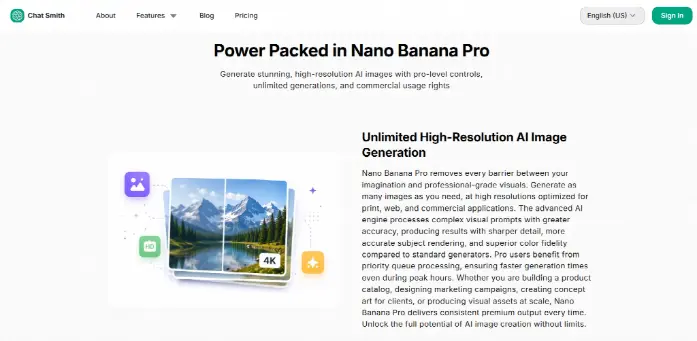
For businesses creating product catalogs, advertising materials, or branded marketing campaigns, realistic editing often saves both production time and creative resources.
Within Chat Smith, Nano Banana Pro complements GPT Image 2.0 by giving creators access to a model optimized for photorealistic image generation and advanced editing, making it easier to choose the right tool depending on the project.
4. General AI Assistants for Creative Brainstorming
Image generation is no longer limited to dedicated image models. Many creators also rely on general-purpose AI assistants powered by models such as GPT, Gemini, Claude, or Grok during the creative process.
These AI assistants can help brainstorm campaign ideas, generate image prompts, write advertising copy, suggest design directions, or refine creative concepts before images are generated. Depending on the platform, they may also support image creation directly or integrate with specialized image-generation models.
Using conversational AI alongside dedicated image models often creates a smoother creative workflow, allowing ideas to move from concept to finished visuals more efficiently.
Choosing the Right AI Model for Your Project
Different creative projects require different strengths. Rather than expecting one model to perform equally well in every scenario, it's often more effective to match the model to the task.
- Marketing graphics, social media creatives, and promotional banners: GPT Image 2.0
- Everyday image generation and quick editing: Nano Banana
- Photorealistic product images and advanced editing: Nano Banana Pro
- Creative brainstorming and prompt development: General AI assistants
Understanding these strengths allows creators to spend less time experimenting with different tools and more time producing high-quality content.
Why Multi-Model Access Matters
One challenge many creators face is that no single AI model consistently delivers the best results across every creative task.
A marketing campaign might begin with brainstorming ideas using an AI assistant, continue with generating promotional graphics, and finish by editing realistic product photos. Switching between multiple AI services for each step can interrupt the creative process and increase workflow complexity.
This is where multi-model platforms become valuable.
Rather than relying on a single model, Chat Smith brings together leading AI chat models—including GPT, Claude, Gemini, Grok, and DeepSeek—alongside specialized image-generation models such as GPT Image 2.0, Nano Banana, and Nano Banana Pro. Users can choose the model that best fits each task while keeping their creative workflow in one place.
For creators, marketers, and businesses managing multiple content formats, this flexibility often proves more practical than depending on a single AI image generator.
Conclusion
AI image generation has evolved beyond finding one "best" model. Today's creators benefit most from understanding the strengths of different models and selecting the right one for each project.
GPT Image 2.0 excels at marketing-focused visuals and structured designs, Nano Banana offers flexible everyday image creation and editing, while Nano Banana Pro delivers realistic imagery and advanced photo editing for professional-quality results.
As creative workflows continue to evolve, having access to multiple specialized AI models within a single platform can help streamline production, reduce context switching, and support a wider range of creative tasks—from brainstorming ideas to publishing polished visual content.
