
Phoenix to Sedona is roughly 116 to 120 miles depending on your exact starting point, and the drive takes about 2 hours under normal traffic conditions. I've made this trip more times than I can count, and I can tell you honestly that those two hours feel like a completely different world by the time you arrive.
The moment you leave the Phoenix metro area behind and start climbing toward Sedona's red rock country, something shifts. The desert opens up, the saguaro cacti thin out, and eventually you're staring at some of the most dramatic scenery in the entire country. Let me walk you through everything you need to know before you make the drive.
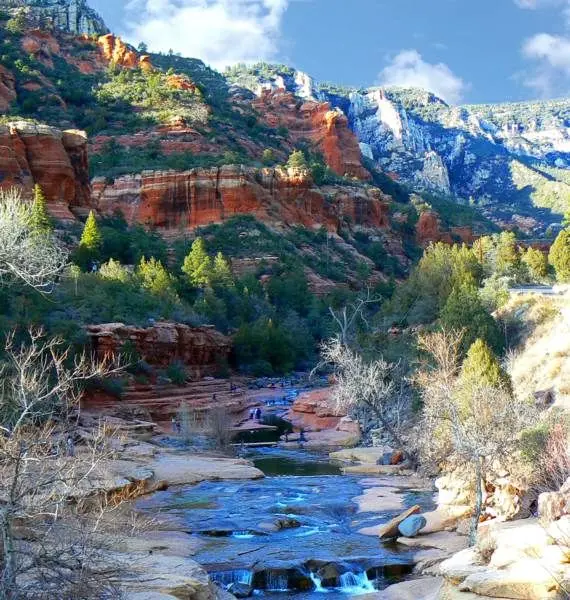
The Exact Distance and What That Really Means
The straight-line distance between Phoenix and Sedona is about 100 miles, but you're not flying a plane. On the road, most routes put you somewhere between 116 and 120 miles. The most popular route, Interstate 17 North to State Route 179, clocks in at roughly 116 miles.
What makes this trip interesting is the elevation change. Phoenix sits at around 1,000 feet above sea level. By the time you roll into Sedona, you're up at about 4,350 feet. That 3,300-foot climb is part of why the landscape looks so dramatically different when you arrive.
Quick Distance Facts:
Driving distance: ~116 to 120 miles
Typical drive time: 2 to 2.5 hours
Elevation gain: ~3,350 feet
Straight-line (as the crow flies): ~100 miles
I remember my first time driving this route on a summer morning. I left Phoenix at 7 a.m. when it was already 95 degrees. By the time I parked in Sedona, it was a breezy 78 degrees. That temperature difference alone makes the drive worth it every time.
The Best Routes From Phoenix to Sedona
There are three main routes you can take, and each one gives you a slightly different experience. Here's a breakdown of all three so you can pick the one that fits your trip.
Route 1: I-17 North to SR-179 (The Quickest Route)
This is the route most people take, and for good reason. You jump on Interstate 17 heading north out of Phoenix, drive until you hit the exit for State Route 179, and then follow that road straight into Sedona. Total distance is around 116 miles, and you can do it in under 2 hours if traffic cooperates.
State Route 179 is also called the Red Rock Scenic Byway, and that name is no joke. The last 7.5 miles before you hit Sedona are absolutely stunning, with Bell Rock and Courthouse Butte rising up on your right. There are several pull-off areas if you want to stop and take photos along the way.
Route 2: I-17 to AZ-260 to AZ-89A (The Scenic Bypass)
This route is about 130 miles and takes around 2.5 hours. You stay on I-17 until Camp Verde, then cut west on AZ-260 through Cottonwood, and finally come into Sedona from the west on AZ-89A. The bonus here is that you approach Sedona through Oak Creek Canyon, which many people say is even more beautiful than the SR-179 approach.
I personally love this route for afternoon drives because the canyon walls catch the light perfectly in the late afternoon. If you're coming back from Sedona, I'd take this route at least once so you enter the canyon from above and wind your way down.
Route 3: Through Prescott and Jerome (The Adventure Route)
This route runs about 150 miles and takes 3 to 3.5 hours. You head north from Phoenix toward Prescott, then wind over the Mingus Mountains on AZ-89A, pass through the historic mining town of Jerome, and drop down into Sedona from the west. It's the longest option but easily the most dramatic.
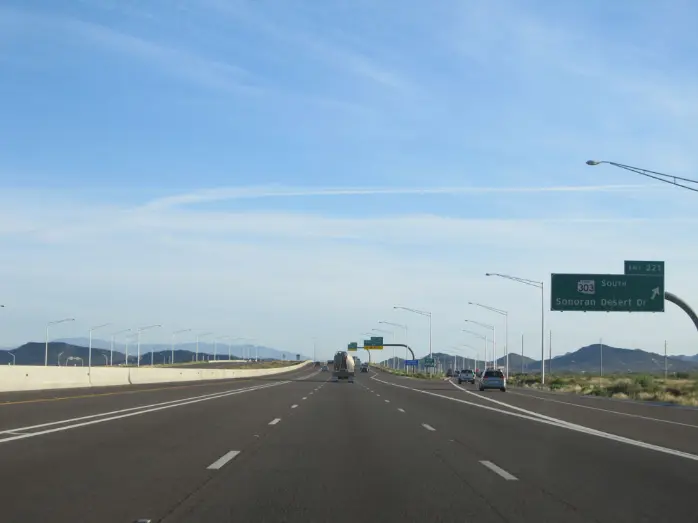
Things to Watch Out for on the Drive
This drive is generally easy, but there are a few things that can catch you off guard if you're not ready for them. I've hit most of these situations personally, so let me save you some headaches.
Traffic Through Phoenix
Getting out of Phoenix is the hardest part of the whole trip. If you leave between 7 a.m. and 9 a.m. on a weekday, or between 4 p.m. and 6 p.m., you're going to sit in traffic on I-17. I once left Phoenix at 1 p.m. on a Monday and hit a 20 to 30-minute delay just getting clear of the city.
My advice is to leave either before 7 a.m. or after 9 a.m. on weekdays. On weekends, especially Friday afternoons, the northbound I-17 toward Sedona can back up pretty badly with everyone trying to escape the city for the weekend.
Traffic at Sedona's "Y" Intersection
Once you arrive in Sedona, the main intersection of SR-179 and SR-89A is called "the Y." This spot gets seriously congested on weekends and holidays. I've seen 30-minute waits just to make a left turn here. Coming in via the AZ-89A route from Oak Creek Canyon actually lets you skip most of this mess.
Winter Weather and Road Conditions
Because of that big elevation gain, Sedona can get snow in winter while Phoenix is sitting in 60-degree sunshine. The roads through Oak Creek Canyon on AZ-89A can get icy and are sometimes temporarily closed after heavy snowfall. Always check Arizona road conditions before heading out between November and March.
- Check ADOT (Arizona Department of Transportation) at az511.gov for live road conditions
- The Oak Creek Canyon stretch of AZ-89A is the most likely to close in winter
- I-17 to SR-179 is typically the most reliable year-round route
- Gas up in Phoenix before leaving since gas prices rise significantly in Sedona
Fun Stops to Make Along the Way
One of the best things about this drive is that you don't have to go straight from point A to point B. There are some genuinely great stops between Phoenix and Sedona that most people skip right past.
Montezuma Castle National Monument
This is my favorite stop on the whole drive. Just off I-17 near the Camp Verde exit, Montezuma Castle is a 20-room cliff dwelling built by the Sinagua people nearly 1,000 years ago. It's built right into the side of a limestone cliff about 90 feet above the ground, and it's remarkably well-preserved. The whole visit, including the short walk to the viewing area, takes about 45 minutes to an hour.
It costs $10 per adult to enter and is open daily. If you've never seen prehistoric cliff dwellings up close, this stop will absolutely blow your mind. I brought my younger cousin here on a road trip and it was easily the highlight of her whole Arizona trip.
Jerome, Arizona
If you take the longer route through Prescott, you'll pass through Jerome, a former copper mining boomtown built into the side of Cleopatra Hill. The whole town is basically stacked on a steep hillside at around 5,000 feet elevation, and the views out over the Verde Valley are incredible.
Jerome has art galleries, restaurants, and a genuinely weird, funky atmosphere that I love. A place called the Haunted Hamburger has been recommended to me by locals more times than I can count, and it lives up to the hype.
Bell Rock and Courthouse Butte
If you take the SR-179 route, Bell Rock is one of the first iconic Sedona landmarks you'll see. You can pull off the road, hop out, and walk right up to the base of it. The Bell Rock Pathway is an easy trail that loops around both Bell Rock and Courthouse Butte and takes about an hour to complete.
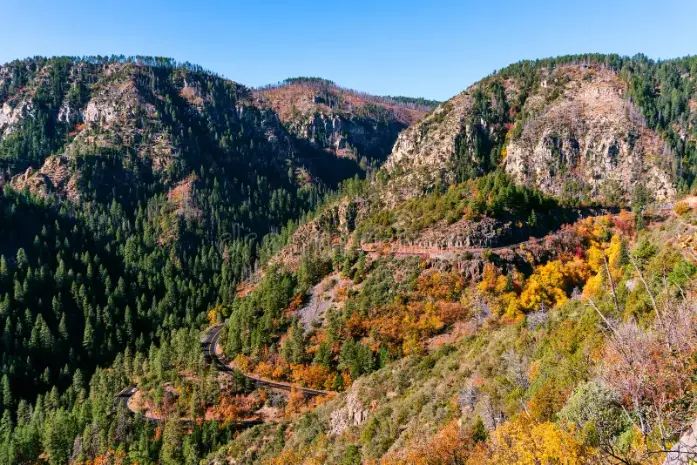
Transportation Options if You Don't Want to Drive
Driving is the most popular option by far, but it's not your only choice. Here's what else is available if you need it.
Shuttle Services
Several shuttle companies run direct service between Phoenix Sky Harbor Airport and Sedona. The ride takes about 2.5 hours and typically costs around $50 to $70 one way per person. This is a solid option if you're flying into Phoenix and want to get to Sedona without renting a car.
Uber and Rideshare
Uber does operate this route, but be prepared for a high price. According to Uber's own estimates, a ride from Phoenix Sky Harbor to Sedona runs about $170 and takes around 2 hours. That's a lot for one person, but split between four people it starts to look more reasonable.
Public Bus
Arizona Shuttle and Groome Transportation both run regular bus service on this route. A one-way bus ticket runs about $40 per person. The journey takes around 2 hours and 45 minutes. It's not as flexible as driving yourself, but it works if you're on a tighter budget.
- Shuttle/bus: ~$40 to $70 one way, 2.5 to 3 hours
- Rideshare (Uber): ~$170 for the whole vehicle, 2 hours
- Rental car: $30 to $70 per day, plus gas
- Your own vehicle: just gas, roughly $15 to $25 round trip depending on your car
Personally, I always recommend renting a car or driving your own if at all possible. Sedona itself has very limited public transit once you're there, so having your own wheels makes exploring the red rock trails and overlooks much easier.
Frequently Asked Questions
How long does the drive from Phoenix to Sedona actually take?
Under normal conditions with no stops, most people complete the drive in about 2 hours. If you hit Phoenix traffic during rush hour, add 20 to 40 minutes. If you're taking the scenic Oak Creek Canyon route or making stops along the way, budget at least 2.5 to 3 hours. The Prescott and Jerome route can take 3.5 hours or more.
What is the best route to drive from Phoenix to Sedona?
For speed, take I-17 North to State Route 179. It's the shortest, most direct route and deposits you right into Sedona's red rock country along the scenic byway. For beauty, come in through Oak Creek Canyon via I-17 to AZ-260 to AZ-89A. I personally like taking a different route each way so I get to see more of the landscape.
Is it safe to drive from Phoenix to Sedona?
Yes, it's a very safe and well-traveled drive. The roads are well-maintained and clearly marked. The only times to use extra caution are during monsoon season (July through September) when sudden heavy rain can cause flash flooding, and in winter when higher elevations near Sedona can get icy. Always check road conditions if you're driving in bad weather.
How much cooler is Sedona compared to Phoenix?
On average, Sedona runs about 10 to 15 degrees cooler than Phoenix. Since Sedona is at about 4,350 feet elevation compared to Phoenix's 1,000 feet, the air is noticeably cooler and less dry. On a day when Phoenix hits 110 degrees in July, Sedona might be sitting at a much more comfortable 95 degrees. In winter, Sedona can get snow while Phoenix has barely a frost.
Final Thoughts
At roughly 116 to 120 miles and 2 hours of driving, Phoenix to Sedona is one of those road trips that punches way above its weight. You don't need a week of vacation or a plane ticket to experience some of the most jaw-dropping scenery in the American Southwest. I've done this drive in the rain, in the blazing summer heat, and on crisp October mornings, and it always delivers. Whether you blast straight up I-17 for the fastest route or take your time through Oak Creek Canyon and stop at cliff dwellings along the way, you really can't go wrong. Just make sure you leave Phoenix before rush hour and tank up on gas before you go.
References:
- Visit Sedona (Sedona Chamber of Commerce). "Getting to Sedona." visitsedona.com
- Trippy. "How far is Sedona from Phoenix." trippy.com
- Shaka Guide. "Driving to Sedona from Phoenix." shakaguide.com
- Melissa's Travel Journal. "Phoenix to Sedona: Distance, Best Route and Transportation Options." melissastraveljournal.com
- Arroyo Pinion. "Phoenix to Sedona: 3 Most Scenic Routes for Your Road Trip." arroyopinion.com
- SecureSpace. "Distance from Phoenix to Sedona." securespace.com
- Uber. "Phoenix Airport to Sedona route." uber.com
- Arizona Department of Transportation. Road conditions: az511.gov
