
For as long as I can remember, writing has been how I make sense of the world. So when I set my sights on climbing Africa’s highest peak, I began, as I always do, by writing about it. I filled notebooks with lists, sketches, timelines, and doubts. I mapped out routes and researched weather patterns. And somewhere in those scribbled pages, the climb shifted from a far-off idea to a plan I couldn’t wait to carry out.
Mount Kilimanjaro had always been a symbol to me — not just a physical challenge, but a metaphor for persistence. It rises from the plains of Tanzania, standing alone and snow-capped, a mountain that thousands of ordinary people climb every year. The more I read, the more I realised this wasn’t a journey reserved for elite mountaineers. It was a test of endurance, patience, and belief — qualities that, like writing, anyone can cultivate with time.
The Story Before the Summit
Before I ever stepped on a trail, I had to understand what it really meant toclimb Kilimanjaro. It isn’t a technical climb; there are no ropes, crampons, or ice axes needed for the standard routes. But the altitude — nearly 5,900 metres — changes everything. The air thins, your body slows, and every step becomes a deliberate act of will.
The question I asked myself — and that most first-time trekkers ask — was, “How long does it take to climb Kilimanjaro?” The answer depends on the route, your pace, and how well you adapt to altitude. I chose an eight-day itinerary, long enough to let my body acclimatise and short enough to still feel like an adventure.
Training became part of the narrative. Weekends were spent on long hikes with a heavy pack, learning to move slowly and steadily. More than physical preparation, it was about building a rhythm — a pacing I knew I’d need on summit night, when every step would feel heavier than the last.
Chapters on the Mountain
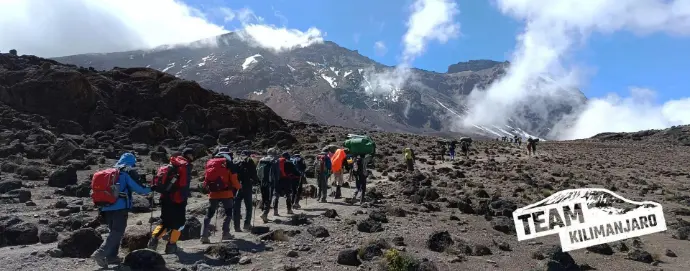
The climb itself felt like a novel unfolding, each day a new chapter with its own tone and texture. The opening pages were set in rainforest — warm, wet, and filled with the sound of birds and distant monkeys. By day two, the scenery shifted to moorland, open skies and sparse vegetation. Higher still, the landscape hardened into volcanic desert, and eventually into a cold, otherworldly wilderness of rock and ice.
Each day followed a simple structure. We woke at sunrise, shared breakfast in camp, and began our slow ascent. “Pole pole,” our guides repeated — Swahili for “slowly, slowly.” It became a mantra, a pacing strategy, and a philosophy all at once. The climb was never a race; it was a process of patience and persistence.
Evenings were spent swapping stories with fellow trekkers from around the world. Around campfires and shared meals, we talked about why we were there — bucket lists, anniversaries, life transitions. For me, the reason was simpler: I wanted to understand what it meant to chase something that couldn’t be rushed.
The Long Night to Uhuru
Summit night was the climax of the story. We woke at midnight and stepped into the cold, guided only by the narrow beam of our headlamps. The air was thin, and every breath felt like work. The hours stretched endlessly, a slow, deliberate battle against fatigue and gravity.
But just before dawn, the sky began to glow. At Stella Point, I turned to see the horizon on fire with sunrise — clouds spread below like a rolling sea. From there, the final walk to Uhuru Peak felt surreal, as if I were writing the last sentences of a book I’d been working on for years.
Standing on the summit, I didn’t feel triumphant so much as humbled. The view was vast and timeless. Glaciers sparkled in the early light. And the mountain, which had once felt impossibly distant, now stood beneath my feet.
Choosing the Right Time for the Story
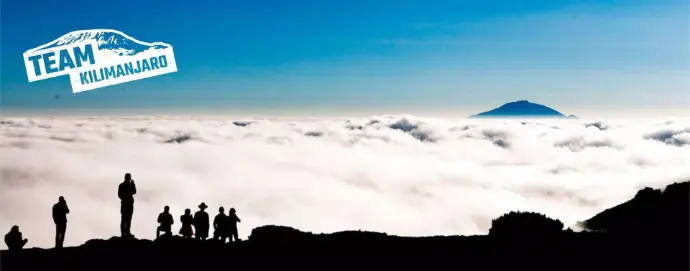
Timing, I learned, is everything — in writing and in mountaineering. Thebest time to climb Kilimanjaro is during the dry seasons, typically January to March or June to October. Clear skies, stable weather, and firm trails make all the difference. I chose early September, and the conditions were perfect: crisp mornings, bright afternoons, and breathtaking summit views.
The shoulder seasons — late May or early November — offer quieter trails but come with a greater chance of rain. And while climbing during the rainy season is possible, it changes the tone of the experience: fewer crowds, yes, but also slick paths and clouded views.
Lessons from the Journey
Climbing Kilimanjaro taught me things no book ever could. It taught me the value of patience and the power of persistence. It reminded me that the biggest challenges are often less about strength and more about rhythm — the steady, deliberate act of putting one foot in front of the other.
It also taught me that some stories are best written with your feet. Kilimanjaro isn’t just a mountain; it’s a journey of resilience, humility, and transformation. And once you’ve stood on its summit, the memory lingers like the last line of a novel — complete, satisfying, and deeply your own.
