
Short answer: shock always goes in first. But there's a bit more to it than that — and getting the order wrong can leave your pool cloudy for days. This guide breaks down exactly what to do, when to do it, and why sequence matters so much.
Always shock your pool first. Wait 24–48 hours for chlorine levels to drop below 5 ppm. Then — and only then — add the clarifier. Skipping this wait undermines both chemicals and wastes your money.
If you've ever stared at a murky pool wondering whether to reach for the shock or the clarifier first, you're not alone. It's one of the most Googled pool questions — and honestly, the wrong answer is out there too, which doesn't help.
The good news is the correct sequence is logical once you understand what each product actually does. Think of it like treating a wound: you disinfect first, then bandage. You wouldn't put the plaster on a dirty cut and hope for the best.
Let's walk through this clearly, step by step.
What Is Pool Shock and What Does It Actually Do?
Pool shock is a concentrated, fast-acting chemical designed to rapidly raise chlorine levels in your pool water. The goal is to overwhelm and destroy harmful bacteria, algae, chloramines (that's what causes the "chlorine smell"), and other organic contaminants.
Most pool shocks use calcium hypochlorite (cal-hypo) or sodium dichlor as the active ingredient. When you shock a pool, chlorine levels spike dramatically — often to 10 times the normal level. This is intentional. That spike is what kills the problem.
According to Compass Pools, those unpleasant stinging eyes and strong chlorine smell around a pool don't mean there's too much chlorine — they're actually caused by chloramines, which form when chlorine reacts with sweat and body oils. Shocking the pool breaks these down.
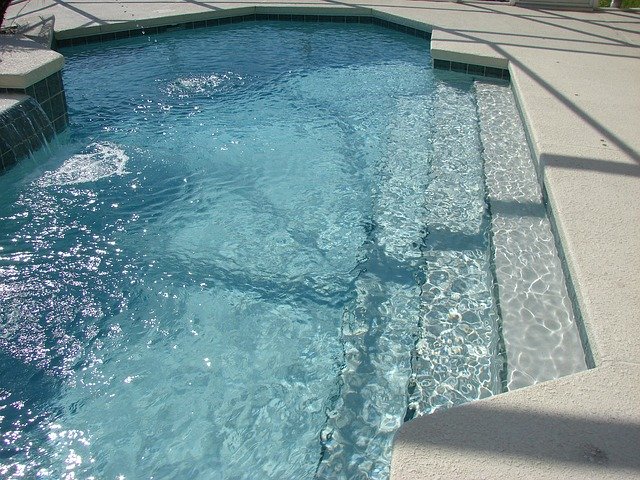
Shock treatments are typically recommended once a week during swimming season, or after heavy use, a rainstorm, or an algae bloom. The standard dosage is around 1 lb per 10,000 gallons for a clear pool — more if the water is green or visibly contaminated.
What Is a Pool Clarifier and How Does It Work?
A pool clarifier is a coagulant — a chemical that groups together tiny particles suspended in your water into larger clumps. Those larger clumps are then easier for your pool filter to trap and remove.
On its own, your filter can't capture microscopic debris like dead algae cells, fine dust, sunscreen residue, or skin particles. They pass right through. Clarifier essentially makes these invisible irritants visible — or at least catchable.
Clarifiers come in both liquid and tablet form. They work best when the pool's pH is between 7.2 and 7.6, and the filter is running continuously throughout the treatment period.
So — Clarifier Before or After Shock?
After. Always after.
Here's the logic. When you shock a pool, the high chlorine concentration is doing serious work — breaking down organic waste, killing bacteria, and disintegrating algae cells. That process produces a cloud of dead microparticles floating in the water. The pool will often look worse before it looks better. That cloudiness? It's actually a sign the shock is working.
If you add clarifier at the same time as shock — or just before it — two things go wrong:
First: The massive chlorine spike from the shock will degrade and break down the clarifier's active polymers before they can bind any particles. You've just wasted it.
Second: The clarifier starts clumping together debris that the shock hasn't killed yet. You end up trapping live algae and bacteria in larger clumps, which can sink to the bottom and create bigger problems later.
As The Pool and Deck explains, adding clarifier too early is counterproductive because the high chlorine levels can overwhelm the clarifier's effectiveness before it has a chance to work.
How Long Should You Wait Between Shock and Clarifier?
This is where people get impatient — and understandably so. Nobody wants to wait around with a cloudy pool while the sun's out.
But the waiting period is non-negotiable. Here's the recommended timeline based on pool chemistry guidance:
-
1
Shock the pool (evening is best): Add shock at dusk or after sunset. UV rays from the sun burn off unstabilised chlorine rapidly, cutting its effectiveness. Shocking at night gives the chemical a full window to do its job undisturbed.
-
2
Run your filter continuously: Keep the pump and filter running for at least 8–12 hours after shocking. This circulates the chlorine throughout the pool and starts catching larger debris particles. Some pool owners pair this stage with a Beatbot AquaSense robotic cleaner to keep the floor and walls clear of settling debris while the shock works overnight.
-
3
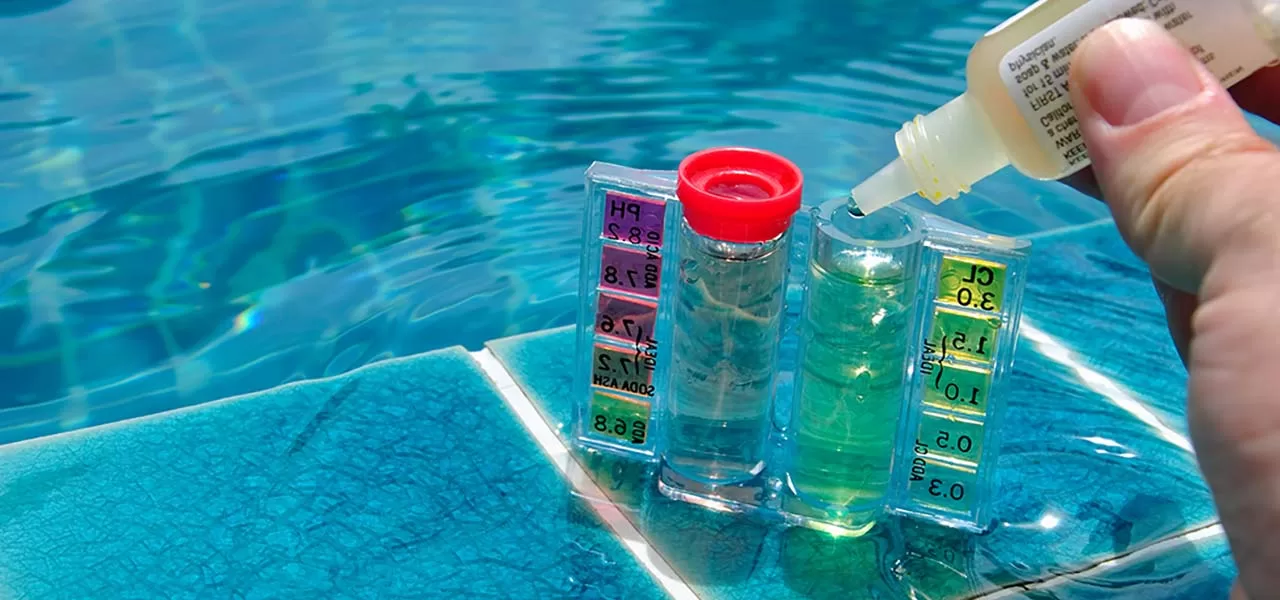
Test chlorine levels after 24 hours: Use a test kit or test strips to measure free chlorine. You want it to drop to below 5 ppm — ideally into the normal range of 1–3 ppm — before adding clarifier. Above 5 ppm, the clarifier won't function properly.
-
4
Check pH before adding clarifier: A slightly elevated pH of 7.5–8.0 actually makes clarifier more effective. Make sure pH is within range before you proceed.
-
5
Add the clarifier: Follow the dosage on the label. Less is more — overdosing clarifier creates a dense polymer cloud that makes water murkier, not clearer.
-
6
Run the filter for another 12+ hours: The clarifier needs circulation time to bind particles and push them into the filter. Don't switch off the pump prematurely.
Timeline guidance sourced from pool chemistry experts and Skovish Pools & Spas.
What If Your Pool Is Bright Green?
Green pool water means algae — and that changes your approach slightly.
First, check and correct your pH. Algae-affected water is often high in alkalinity, and shock works far less effectively at pH above 7.8. Get the pH down to around 7.2 before shocking, and your chlorine will be significantly more potent.
Then shock — heavily. For a green pool, you may need two to three times the standard dose. As a rough guide from In The Swim:
| Water Condition | Shock Dose (per 10,000 gal) |
|---|---|
| Blue and clear | 1 lb |
| Blue and cloudy | 1 lb per 8,000 gal |
| Light green (36" visibility) | 1 lb per 6,000 gal |
| Medium green (24" visibility) | 1 lb per 4,000 gal |
| Dark green (12" visibility) | 1 lb per 2,000 gal |
After shocking, wait for the water to shift from green to a cloudy blue-grey colour. That colour change confirms the algae is dead. Only then — once chlorine levels fall back to normal and you've confirmed the colour shift — should you add your clarifier.
The Spring Pool Opening Order — A Practical Sequence
If you're reopening your pool after winter, the full chemical sequence matters just as much as the shock-clarifier order. Here's the recommended schedule, based on guidance from In The Swim's pool opening guide:
Day 1: Balance the water — adjust pH, alkalinity, calcium hardness, and cyanuric acid. Once balanced, add a stain preventer and your clarifier. Give these 8–12 hours to circulate.
Day 2: Check pH again (aim for 7.2), then shock the pool. Granular cal-hypo shock should always be pre-dissolved in a bucket of water before pouring it into a vinyl pool. Never pour shock directly onto the pool liner.
Day 3: Once chlorine drops below 3 ppm, add algaecide if desired. High chlorine destroys algaecides — so the wait here is also important.
Notice that in the spring opening sequence, clarifier is added on Day 1 and shock on Day 2. This works because the clarifier has a full day to work before the shock is introduced — they're not competing with each other in real time.
What About Clarifier and Algaecide — Can They Be Added Together?
Good question, and the answer is: it depends on the type of algaecide.
Polyquat algaecides and clarifiers do not play nicely together. Both products use polymer chemistry, and when they meet in pool water, they can interact in ways that actually increase cloudiness rather than reducing it. According to Leslie's Pool, you should never add a clarifier on the same day as a polyquat algaecide.
Quaternary ammonium (quat) algaecides are generally fine alongside clarifiers — but always read the label. When in doubt, space them out by at least 24 hours.
How to Use Clarifier Correctly (The Bit People Skip)
Clarifier is one of those products where more is definitely not better. Overdosing is a surprisingly common mistake — add too much and the polymer cloud becomes so dense it actually blocks the filter rather than helping it.
If you've overdosed and your pool has become cloudier after adding clarifier, you have a few options: keep running the filter and wait it out (can take several days), partially drain and refill the pool, or consult your pool supplier about a corrective treatment.
The right way to use it:
Make sure the filter is clean before you start. A clogged filter won't capture the clumped particles effectively, and the clarifier can't do its job. Check the pH is between 7.2 and 7.6. Measure carefully — don't eyeball it. Then add the recommended dose evenly around the pool's perimeter with the pump running.
Expect results within 24–72 hours, not immediately. Patience pays off here. Run the filter continuously, check it regularly, and backwash if pressure increases.
Quick FAQs
Can I add clarifier and shock at the same time?
No. The high chlorine from shock will break down the clarifier's polymers before they can work. You'll waste your clarifier and still end up with cloudy water. Always shock first, wait 24–48 hours, then add clarifier.
How long after shock can I add clarifier?
Wait at least 24 hours and test your free chlorine. Once it drops below 5 ppm (ideally to 1–3 ppm), it's safe to add clarifier. Sometimes with heavy algae blooms, this can take 48 hours.
My pool is still cloudy after shocking — should I add clarifier now?
Not yet. A cloudy pool after shock is normal — it means the shock is killing contaminants and those particles are floating free. Run your filter, wait for the chlorine to drop, then add clarifier to help your filter catch the remaining fine particles.
How long does clarifier take to work?
Pool clarifier typically takes 48–72 hours to fully clear the water. In cases with heavy particle loads, it can take longer. Run your filter continuously throughout this period for best results.
Can I swim after adding clarifier?
Clarifier itself is not harmful to swimmers once it's been circulating for a few hours. However, if you've recently shocked the pool, you should wait until chlorine levels return to 1–3 ppm before swimming — regardless of the clarifier.
The Bottom Line
Pool chemistry rewards patience and punishes shortcuts. The sequence — shock first, clarifier second — isn't arbitrary. Each chemical needs specific conditions to work properly, and those conditions are destroyed if you rush the process.
Shock kills the problem. Clarifier clears up the aftermath. In that order, every time.
Test your water before each addition. Run your filter consistently. Wait the full 24 hours between shock and clarifier. Do that, and you'll spend far less time troubleshooting and far more time swimming.
Short answer: shock always goes in first. But there's a bit more to it than that — and getting the order wrong can leave your pool cloudy for days. This guide breaks down exactly what to do, when to do it, and why sequence matters so much.
Always shock your pool first. Wait 24–48 hours for chlorine levels to drop below 5 ppm. Then — and only then — add the clarifier. Skipping this wait undermines both chemicals and wastes your money.
If you've ever stared at a murky pool wondering whether to reach for the shock or the clarifier first, you're not alone. It's one of the most Googled pool questions — and honestly, the wrong answer is out there too, which doesn't help.
The good news is the correct sequence is logical once you understand what each product actually does. Think of it like treating a wound: you disinfect first, then bandage. You wouldn't put the plaster on a dirty cut and hope for the best.
Let's walk through this clearly, step by step.
What Is Pool Shock and What Does It Actually Do?
Pool shock is a concentrated, fast-acting chemical designed to rapidly raise chlorine levels in your pool water. The goal is to overwhelm and destroy harmful bacteria, algae, chloramines (that's what causes the "chlorine smell"), and other organic contaminants.
Most pool shocks use calcium hypochlorite (cal-hypo) or sodium dichlor as the active ingredient. When you shock a pool, chlorine levels spike dramatically — often to 10 times the normal level. This is intentional. That spike is what kills the problem.
According to Compass Pools, those unpleasant stinging eyes and strong chlorine smell around a pool don't mean there's too much chlorine — they're actually caused by chloramines, which form when chlorine reacts with sweat and body oils. Shocking the pool breaks these down.
Shock treatments are typically recommended once a week during swimming season, or after heavy use, a rainstorm, or an algae bloom. The standard dosage is around 1 lb per 10,000 gallons for a clear pool — more if the water is green or visibly contaminated.
What Is a Pool Clarifier and How Does It Work?
A pool clarifier is a coagulant — a chemical that groups together tiny particles suspended in your water into larger clumps. Those larger clumps are then easier for your pool filter to trap and remove.
On its own, your filter can't capture microscopic debris like dead algae cells, fine dust, sunscreen residue, or skin particles. They pass right through. Clarifier essentially makes these invisible irritants visible — or at least catchable.
Clarifiers come in both liquid and tablet form. They work best when the pool's pH is between 7.2 and 7.6, and the filter is running continuously throughout the treatment period.
So — Clarifier Before or After Shock?
After. Always after.
Here's the logic. When you shock a pool, the high chlorine concentration is doing serious work — breaking down organic waste, killing bacteria, and disintegrating algae cells. That process produces a cloud of dead microparticles floating in the water. The pool will often look worse before it looks better. That cloudiness? It's actually a sign the shock is working.
If you add clarifier at the same time as shock — or just before it — two things go wrong:
First: The massive chlorine spike from the shock will degrade and break down the clarifier's active polymers before they can bind any particles. You've just wasted it.
Second: The clarifier starts clumping together debris that the shock hasn't killed yet. You end up trapping live algae and bacteria in larger clumps, which can sink to the bottom and create bigger problems later.
As The Pool and Deck explains, adding clarifier too early is counterproductive because the high chlorine levels can overwhelm the clarifier's effectiveness before it has a chance to work.
How Long Should You Wait Between Shock and Clarifier?
This is where people get impatient — and understandably so. Nobody wants to wait around with a cloudy pool while the sun's out.
But the waiting period is non-negotiable. Here's the recommended timeline based on pool chemistry guidance:
-
1
Shock the pool (evening is best): Add shock at dusk or after sunset. UV rays from the sun burn off unstabilised chlorine rapidly, cutting its effectiveness. Shocking at night gives the chemical a full window to do its job undisturbed.
-
2
Run your filter continuously: Keep the pump and filter running for at least 8–12 hours after shocking. This circulates the chlorine throughout the pool and starts catching larger debris particles. Some pool owners pair this stage with a Beatbot AquaSense robotic cleaner to keep the floor and walls clear of settling debris while the shock works overnight.
-
3
Test chlorine levels after 24 hours: Use a test kit or test strips to measure free chlorine. You want it to drop to below 5 ppm — ideally into the normal range of 1–3 ppm — before adding clarifier. Above 5 ppm, the clarifier won't function properly.
-
4
Check pH before adding clarifier: A slightly elevated pH of 7.5–8.0 actually makes clarifier more effective. Make sure pH is within range before you proceed.
-
5
Add the clarifier: Follow the dosage on the label. Less is more — overdosing clarifier creates a dense polymer cloud that makes water murkier, not clearer.
-
6
Run the filter for another 12+ hours: The clarifier needs circulation time to bind particles and push them into the filter. Don't switch off the pump prematurely.
Timeline guidance sourced from pool chemistry experts and Skovish Pools & Spas.
What If Your Pool Is Bright Green?
Green pool water means algae — and that changes your approach slightly.
First, check and correct your pH. Algae-affected water is often high in alkalinity, and shock works far less effectively at pH above 7.8. Get the pH down to around 7.2 before shocking, and your chlorine will be significantly more potent.
Then shock — heavily. For a green pool, you may need two to three times the standard dose. As a rough guide from In The Swim:
| Water Condition | Shock Dose (per 10,000 gal) |
|---|---|
| Blue and clear | 1 lb |
| Blue and cloudy | 1 lb per 8,000 gal |
| Light green (36" visibility) | 1 lb per 6,000 gal |
| Medium green (24" visibility) | 1 lb per 4,000 gal |
| Dark green (12" visibility) | 1 lb per 2,000 gal |
After shocking, wait for the water to shift from green to a cloudy blue-grey colour. That colour change confirms the algae is dead. Only then — once chlorine levels fall back to normal and you've confirmed the colour shift — should you add your clarifier.
The Spring Pool Opening Order — A Practical Sequence
If you're reopening your pool after winter, the full chemical sequence matters just as much as the shock-clarifier order. Here's the recommended schedule, based on guidance from In The Swim's pool opening guide:
Day 1: Balance the water — adjust pH, alkalinity, calcium hardness, and cyanuric acid. Once balanced, add a stain preventer and your clarifier. Give these 8–12 hours to circulate.
Day 2: Check pH again (aim for 7.2), then shock the pool. Granular cal-hypo shock should always be pre-dissolved in a bucket of water before pouring it into a vinyl pool. Never pour shock directly onto the pool liner.
Day 3: Once chlorine drops below 3 ppm, add algaecide if desired. High chlorine destroys algaecides — so the wait here is also important.
Notice that in the spring opening sequence, clarifier is added on Day 1 and shock on Day 2. This works because the clarifier has a full day to work before the shock is introduced — they're not competing with each other in real time.
What About Clarifier and Algaecide — Can They Be Added Together?
Good question, and the answer is: it depends on the type of algaecide.
Polyquat algaecides and clarifiers do not play nicely together. Both products use polymer chemistry, and when they meet in pool water, they can interact in ways that actually increase cloudiness rather than reducing it. According to Leslie's Pool, you should never add a clarifier on the same day as a polyquat algaecide.
Quaternary ammonium (quat) algaecides are generally fine alongside clarifiers — but always read the label. When in doubt, space them out by at least 24 hours.
How to Use Clarifier Correctly (The Bit People Skip)
Clarifier is one of those products where more is definitely not better. Overdosing is a surprisingly common mistake — add too much and the polymer cloud becomes so dense it actually blocks the filter rather than helping it.
If you've overdosed and your pool has become cloudier after adding clarifier, you have a few options: keep running the filter and wait it out (can take several days), partially drain and refill the pool, or consult your pool supplier about a corrective treatment.
The right way to use it:
Make sure the filter is clean before you start. A clogged filter won't capture the clumped particles effectively, and the clarifier can't do its job. Check the pH is between 7.2 and 7.6. Measure carefully — don't eyeball it. Then add the recommended dose evenly around the pool's perimeter with the pump running.
Expect results within 24–72 hours, not immediately. Patience pays off here. Run the filter continuously, check it regularly, and backwash if pressure increases.
Quick FAQs
Can I add clarifier and shock at the same time?
No. The high chlorine from shock will break down the clarifier's polymers before they can work. You'll waste your clarifier and still end up with cloudy water. Always shock first, wait 24–48 hours, then add clarifier.
How long after shock can I add clarifier?
Wait at least 24 hours and test your free chlorine. Once it drops below 5 ppm (ideally to 1–3 ppm), it's safe to add clarifier. Sometimes with heavy algae blooms, this can take 48 hours.
My pool is still cloudy after shocking — should I add clarifier now?
Not yet. A cloudy pool after shock is normal — it means the shock is killing contaminants and those particles are floating free. Run your filter, wait for the chlorine to drop, then add clarifier to help your filter catch the remaining fine particles.
How long does clarifier take to work?
Pool clarifier typically takes 48–72 hours to fully clear the water. In cases with heavy particle loads, it can take longer. Run your filter continuously throughout this period for best results.
Can I swim after adding clarifier?
Clarifier itself is not harmful to swimmers once it's been circulating for a few hours. However, if you've recently shocked the pool, you should wait until chlorine levels return to 1–3 ppm before swimming — regardless of the clarifier.
The Bottom Line
Pool chemistry rewards patience and punishes shortcuts. The sequence — shock first, clarifier second — isn't arbitrary. Each chemical needs specific conditions to work properly, and those conditions are destroyed if you rush the process.
Shock kills the problem. Clarifier clears up the aftermath. In that order, every time.
Test your water before each addition. Run your filter consistently. Wait the full 24 hours between shock and clarifier. Do that, and you'll spend far less time troubleshooting and far more time swimming.
